Monday, January 14, 2019

1960s Antonio Margheriti Part Two

BATTLE OF THE WORLDS
(1961)
Overall: WOOF

Antonio Margheriti who is dubbed Anthony M. Dawson here for more easy to pronounce American audiences helmed his second ridiculous, barely-a-budget sci-fi dud Battle of the Worlds, (Pianeta degli uomini spenti), a year after his debut Space-Men.  For this go around he scored none other than Claude Rains of all completely random people to be in it.  Everything about Rains character is laughably absurd from how much of a raging asshat he is, to his seemingly godlike abilities to know everything down to the most minute detail at all times, (often by scribbling some math on random objects with chalk, looking at things, or just boldly proclaiming them out of nowhere).  It is mostly his hilarious performance though which shows an untamed, full-throttle devotion into camp that the noted thespian never even hinted at before.  Hypothetically taking Rains out of the equation though, this may be the most unmemorable Italian sci-fi movie ever made, which is saying something.  The characters are embarrassingly underwritten, the "special" effects are anything but, and it is atrociously dull throughout almost its entire running time.  Yet with Rains unabashedly hamming it up to the umpteenth degree and the movie so cliche-ridden and stupid that it actually has you guessing along the way just how cliche-ridden and stupid it is going to be, it is fair to say that this is worth at least one viewing, solely to point and laugh at.  Out loud of course.

THE LONG HAIR OF DEATH
(1964)
Overall: MEH

Having Barbara Steele on board alone for the amusingly titled The Long Hair of Death, (I lunghi capelli della morte), makes it impossible not to link back to Mario Bava's Black Sunday which more or less kickstarted the European Gothic horror boom four years earlier.  In pretty much every respect, this film plays a similar, standard game.  It starts with a woman wrongly being put to death as a witch, (of course), who curses her executioners, (of course), has her bloodline seek revenge, (of course), and then there is more barely important stuff about horny, hypocritical Counts and whatnot being all horrible and getting their comeuppance, (of course).  The script by Margheriti and Tonino Valerii based off of a story by Ernesto Gastaldi, (who would pen a hefty number of low-budget horror and sword and sandal movies), would be fine with all of its cliches in tow.  That is if not for the badly written characters who abruptly change their motivations and behavior at a moments notice.  People are boldly refusing to do things or carrying their weight around only to become either sheepishly or diabolically accommodating in the very next scene.  The middle of the movie plods along too and pretty much dooms the ending to come off far more lackluster than it was intended.  There are some memorable scenes of animated corpses though and a few other moody bits that work OK.
THE YOUNG, THE EVIL, AND THE SAVAGE
(1968)
Overall: GOOD

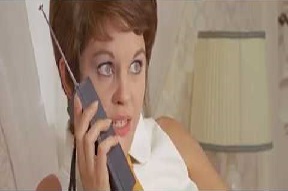
When making a giallo with an eye-ball rollingly silly script like this, it is usually a better move to have a bit of fun with the whole ordeal.  It is in this very regard that The Young, the Evil, and the Savage, (also hilariously titled Nude...si muore aka Naked...You Die), is a success.  Sure the story is loaded with cliches, (obvious transvestite), plot holes, (no one would notice any smell omitting from a huge crate with a dead body in it in the warm Italian summer for days on end?), and moronic behavior amongst most of its characters, (get woken up in the middle of the night by a shower being left on when a girl is missing/presumed murdered and decide to go in and take a shower yourself?), but both Antonio Margheriti and his cast seem consistently to be enjoying themselves with how kind of dumb it all is.  The movie laughs off how Mark Damon, (The Pit and the Pendulum), openly romances an underage girl and another one, (British born Sally Smith), is a downright hoot as an aspiring crime novelist/investigator who sasses her way around the boarding school while jumping in to save the day on more than one occasion.  While it is not very flamboyantly staged, Margheriti excels at least as far as the "whodunit?" element is concerned by misleading the audience nearly every step of the way, often more cleverly than not.

Saturday, January 12, 2019

1960s Antonio Margheriti Part One

THE VIRGIN OF NUREMBERG
(1963)
Dir - Antonio Margheriti
Overall: WOOF

Quite sadly, Christopher Lee appeared in one of the worst movies ever made and that movie is The Virgin of Nuremberg, (La vergine di Norimberga, Horror Castle).  A rushed production which was filmed in three weeks hot off the heels of director Antonio Margheriti's Castle of Blood which was released the following year, Nuremberg is based on a disposable, cheap Italian paperback novel of the same name by Maddalena Gui with a screenplay credited to three different people including Margheriti.  This makes sense considering how utterly messy and ridiculous it all plays out.  Every single detail in the plot is almost impressively stupid.  Everything every character says, everything they do, every single thing that happens is devoid of logic in a manner far surpassing even the usual Euro-horror standards.  The sets are fine and the music is awful in a generic sense, but the mind-numbingly stupid script and cripplingly tedious pacing makes it as close to unwatchable as can be imagined.  Even by silly and lousy Italian horror standards, only the truest gluttons for punishment can hope to endure how unentertainingly terrible this is.  Truly the worst of its kind, that is for sure.
 
CASTLE OF BLOOD
(1964)
Dir - Antonio Margheriti/Sergio Corbucci
Overall: MEH

Occasionally spooky and containing a more than admirable if cliche ridden plot, flaws in Castle of Blood, (Danza Macabra), sadly do too much harm to the proceedings.  Sergio Corbucci was initially on board to direct it, having been given the opportunity to make a Gothic horror film on the cheap from producer Giovanni Addessi who had some sets left over from The Monk of Monza that he wanted to get more mileage out of.  While he conceived of the initial story concept, Corbucci ended up dropping out, (though he was later brought in to direct a single scene), and his friend Antonio Margheriti took on the project instead.  Margheriti stretches the deliberate, would-be moody pacing too far and in several instances the movie goes from genuinely white-knuckled to tedious.  This makes it far too easy for the viewer to lose patience and by the end of it, more moments become undone by their exhausting presentation than not.  It is another common shame where the material is treated sincerely, the premise is solid, the performances are fine, the sets are wholly appropriate for such a gloomy affair, and the small budget is forgivable, but they just cannot pick up the goddamn pace.

WAR BETWEEN THE PLANETS
(1966)
Overall: MEH

It is occasionally charming how awful some cinematic dung heaps are and War Between the Planets, (not to be confused with about ten other Italian movies titled with the same group of words made in and around the decade that this one was produced), gets a solid "so bad it is almost kind of OK good" pass.  A typical drive-in schlock fest made on a dime and designed to maybe make a few extra dollars than it was worth, its only really remembered now by people who champion silly, cheap, European genre cash-grabs and that is perfectly fine.  Giacomo Rossi Stuart, (Kill, Baby, Kill), plays one of the most unnecessarily hard-assed space captains and when he is not getting into macho fistfights with other officers or scowling in all of his shots, he is yelling at everyone for not following his orders and spattering off some of the most redundant dialog you are likely to hear along with the rest of the cast.  The effects are an absolute hoot with toy space ships, astronauts dangling on wires against papier-mâché planets and cardboard backdrops, and a bubbling alien/comment/planet/something with snugly blankets that act as organic material.  The amount of effort put into pretending this is a real movie by the cast and crew is rather adorable at some instances, but of course it starts to drag too much by the pathetic finale and you are left barely remembering what you just watched.  Which is also kind of fine.

THE UNNATURALS
(1969)
Overall: GOOD

Antonio Margheriti closed out the 1960s with probably his strongest overall film, the cold and eerie The Unnaturals, (Contronatura in Italy, Schreie in der Nacht in Germany, both countries of which had studios that co-produced it).  The first half moves a bit too slow, but eventually we are treated to something closely resembling an anthology mystery, with the guilty secrets of a bunch of rich socialites all getting revealed to us in various flashbacks over a séance.  Margheriti maintains pretty tight control of the material here and working with his own screenplay as well as co-producing, it is one of the rare auteur works in the director's filmography, (and probably the reason he considered it his best movie).  The international cast is pretty strong with German-born Marianne Koch, (A Fistful of Dollars), standing out the most as a tragic, closeted lesbian.  The erotic aspects are mostly underplayed with only minimal nudity and the sex scenes being as atmospheric as the "creepy castle during a thunderstorm" ones.  The finale is a bit unexpected almost in a humorous way, but it is just another pleasantly surprising element to a film that would have been far less successful under more exploitative and uninspired direction.

Thursday, January 10, 2019

1960s Mario Bava Part Two

HERCULES IN THE HAUNTED WORLD
(1961)
Overall: GOOD

With his only entry in the Hercules franchise, (once which numerous countries over numerous years indulged in), Mario Bava does commendable work once again on an air-tight budget whilst juggling a joyously silly, over-stuffed plot.  Hercules In the Haunted World, (Ercole al centro della terra), has one time Mr. Universe Reg Park in the title role, which was his second time appearing as such with Hercules Conquers Atlantis also coming out the same year.  To help bolster the proceedings, Christopher Lee is appropriately on board as the villainous King Lico.  Unfortunately Lee's voice is dubbed in the English language version of the film, but he still commands respect in a role that could have been far more forgettable in the hands of a lesser thespian.  The plot here combines as many desperate, hammy elements as can be such as generously tweaked Greek mythology, melodramatic love arcs, a stone monster, and even vampires.  Bava not only keeps up the pace rather frantically while racing from one story element to the next, but his usual, striking use of color gets a full workout as he gets to decorate the lens with scenes transpiring in otherworldly planes such as Hades and an underground crypt.  In the latter, a slew of undead rise from their tombs to attack Hercules while flying at him with visible strings attached.  It is quite a fun experience where you can laugh at how most people in it just stare at dangerous things approaching them without running away and how Hercules' answer to practically every problem is "just throw giant rocks at it until it goes away".

BLOOD AND BLACK LACE
(1964)
Overall: GOOD

On the rather long list of significant Mario Bava films that would have a profound impact on horror cinema overall, his prominent giallo offering Blood and Black Lace, (6 donne per l'assassino, Blutige Seide), could be chief among them.  A masked killer stalking and killing pretty girls who lack the common sense to not be all alone nor turn any lights on wherever they happen to be getting murdered was not anything particularly new when Bava made the film, but the style with which he does so was unique.  Having the murders themselves be particularly brutal, the movie revolving around a fashion house which offers up above average sex appeal, and of course the inventive way in which he stages the kills with primitive colors, darkness, tracking shots, and silence would all become benchmarks of Italian slashers.  Though even outside of that country, you cannot name enough other movies that leisurely borrowed from the rules Bava sets up here.  While this would ultimately be for the worst as the 80s in particular begat the most boring and uninspired slasher sub-genre that still unfortunately lingers today, just like Psycho or Halloween, Blood and Black Lace can still be viewed as quite an exceptional precursor to *sigh* later garbage.

KILL, BABY, KILL
(1966)
Overall: GOOD

The most celebrated Gothic horror work of Mario Bava's career along with Black Sunday, Kill, Baby, Kill, (Operazione paura), proved as influential as any other Italian film in pretty much any genre.  The contemporary "creepy kid + toy ball = scary" motif can be directly traced back to here and thankfully Bava still cannot make his movies look anything but extraordinary, even if he tried.  Shooting both on location in Calcutta and at Titanus Appia Studios, the overly-cobwebbed, eerily lit sets are endlessly effective, wholly benefiting the movie's illogical, dreamlike narrative.  The production ran out of money while filming which not only forced the cast and Bava to work unpaid for much of it, but also warranted that they improvise the allegedly unfinished script and resort to using stock music.  These budgetary elements present the only fair problems one can sight as the plot is a bit too underdeveloped and the nearly relentless, unremarkable musical score gets in the way more often than not.  It is still highly impressive that Bava was able to make such a still lauded work with all of the obstacles faced.  It is no less flawed than many other good to excellent Italian horror outings, especially many that would come in its wake and freely borrow from its groundwork.

Tuesday, January 8, 2019

1960s Mario Bava Part One

BLACK SUNDAY
(1960)
Overall: GOOD
 
Though Mario Bava's stylized use of color is one of the most lauded talents he brought to horror cinema, the black and white Black Sunday, (The Mask of Satan, Revenge of the Vampire, La Maschera del Demonio), still probably sits in most people's mind as his definitive film.  It is certainly one of the most atmospheric Gothic horror movies ever made and would prove largely influential across the globe, reestablishing Universal's monster movie tropes for more generations to come.  Particularly in Italy, logic and realism are rarely a concern and memorable visuals, gore, and moody evilness instead take center stage.  This is certainly the case here, where silly moments could become distracting if not for the near suffocatingly dreadful and sinister ambiance that oozes from every frame.  Shadows, darkness, crypts, spiderwebs, howlings, plus a thousand other horror staples are all exploited marvelously here, with the added element of gore and sexual tension.  The only shortcomings present are with the melodrama and lousy musical score, both of which are common drawbacks of the era more than anything else.  Still, this established both Bava's reputation as a master in in the genre as well as British actor Barbara Steele's place as arguably Europe's premier scream queen.
 
THE GIRL WHO KNEW TOO MUCH
(1963)
Overall: GOOD

Serving as both Mario Bava's final film in black and white as well as one that is regularly regarded as the first official giallo, The Girl Who Knew Too Much, (La ragazza che sapeva troppo, The Evil Eye), is a historically important thriller from one of horror's most important filmmakers.  There are a couple of instances where Bava lets the flow drag a bit, failing to successfully ride that line of building tension where instead, some of the scenes become drawn-out and snore-inducing.  There are some tonal problems as well when the movie occasionally decides to be a comedy, though this almost happens enough to conclude that it was meant not to be taken all that seriously.  Bava himself was not that impressed with the senseless script or from working with American John Saxton who allegedly practiced his martial arts too much on set for the director's liking.  Issues aside, the film is photographed beautifully, with Bava doubling as cinematographer.  Shooting locations such as the Spanish Steps and the Trinità dei Monti in Rome are shown in expansive, shadow-drenched ways.  As a precursor to the giallo film which would begin to get made in growing abundance over the following years, Bava proves quite innovative not so much in the slasher aspects of the sub-genre but more in the film noir/crime mystery ones where a pretty girl sees "too much", gets threatened, and becomes hellbent on discovering her pursuer.

THE WHIP AND THE BODY
(1963)
Overall: MEH

Drastically flawed due to its arduous pacing, The Whip and the Body, (La frusta e il corpoWhat!Night Is the Phantom), is nearly recommendable as a high water mark for Mario Bava's fantastic, visual style at least.  The film was put together deliberately as an Italian answer to Roger Corman's The Pit and the Pendulum and Bava was brought in to direct and act as cinematographer, (uncredited), while Christopher Lee was scored in a practically tailor-made part as a sadomasochistic, black sheep of a noble family.  From a pure optical standpoint, this is a triumph as Bava works his true strengths framing nearly every shot beautifully in expressive color pallets and shadows while staging some purely memorable scenes involving hands emerging out of blackness, eerily-lit crypts and hallways, and intense closeups of women's terrified eyes.  Lee is naturally menacing and brutish, and even though his screen time is rather minimal, the most is made out of his foreboding demeanor.  Sadly though, the movie is sloooooooooooooow as all hell.  It becomes cumbersome how so many shots linger on and on while the story itself has virtually nothing to it.  The whole thing succumbs to a boring game of people seeing and hearing things, screaming, and then other people running in to tell them it was all in their imagination.

PLANET OF THE VAMPIRES
(1965)
Overall: MEH

Mario Bava did not dip his toes too frequently into sci-fi throughout his career, making Planet of the Vampires, (Terrore nello Spazio), a rather unique work.  Virtually all of its story elements are standard, familiar stuff with an alien force mysteriously overtaking a bunch of marooned astronauts.  Yet while the script is not the most ingeniously original of its kind, it has some merit for its creepy atmosphere and colorful look which is straight out of pulp science fiction comics.  The film was internationally financed by studios in American, Spain, and Italy and the ethnically diverse, (and post dubbed of course), cast are just as varied.  Being made cheaply as a double feature though, the lack of budget is charmingly noticeable and Bava works quite a few wonders drenching the small sets with enough vibrant, multi-colored fog to obscure the plastic rocks and clunky toy spaceship.  The big, giant alien skulls look pretty damn cool too.  The only problem really is a common one in that the movie drags and absolutely no investment is made to flesh out any of the characters.  This makes it problematic to care as everyone simply goes through the motions exploring their environment, trying to fix their ship to return to earth, and tediously discovering what is going on.

Sunday, January 6, 2019

1960s Roger Corman

THE LITTLE SHOP OF HORRORS
(1960)
Overall: GOOD

It says a lot about Roger Corman's maverick filmmaking abilities that he was able to produce both the seminal, first Gothic Edgar Allan Poe adaptation with Vincent Price in House of Usher and then The Little Shop of Horrors in the same year.  These two movies alone could not differ more drastically, but then again most movies PERIOD do not resemble this one.  As was often his infamous trade, Corman snatched up the chance to make the film with a leftover set, stock actors, and no money from A Bucket of Blood, finishing principal photography in a whopping two days while employing as many corner-cutting tricks as he was expertly able.  At the same time, he and screenwriter Charles B. Griffith concocted an absurd farce that openly makes fun of Jewish stereotypes, slubbish heroes, killer monster movies, and deadpan detective serials all at once.  The fact that it was pulled off so cheaply yet remains a cherished cult film, (and spawned a hit Broadway play, star-studded 80's remake, and even a cartoon series), is simply a testament to Corman's uncanny skills to think on his feet and occasionally get pretty damn lucky in the process.

THE PREMATURE BURIAL
(1962)
Overall: GOOD

The third in the "Poe Cycle", Roger Corman's The Premature Burial was the only one in the series not to feature Vincent Price, as he was under contract with American International Pictures exclusively at the time production began.  Corman worked independently from the studio this time even though AIP ended up distributing the movie anyway once it was finished.  Ray Milland does a fine if considerably less memorable job than Price presumably would have, and the story is so similar in tone and theme to Corman's previous two Poe vehicles House of Usher and The Pit and Pendulum anyway that perhaps seeing Price once again playing a manic eccentric cooped up by his own eccentricities in another gloomy castle would have been even more redundant.  As predictable and familiar as the presentation is, Corman still works his Gothic horror magic with beautiful sets, creepy dream sequences, and by utilizing mainstay Floyd Crosby, (David Crosby's dad), as cinematographer once again.  Corman would begin to incorporate comedy into his Poe adaptations with the next few entries and permanently bring Price back to the proceedings, but this one is still enjoyable if not as essential by comparison.

X: THE MAN WITH X-RAY EYES
(1963)
Overall: GOOD

Based off of one of his own ideas, Roger Corman got Ray Russell and Robert Dillon to put together a screenplay about the all-seeing eyes of Dr. James Xavier, (not to be confused with Marvel's Prof X who coincidentally would debut in comics the exact same month that this film was released), and the result X: The Man with X-Ray Eyes is solid for the most part.  The religious tag at the end is random and clashes with the rest of the movie, plus the blurry, headache inducing POV effects hardly work convincingly.  Otherwise though, the film has a solid performance from Ray Milland, plus Corman takes the material seriously enough to make it captivating.  There is an amusing scene where Milland is testing out his new powers at a party where everyone is dancing, seeing them all in their birthday suits.  We also have Don Rickles in a small though important part as a character he was virtually born to play, (a crowd-insulting carnie).  Yet aside from all of that, the camp level is toned down with the "man playing god" angle taking center stage.  It is predictably tragic by following the same beats where a protagonist who starts off with somewhat noble intentions gradually becomes power-obsessed.  As far as Corman's contemporary-set horror films from the period go though, this is easily one of the better ones.

Friday, January 4, 2019

1960s American Horror Part Four

DEMENTIA 13
(1963)
Dir - Francis Ford Coppola/Jack Hill
Overall: MEH

Obviously notable as the first film written and directed almost solo by Francis Ford Coppola, (Jack Hill was hired to shoot addition scenes since producer Roger Corman was displeased with the initial version), Dementia 13 suffers from some understandable problems.  As usual, Corman had just wrapped up a movie in Ireland under budget and offered Coppola the chance to make a cheap, Gothic horror outing while they were still there with the same crew.  Coppola then wrote the script in three days with the help of friend as well as art director Al Locatelli, the result coming off as quite the rushed, limited funded project it is.  To say that the story is confusing would be an understatement with most of the character's motivations underwritten and several plot avenues abandoned at various points.  It kind of just goes through a number of sections and by the end, it has the feeling of being three or four different movies disastrously spliced together.  Coppola even this early on had a flair for some nifty camera work and the opening scene on a row boat, as well as the moment where Luana Anders, (The Pit and the Pendulum), undresses, swims underwater, and then meets some grisliness once she resurfaces are indeed pretty well done.

QUEEN OF BLOOD
(1966)
Dir - Curtis Harrington
Overall: GOOD

Made for American International Pictures on a typically small scale budget, Curtis Harrington's Queen of Blood further swiped its special effects shots from two Russian films Mechte Navstrechu, (A Dream Come True), and Nebo Zovyot, (Battle Beyond the Sun).  They also scored Basil Rathbone for a day and a half of shooting as well as a young Dennis Hopper, who is always amusing to see in such clean-cut, pre-Easy Rider roles.  Even though Harrington takes quite a long time to get to the good stuff, the film's first two acts are pretty briskly paced as all of the pieces are quickly set up to get our astronauts in contact with the title character.  Every aspect of Queen of Blood looks as silly and dated as can be and once cannot think of how incredible 2001: A Space Odyssey must have come off in comparison a mere two years later.  As was common for many hokey sci-fi movies of the day, (even if this one more closely resembles the ones that were coming out in droves a decade or so earlier), everyone takes things rather seriously which makes it possible to fully invest in the proceedings.  Harrington's script is rather textbook, poses some thoughtful questions, wisely glosses over the space travel details as they are hardly important, and also has some laughable leaps of logic, yet it is still plenty charming and occasionally memorable.

JESSE JAMES MEETS FRANKENSTEIN'S DAUGHTER
(1966)
Dir - William Beaudine
Overall: MEH

Boring, stupid, and cheap, William Beaudine's companion piece to the comparatively less boring, stupid, and cheap Billy the Kid Versus Dracula plays nearly all of its cards wrong.  The movie is competently acted and Estonian actress Narda Onyx chews as much scenery as possible in the Dr. Maria Frankenstein role, but there is hardly anything to recommend anywhere else.  Jesse James Meets Frankenstein's Daughter goes through the motions for the first half, presenting two totally different movies for awhile before haphazardly smashing them together later.  It never gets tortuously inept, but it also never picks up any momentum either and the amount of lazy plot devices mount up embarrassingly.  Any "scientific" details to Miss Frankenstein's experiments seem like they were imagined by a five year old and her entire motivation in the first place is shrugged off as an afterthought.  Both of the female characters fall dramatically in love with Jesse James within minutes of meeting him and the amount of charisma John Lupton brings to the role is completely unconvincing.  It is not his or anyone else's fault though since the film barely tries and all these years later, it is nearly impossible to find the end product even sparsely interesting.

Wednesday, January 2, 2019

1960s American Horror Part Three

THE HYPNOTIC EYE
(1960)
Dir - George Blair
Overall: MEH

The pieces never properly come together in the hokey, gimmick-laden The Hypnotic Eye, though the film still manages to be fun at times.  The opening scene is a good grab where a woman casually lights her hair on fire over a stove top.  We actually end up getting a few other properly gruesome and memorable moments like this while the mystery is still hovering over us.  Sadly, once it is revealed what is going on, the payoff is about as underwhelming as it gets.  It almost seems like large chunks of the script were not filmed to successfully convey what was happening.  The movie actually consulted noted pioneer in hypnotism Gil Boyne to stage its numerous scenes where Jacques Bergerac hypnotizes both the people in the movie and the members of the theater audience, looking directly into the camera as part of its "Hypnomagic" gimmick.  Unfortunately though, the big moment of this comes near the end and goes on for an excruciatingly boring ten minutes, sucking all of the life out of what was meant to be a heart-racing finale.  Elsewhere, the lack of plot development and mostly wooden performances do not help much on the engaging front.  Still, director George Blair and cinematographer Archie R. Dalzell do put together a small handful of creepy scenes.  James Lipton's real-life beatnik dad Lawrence even shows up in one of them, coming off as pretentious as one would imagine.

BLOODLUST!
(1961)
Dir - Ralph Brook
Overall: MEH

Though it is likeable in several respects, Bloodlust! has a few too many unmistakable flaws to truly stand out amongst the plethora of Richard Connell's "The Most Dangerous Game" adaptations.  Wilton Graff is distinguished looking enough yes, but his performance as the film's villain is rather stiff, while the rest of the cast who is trapped on his island do not come off any more exciting either.  The plot holes though are numerous and large.  There are many opportunities to easily thwart Dr. Balleau's diabolical plans which he leisurely explains to them while sitting at his desk with no henchman around and everyone that he announces that he is going to hunt and kill just stand right next to him and listen patiently.  Just tackle and beat up the guy already, or at the very least restrain him.  Such moments are frequent and it is never NOT silly how nonchalantly everyone just goes along with a lunatic trying to murder them as they are left to rather freely roam around.  Surprisingly, the film takes itself somewhat seriously though, is pretty briskly paces, and has some clever design work like the doctor's hidden trophy room, (even if the cave walls are clearly just large sheets of crumpled up paper).  The embarrassing aspects of it keep it somewhat fun and it is hardly the worst movie MST3K ever tackled, though tackle it they did.

BILLY THE KID VERSUS DRACULA
(1966)
Dir - William Beaudine
Overall: MEH

Filmed in eight days along with Jesse James Meets Frankenstein, (and released on the same day as part of a double bill), Billy the Kid Versus Dracula is the type of B-movie that is clearly designed to spark interest on its desperately hokey title alone.  Sandwiching the western and horror film together was not anything new by 1966, yet it still was not a well-mined genre mash-up either.  The alluring nature on paper here does not much matter in the end as it is too cheaply made and too flawed to maintain one's interest, let alone become any sort of memorable vampire movie.  It must be said though that John Carradine, (back reprising his role as the undead Count for the first time since Universal's House of Dracula twenty-one years earlier), is actually kind of menacing in his early moments.  That is before he is given too much dialog and the movie's generous script blunders become overwhelming.  The vampire mythos are not clearly defined either as Carradine talks about sleeping all day yet clearly has no problem getting around at night.  Also, random townsfolks seem to know vampire lore and the ending is laugh out loud dumb with Billy the Kid throwing a gun at Dracula, knocking him to the ground, and then a bat is scene flying away, (?!?) after  Dracula is shown still on the floor where he turns into a skeleton after being staked.  Sure, why not?