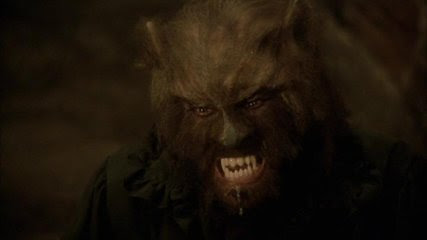
Showing posts with label Paul Naschy. Show all posts

Monday, February 24, 2025

2010 Horror Part Ten

YELLOWBRICKROAD
Dir - Andy Mitten/Jesse Holland
Overall: MEH
 
Though clunky in execution, the debut YellowBrickRoad from the writer/director duo of Andy Mitten and Jesse Holland boasts a bizarre premise that breathes some singular life into the ole "lost in the woods" style horror film.  In 1940, an entire town full of people randomly head into the wilderness after watching a local screening of The Wizard of Oz, most never to be heard from again.  Decades later, a group of curious journalists, a film crew, and some scouts decide to venture the same newly discovered route as the doomed townsfolk did, inevitably running into some nasty psychological torment.  Besides retro music and piercing feedback that seems to be blaring from loudspeakers that no one can see, the characters do not run into much that is unwholesome.  Instead, they begin to fail their own self-imposed mental checkpoints one by one, splintering apart from one another while exhibiting different kinds of wackadoo behavior.  Mitten and Holland's script has the right jumping off point and a disturbing outcome, but there is no overarching theme besides that the woods are dangerous and never trust your hand-written coordinates when you are clearly in the Twilight Zone.  Also, the characters are underwritten despite consistently decent performances, which makes the whole thing difficult to invest in.
 
UNCLE BOONMEE WHO CAN RECALL HIS PAST LIVES
Dir - Apichatpong Weerasethakul
Overall: GREAT

Taking inspiration from the 1983 book A Man Who Can Recall His Past Lives by Buddhist abbot Phra Sripariyattiweti, (who apparently met and interviewed a man that claimed such a thing), Uncle Boonmee Who Can Recall His Past Lives, (Lung Bunmi Raluek Chat), is a contemplative experience, taking low-key filmmaking to a place where spirits, perceptions, and the subconscious all co-exist.  Though it deliberately bounces around, the main narrative is set in modern times and focuses on the last days of its title character; an unassuming farmer who is dying of kidney failure and reflects on both his earlier years and what can happen next as he is visited by a small crop of loved ones.  The fact that some of these family members are either ghosts or ape-like woodland creatures with red eyes is treated matter-of-factly, which goes hand-in-hand with an ethereal and folkloric mood, as well as references to such real world events such as a 1965 communist crackdown.  There is a permeating theme of everything, (either otherworldly or not), sharing real estate with each other, and writer/director Apichatpong Weerasethakul offers up no spoon-feeding for his audience.  Instead, the film plays out slowly and by its own terms, lingering on moments that are both simple and ridiculously strange, yet it all seems warm and inviting instead of challenging, which in and of itself is a rarity for art house cinema.

EMPUSA
Dir - Paul Naschy
Overall: WOOF

The final directorial effort Empusa from Paul Naschy is a nobble yet ultimately embarrassing attempt at rekindling his exploitation glory days on as shoestring of a budget as ever.  Shot in 2007 yet finished by its producer Angel Mora a year after Nashy's death, the Spanish horror icon that loves his monsters as much as he cannot resist putting female characters in his movies that find him irresistible seems to at least be poking fun at himself here.  Nashy was seventy-three when this was filmed, playing a foul-mouth occult writer in a ridiculous jet-black wig and durag who still has the sexual prowess to impress naked flirting females that are young enough to be his granddaughters.  Yet he also jokes about his withered age and throws several deliberately funny lines into the mix, plus someone had the horrendous idea to fill almost every second of screen time with goofy keyboard music.  While the idea of an elderly ladies man squaring off against Ancient Greek vampire babes while wise-cracking with his rotting corpse best friend should be enough to carry things through, the cheap production aspects leave little room for exciting set pieces or flashy cinematography.  Instead, this is painfully boring stuff, only coming alive at irregular intervals and primary being nothing more than actors sitting down and talking to each other, followed by another scene where actors sit down and talk to each other.

Monday, February 10, 2025

1990s Spanish Horror Part Four

IMMORTAL SINS
(1991)
Dir - Hervé Hachuel
Overall: MEH

The second of only two full-length films directed by producer Hervé Hachuel, Immortal Sins, (Veil of Dreams, Vengeance with a Kiss), is a contemporary set throwback, set in a Gothic location and involving a long condemned witch who works her mojo on any men in her accuser's family line.  These kind of formulaic tales write themselves, and Thomas McKelvey Cleaver and Beverly Gray's screenplay has nothing clever to add to a long-established cinematic mythos of unsuspecting city folks moving out into the European countryside only to get besieged by supernatural forces that are beyond their control.  There are some steamy nightmare sex scenes between Not-Wings Hauser Cliff De Young and Shari Shattuck, the latter playing the scheming succubus lady who is posing as an interior decorator because she has to pose as something.  This was one of many B-level productions from Roger Corman's Concorde-New Horizons to be shot overseas and with a local crew, and the "anything to save a buck" approach captures some of the remote Spanish countryside, not to mention the dark, fire-lit castle setting.  The film is atmospherically on point, but the story is a snore and it only comes alive within the last five or so minutes when we get some hearts being ripped out, some monster make-up, and a pool of water erupting into flames.
 
THE NIGHT OF THE EXECUTIONER
(1992)
Dir - Paul Naschy
Overall: MEH

If one wanted to be kind, they can see Paul Naschy's penultimate directorial full-length The Night of the Executioner, (La noche del ejecutor), as a fun action revenge parody, but it is more likely that it is simply a hilariously out-of-touch and ridiculous vanity project from a man who has done far better.  This is Naschy's low-end version of Death Wish, and it is presented in an identical style to his films from a decade and some change earlier, dating it right out of the gate.  Scenes start with zoom-outs, characters sit around talking in boring wide-shots, there is hardly any atmospheric lighting or cinematography, expository dialog is never disguised as anything but, and it has a lackadaisical pace that the early 90s were hardly on about.  Besides an unflinching rape and murder scene in the beginning to get things going, the rest of the action is clumsy and downright embarrassing, with Naschy usually just slowly shooting people instead of coming up with outrageous comeuppance kill scenes.  Playing a rich doctor, Naschy gives himself a humdrum training montage, learns how to throw knives and use guns with pinpoint accuracy in a manner of hours or days, literally walks headfirst right through a goddamn glass window, and picks off the criminals one at a time in order for them to formulate a plan and murder more of his loved ones.  There is plenty of other nonsense like cars exploding from a single gunshot yards away and badly-hung Nazi flags because evil, but if one can withstand how sluggish the majority of it is, there are definitely some things left over to laugh at.
 
KILLER TONGUE
(1996)
Dir - Alberto Sciamma
Overall: WOOF

A loud, aggressive, disgusting, and insufferably obnoxious trash "comedy", Killer Tongue, (La lengua asesina), is the first full-length from music video director Alberto Sciamma, and you can tell.  Edited at a dizzying rate, (coherence be damned), it cruises along like a jackrabbit on a drug-fueled quest towards self destruction.  An alien life form, (or something), crashes into the dingy home of ex-bank robber Melinda Clarke, who is awaiting the release of her lover from the clutches of Robert Englund's "prison" which is just him screaming at a couple of inmates in the middle of the desert where he makes them do torturous amounts of manual labor.  Clarke's body gets overtaken by the killer appendage of the title that turns her into a Goth rock dominatrix and makes her act like she is about to self-combust.  Oh, and the tongue talks, turns her dogs into drag queens, and a nun shows up with supernatural powers while more people scream, piss, fondle each other, and scream some more.  It is such an alarmingly hare-brained mess that its filthy, violent, profanity-ridden, bizarre, and gross-out trajectory has to be intentional.  What audience this dung heap could possibly be for is another question since it goes so hard and so fast in so many wild directions that it seems more like a parody of grimy exploitation movies than one that has any clue as to what makes some of those movies enduring.

Thursday, August 22, 2024

1960s Spanish Horror Part Three

FACE OF TERROR
(1962)
Dir - Isidoro M. Ferry/William J. Hole Jr.
Overall: MEH

A Spanish, "plastic surgery gone amok" horror film done on the cheap, Face of Terror, (La cara del terror), is unique among such movies in that the crop of not-American actors largely dub their own dialog with accents in tow, but it is otherwise a derivative and sluggish bore.  TV director William J. Hole Jr. added some extra scenes for the US release depending on which version you come across, but either one boasts the same lackluster results.  It plays the trope that all women with mental illness must be raving lunatics, but the annoyance of Lisa Gaye's antagonist over people gawking at her or trying to send her back to a crazy house comes off as reasonable.  That is because her extreme level of depression stems from her face being deformed, something which would make anyone unhappy to say the least.  The film detours with musical numbers, police trying to track Gaye down, and the attempts of Fernando Rey's doctor to recover from Gaye's earlier attack on him after he "cures" her unfortunate facial features.  It makes for a boring and talky watch that only mildly springs to life with clumsy set pieces, plus the cinematography is barely competent and the finale is clearly broadcast from the onset.
 
STRANGE VOYAGE
(1964)
Dir - Fernando Fernán Gómez
Overall: MEH

Splashing together some old dark house and hagsploitation motifs under what is primarily a lighthearted black comedy, Strange Voyage, (El extraño viaje), comes from director Fernando Fernán Gómez, who was a beloved Spanish renaissance man in various fields throughout his career.  While the story meanders with several side characters and never lands anywhere interesting, it does provide a melodramatic look into unassuming Spanish life during an era that was undergoing cultural change.  Most of the film focuses on the generational differences emerging during Francoist Spain, where the older townspeople are depicted as suspicious curmudgeons and the younger adults try to find their way out of their small, judgemental village while dancing and falling in love.  It also just so happens to throw in an accidental murder where an old spinster gets bludgeoned by her dim-witted siblings, one of whom is portrayed with schlubby charm by the world's lousiest/most prolific filmmaker Jess Franco.  We eventually get a convoluted explanation that ties some otherwise unrelated arcs together, but the road to get there is poorly paced and lacking in any convincing humor.  It is a shame though that Gómez never embarked on anything in the horror genre proper, since he stages some early scenes in a spacious house at night with suspenseful and spooky confidence.
 
THE MARK OF THE WOLFMAN
(1968)
Dir - Enrique López Eguiluz
Overall: GOOD

While the debut of Paul Nashcy's Waldemar Daninsky's character has some of the usual drawbacks for Euro-horror of the era, (namely sluggish pacing, laughable dubbing, and a hare-brained script), The Mark of the Wolfman is benefited by stylish visuals and of course Nashy's ferocious performance.  This was the actor's first starring role, which he allegedly debating in offering to a far past his prime Lon Chaney Jr before Naschy somewhat reluctantly took it on himself.  Considering that this launched his career as the Spanish Wolfman and easily the country's most stubborn-in-a-good-way proponent of throwback horror cinema, it is crazy to see anyone else in the part.  Director Enrique López Eguiluz helps to create a colorful, Bava-esque tone with vibrant lighting, Gothic locations, fog, and occasionally eerie music which accompanies the transformation scenes wonderfully.  Of course no European genre film would be complete without having been released under a plethora of alternate titles and this one is near the top of such a list with La Marca del Hombre Lobo, Hell Creature, Les Fantomes de Dracula en de Weerwolf, Le Notti di Satana, Hexen des Grauens, Die Vampire des Dr. Dracula, and of course the most misleading, Americanized title of all time in Frankenstein's Bloody Terror.

Wednesday, July 26, 2023

1970s Spanish Horror Part Eight

THE CORRUPTION OF CHRIS MILLER
(1973)
Dir - Juan Antonio Bardem
Overall: GOOD

From a script perspective, Juan Antonio Bardem's The Corruption of Christ Miller, (La corrupción de Chris Miller, Behind the Shutters, Sisters of Corruption), is one of the more complex and nuanced of Spanish giallo-tinged thrillers from the 1970s.  Bardem was not known for genre cinema throughout his career, so it is unsurprising in this respect that he presents Santiago Moncada's script in a manner that is off the beaten path.  Somewhat of a thinking person's Euro-trash, its more open ended attributes actually seem to be there on purpose as opposed to being rushed, unimportant afterthoughts due to budget constraints and minimal shooting schedules.  The opening is particularly odd and noteworthy where a woman wakes up nude, goes downstairs, and orders a mute person dressed as Charlie Chaplin to leave the premises.  When things shift to the troubled mother/stepdaughter dynamic of Jean Seberg and Marisol, (Josefa Flores González), and then a handsome drifter enters the picture, the story takes on a different tone where manipulation, bitterness, and suspicion create some chilling ambiguity.  Several moments have an arthouse flavor, including a nasty murder sequence that cuts out the sound and switches to slow motion for stark, horrific emphasis as well as a strong ending that unconventionally utilizes a montage approach to create almost Hitchcock-worthy tension.  

CREATION OF THE DAMNED
(1974)
Dir - José Ulloa
Overall: MEH

More of an apocalyptic drama than anything exploring science fiction ideas or utilizing horror motifs, co-writer/director José Ulloa's Creation of the Damned, (El refugio del miedo, Refuge of Fear), is too sluggish and flat in its presentation to be of much interest.  This is Ulloa's first credited feature behind the lens, which perhaps partly explains the unengaging pace and sterile look.  Set in a single, boarded up apartment where a group of friends sit through a nuclear fall out that has left the world ravaged by radiation, we certainly feel their monotonous lifestyle where they grow increasingly agitated, desperate, and suspicious of each other as they are left with little else to do beside play pool and have sex with whoever is bored.  As one would expect, the imposed quarantine makes everyone crack in more ways than one and the nihilistic ending sees genre mainstay Patty Shepard defending herself against a guy who is trying to repopulate the human race with her after being convinced that the earth is doomed even though their radio connection to the outside world has informed them that it is in fact finally safe to venture out.  There are the usual low-budget Euro-tropes such as unintentionally funny dialog, inappropriately jovial music, choppy editing, bad dubbing, and of course rape, with a random striptease also thrown in to sleaze it up that much more.

DEMON WITCH CHILD
(1975)
Dir - Amando de Ossorio
Overall: GOOD

One of the more wild and inventive foreign knock-offs of The Exorcist, Demon Witch Child, (La endemoniada, The Possessed), from the Blind Dead series writer/director Amando de Ossorio goes for garish shocks, hilariously profane dialog, and fun, blasphemous creepiness.  The appropriate plagiarism is in place with A) a preteen girl getting possessed, dropping a lot of profanity, and speaking in other people's voices B) people doing experiments on her to see what the hell is the matter, C) her mother being particularly distraught over the whole affair, and D) a priest with some troubled personal drama of his own.  Several elements are missing, namely an actual exorcism and a demonic entity, but here lies some of Ossorio's own clever ideas which differentiate it enough as a silly cash-grab.  Little Marián Salgado, (who actually dubbed Linda Blair in the Spanish release of The Exorcist), looks ridiculous enough in her old crone makeup to actually come off as unsettling and the scenes of the evil coven in all of their grandiose, Satan-praising glory have a fitting mix of gruesomeness and absurdity as the performances crank up the silly even as they are sacrificing live babies.  Euro-horror scream queens Julia Saly and María Kosty are nice additions as well in minor roles, the later as a particularly dramatic women who falls into prostitution because her boyfriend dumped her for the priesthood.  Hey, we've all been there.

Monday, July 24, 2023

1970s Paul Naschy Part Eight

THE CRIMES OF PETIOT
(1972)
Dir - José Luis Madrid
Overall: MEH

The second giallo collaboration between Paul Naschy and co-writer/director José Luis Madrid, The Crimes of Petiot, (Los crímenes de Petiot), is n unrelated follow-up to the duo's Seven Murders for Scotland Yard which was released the previous year.  Essential narrative components are all there, like a black-gloved killer picking off victims while the police try and narrow down suspects, all pointing in various red herring directions along the way before the big reveal of who the murderer is utilizes a traumatic past for his excuse.  This particular story is very loosely/not really at all based on Dr. Marcel Petiot, a French serial killer who was discovered a few years after World War II, though the version here paints a more sympathetic picture driven by unwilling vengeance.  Unfortunately, such psycho analyzing sounds far more interesting than the actual movie which is plagued by a monotonous structure that consists almost entirely of characters sitting in rooms saying variations of "Well maybe YOU'RE the killer" only to be followed by, "Well there can be no doubt, THIS guy is the killer".  Also, virtually one piece of music plays on the soundtrack over and over and over again and it proves obnoxious even before the opening credits are finished.
 
KILMA, QUEEN OF THE JUNGLE
(1974)
Dir - Miguel Iglesias
Overall: MEH

A dopey and bog-standard amazon woman jungle adventure, Kilma, Queen of the Jungle, (La diosa salvaje, The Jungle Goddess), has all of the preposterous elements that you would expect from such silliness.  After a helicopter full of diamonds crashes in the jungle, a young child, (who is the lone survivor), grows up to be a smoking hot, body-hair-shaved, makeup wearing, raven-haired babe with a leopard print bikini on who plays with monkeys and wields a leather whip at any humans that come her way.  Her mother then has dreams about her daughter still being alive as a female Tarzan, her complaining husband with dubious, alternate intentions stages an expedition to find her, the mother is never seen again, a dashing hero guy falls in love with Kilma, other greedy assholes show up, primitive natives are there to keep the cultural insensitivity in check, etc.  It is more harmlessly silly than actually fun, with regular monotonous intervals that slog the pace along which are only occasionally broken up by the dated goofiness of the presentation.  For his part as the aforementioned shady husband, Paul Naschy gets plenty of screen time and makes his inevitable villain reveal convincing enough even under the typically atrocious English dubbing.  Otherwise though, this is definitely to be missed.

THE PEOPLE WHO OWN THE DARK
(1976)
Dir - León Klimovsky
Overall: GOOD
 
A post-apocalyptic movie from director León Klimovsky, The People Who Own the Dark, (Último deseo), has a number of familiar faces present to liven up what is essentially a dour production.  Nadiuska, Alberto de Mendoza, Julia Saly, Antonio Mayans, and of course Paul Naschy had all made their names to some degree at least in other genre movies from the era, yet this particular film is of a different breed from straight, low-budget Euro-sleaze and unabashed Gothic horror.  A handful of wealthy, borderline unlikable people throw a tasteless party at a remote mansion where prostitutes are invited to perform in strange, occult ceremonies for a gag, all of which sets things up to be some soft of sadistic captive story.  This is ultimately not the case though as an extreme shift happens in the plot which turns it into a survivor-style hold up where said crop of characters fend off against a town full of newly blinded commoners once a nuclear war breaks out.  As one could guess, the millionaire's back-stabbing, "every man for themselves" nature quickly dominates while others simply lose their marbles in the chaos of it all.  It all culminates in a tense, cynical finale that nevertheless serves as a highlight, leaving things off on a bleak series of images that is more memorable than what is usually allowed. 

Sunday, July 23, 2023

1970s Paul Naschy Part Seven

THE FURY OF THE WOLFMAN
(1970)
Dir - Jose Maria Zabalza
Overall: WOOF
 
Easily the worst in Paul Naschy's Waldemar Daninsky series until Fred Olen Ray took an embarrassing crack at it over thirty years later, The Fury of the Wolfman, (La Furia del Hombre Lobo, Wolfman Never Sleeps), is a botched effort solely due to its trainwreck production.  The initial director was to be Enrique Lopez Eguiluz, a friend of Naschy's who was then replaced by José María Zabalza, a veteran in Spanish cinema that was allegedly drunk and volatile during the shooting.  Coming in too short for proper theatrical release, additional, "out for a stroll" werewolf scenes were shot with a stand-in, footage was then recycled from two earlier Naschy Daninsky films, and further distribution problems resulted in numerous cuts of the movie which did not get circulated until several years after everything wrapped.  As one could surmise, the result is virtually incomprehensible with plot points that are both rushed and boringly drawn out, random stock music thrown in anywhere, and abrupt editing that gives it a lazily slapdash feel throughout.  Certain moments are unintentionally hysterical like an early, sloppy dream sequence where a Hindi man says "Pentagram" over and over again and a later scene where Naschy in full lycanthropian garb casually gets into a screaming woman's bed for a few seconds, only to then get up and leave with her laying there unattacked and still screaming.

DEATH OF A HOODLUM
(1975)
Dir - León Klimovsky
Overall: MEH
 
The last collaboration between director León Klimovsky and Paul Naschy was the crime drama Death of a Hoodlum, (Muerte de un quinqui), one of a handful of lesser known works during the actor's 1970s heyday to never receive an English dub or US release.  Not that fans on the other side of the Atlantic were particularly missing out as this is hardly a memorable effort for all parties involved.  Naschy penned the screenplay as he was wont to do, this time writing that he successfully seduces a mother and daughter under the same roof.  At least this time the women on screen do not find him irresistible from the moment they lay eyes on him, but it still provides the movie with one of Naschy's most steadfast and silly tropes.  Elsewhere, this is dull stuff that is similar in some respects to the 1973 giallo Blue Eyes of the Broken Doll which also found Naschy's unwholesome character looking for work, holding up in an isolated house, and banging more than one woman in a family.  Klimovsky's direction is entirely flat though, with no stylistic choices whatsoever besides the same piece of horrible music showing up several dozen times to give it the wrong, romantic tone at random intervals.  Naschy's character has some disturbing trauma involving his parents which cause him to occasionally lose his cool, call women sluts and bitches, and resort to violence, but besides that, it is a snore.

THE FRENCHMAN'S GARDEN
(1978)
Dir - Paul Naschy
Overall: GOOD

During the late 70s, Paul Naschy was stepping away from his nostalgic, Gothic horror reworkings to prioritize more boundary pushing and challenging works, turning "The Frenchman's Garden Murders" of 1904 into an incredibly stark, understated film whose tone was miles away from the Spanish Wolfman's norm.  Though he appears in the lead, Naschy omitted his name from all promotional materials as to not mislead audiences into thinking that this was akin to the movies that he was known for, though the result is one of the most personally sincere in his filmography.  The Frenchman's Garden, (El huerto del Francés), primarily focuses on the sin of pride and how if left unchecked, can lead to a series of misfortunes at the expense of others.  As the brothel owner Juan Andrés Aldije 'El Francés', the character's selfish need to sleep with as many women as he wishes, murder as many wealthy passers-by as he wishes, and all with the explicit excuse to prove himself worthy of his wife's disapproving parents, sets him up as a severely flawed man.  Naschy's performance is wonderfully nuanced though.  He rarely comes across as the on-paper brute that he is, routinely seeming concerned and compassionate towards those around him, even if it is ultimately a cold affront to the deep seeded darkness within, (a darkness that is literally shown in a few sequences through some lighting maneuvers).  The entire film which deals explicitly with abortion, murder, adultery, and even homosexuality is played virtually exploitation-less, showcasing a bold move for Spanish cinema in general of the era which was only a few years removed from the Francoist Period.

Saturday, July 22, 2023

1970s Paul Naschy Part Six

LA NOCHE DE WALPURGIS
(1971)
Dir - León Klimovsky
Overall: GOOD
 
The fourth in the Waldemar Daninsky series of wolfman films to be released, La Noche de Walpurgis, (Die Nacht der Vampire, The Werewolf vs. the Vampire Woman, Shadow of the Werewolf, Werewolf's Shadow, Le messe nere della contessa Dracula, La Furie des Vampires, Le Nuit des Loup Garous, Blood Moon), is quite the memorable one, going as far as to be remade a decade later as El Retorno del Hombre Lobo.  After the previous Fury of the Wolfman which was a heavily botched production, Paul Nashcy concocted another pair-up that was akin to 1969's Los Monstruos del Terror.  The story here is much more streamlined than the aforementioned, ridiculous monster mash where Waldemar lazily survives what appear to be the events of the previous year's Fury, only to have a completely different cover as an author living in an isolated castle with his deranged sister.  Also, a vampire lady gets resurrected after some blood is accidentally spilled on her corpse.  As the first of eight films that Naschy would make with director León Klimovsky, several of the familiar motifs are adhered to with women falling effortlessly in love with Nashy's character, him only finding peace if murdered by said love interest, spooky, slow motion sequences and music, plua cheap yet effective gore and makeup effects.

THE KILLER IS ONE OF 13
(1973)
Dir - Javier Aguirre
Overall: WOOF
 
An exasperatingly dull Agatha Christie-styled giallo, The Killer Is One of 13, (El asesino está entre los trece), cannot gather nearly enough gusto out of its ensemble cast and murder mystery plot.  As one could guess, thirteen people, (plus some handymen and women which includes Paul Naschy in about seventeen seconds of screen time), hold up at a single location in a remote, spacious house where their host accuses one of them as the murder of her husband some years back.  While this is set up early enough in a long, increasingly boring dinner sequence, the rest of the movie regrettably continues on in such a trajectory.  With only the most minimal of exceptions including some very mild, nudity-less sex scenes and a few blink and you'll miss them murder sequences, (the first of which does not occur until over an hour in), the entire movie is made up of characters sitting or standing in rooms and talking with each other.  Sometimes they argue, sometimes they crack jokes, and usually they repeat the same mind-numbingly mundane information about not trusting so and so, being mad at another so and so, wanting to leave, etc.  It is impressive in one capacity that such a lackluster story was green-lit in the first place, but sitting through it is a chore that only the most dedicated gluttons of snore-inducing Euro trash can endure.

THE TRAVELER
(1979)
Dir - Paul Naschy
Overall: GOOD

For his forth time in the directorial seat, supplying the screenplay along with Eduarda Targioni, and appearing as the title character, Paul Naschy's The Traveler, (El caminante, The Devil Incarnate), is one of his more amusingly diabolical ventures.  The blasphemous premise of the Devil getting bored and deciding to live as a man ala Jesus for awhile gives way to both an endless and monotonous stream of wickedness where Naschy murders, steals, betrays, and impregnates anyone who will put a little more gold in his pockets or provide him with leisurely accommodations.   It has an odd, humorous tone for a Naschy movie though.  The sinful mischief includes piss drinking, fart jokes, and man rape, all of which is presented with gleeful, tongue-in-cheek, and hedonistic relish.  Not that one can take this seriously as a "message" movie, but the cynical theme of mankind being inherently selfish and evil is on the nose, while also not being heavy-handed.  Instead, it is presented in a fun and mockingly whimsical manner that makes the whole thing's boundary-pushing exploitativeness more goofy than sleazy.

Saturday, November 19, 2022

2000s Paul Naschy

TOMB OF THE WEREWOLF
(2003)
Dir - Fred Olen Ray
Overall: WOOF

Shot during the same week as Countess Dracula's Orgy of Blood and released the following year, Tomb of the Werewolf, (The Unliving), is the final entry in Paul Nashcy's Count Waldemar Daninsky series.  The fact that the Spanish horror icon got to play his most famous character one last time while pushing seventy years old is a wonderful thing in spirit, yet unfortunately the resulting film is a piece of absolute shit.  Writer/director/schlock peddler Fred Olen Ray is basically only tolerable when he is delivering his own brand of exploitative tongue-in-cheek comedy, so his attempt at atmospheric Gothic horror with worse production values and acting than most pornography is just headscratchingly embarrassing.  Speaking of porn, this is of the softcore variety with an exclusive cast made up of mimbos and naked women, save for both Hollywood Chainsaw Hooker's Jay Richardson who mostly just smirks and of course Naschy who only speaks a couple lines of phonetic English.  On the positive side, the makeup is actually decent and Naschy still has an impressive ferociousness when under the wolfman garb.  Elsewhere though, it is a typical "shot on digital video" crapfest that fairly belongs on anyone's "bad movie night" list.

ROTTWEILER
(2004)
Dir - Brian Yuzna
Overall: MEH
 
Following up Beyond Re-Animator with another low budget Spanish production, Brian Yuzna hits a creative wall with the painfully not good Rottweiler.  The concept of a cybernetic K9 hunting down an escaped prisoner is nothing to take seriously of course, but the tone here goes for riveting, B-movie action that fails to jive with incredibly lousy dialog, unfocused plotting, shit dubbing, and an underwritten story loaded with unintentional humor and schlocky cliches.  Yuzna's attempts at visual and conceptual edginess are pretty far removed from his earlier, wackier work as well.  Poor little Ivana Baquero for instance sees a stark naked guy, her mom having sex with him, her dog mutilated, and her then mom viciously murdered right in front of her all within a handful of minutes.  As opposed to the absurd yuckfest Society which was actually intelligently crafted, or even the unwatchably terrible yet gleefully over the top Faust: Love of the Damned, this is just an unremarkable, not even minimally interesting dud.  Paul Naschy plays a mysterious bad guy for a couple of seconds though so at least he made some money.

A WEREWOLF IN THE AMAZON
(2005)
Dir - Ivan Cardoso
Overall: MEH

Nearing the end of his performing career, Paul Naschy got to check one last iconic horror character off from his list of many, this time playing none other than Dr. Moreau in A Werewolf in the Amazon, (Um Lobisomem na Amazônia), a barely sequel to H.G.Welles' source material.  It would be unfair to expect anything that profoundly examines "man playing god" themes within the bottom-barrel, purposely goofy presentation here from Brazilian filmmaker Ivan Cardoso.  A comedy/horror hybrid that even randomly detours into musical terrain for a single scene, there are topless Amazon women, sex scenes that fade to black as soon as they begin, about four sets to shoot on, day for night scenes via obvious digital manipulation, no animal makeup for any of Moreau's monstrous creations, and every single dialog dump is littered with nothing but exposition.  In many ways this fits right at home with much of Naschy's low-budget work, though it is a plus that the sleaze factor is played exclusively for campy chuckles this time.  The tone is quite appropriate for the moronic material and Naschy actually seems to be enjoying himself as the one-note villain, giving his scant few werewolf appearances a sufficient jolt to go out on.  A better movie overall certainly would have been preferable to hang his lycanthropian hat on once and for all, but this is harmless silliness that is at least watchable for fans that are hip to its existence.

Tuesday, September 20, 2022

1990s Spanish Horror Part One

THE DAY OF THE BEAST

(1995)
Dir - Álex de la Iglesia
Overall: GREAT

The second full-length The Day of the Beast, (El día de la bestia), from Spanish filmmaker Álex de la Iglesia is renowned by many of his peers as a game-changing horror movie that helped to revitalize the genre in its native Spain.  Iglesia's penchant for dark comedy jives perfectly with the end of days scenario where a possibly delusional, unassuming priest is hell-bent on a quest to sell his soul to Satan so he can find out where the Antichrist will be born in order to destroy it.  Along the way, several other likeable, eccentric characters come into the picture including but not limited to a goofy metalhead, a violence-prone mother who is handy with a shotgun, a drug-fried grandpa who refuses to put on clothes, and a charlatan, occult expert TV personality.  The wonderfully committed performances help keep things moving in Iglesia and frequent collaborator Jorge Guerricaechevarría's ridiculous yet inventive script where the next hilarious moment gets that much more strange and diabolical all at once.  This is also one of the first Spanish films to use digital effects and though they are rather poor from a technical standpoint, everything else going on is so relentlessly entertaining and clever that any perceivable flaws can quickly be forgiven.

LICÀNTROPO
(1996)
Dir - Francisco Rodríguez Gordillo
Overall: MEH
 
Five years after suffering a rather serious heart attack, Paul Naschy staged what would be a failed comeback with Licántropo, (Lycantropus: The Moonlight Murders, Lycantropus: The Full Moon Killer), the eleventh entry in the Waldemar Daninsky series and first since 1983's The Beast and the Magic Sword.  Elements of the film seem right out of the Spanish Wolfman's 70s output, namely the flat direction and piles of exposition.  The problem is that both of these "qualities" are exactly what undoes the final result as the movie is alarmingly talky, almost completely absent on gore, actually absent on sex appeal, and incredibly boring.  Worse yet, it throws in a pathetic slasher sub-plot and Naschy only appears in werewolf makeup for what amounts to less than a minute of screen time.  The makeup itself is far more toned down and therefor light years less impressive than what his previous portrayals were known for, plus the once exuberant actor is noticeably older and clearly struggling to muster any enthusiasm in his performance.  There are some halfway passable attempts at creating a suspenseful atmosphere with the flat material, but this is still quite a slog.

THE NAMELESS
(1999)
Dir - Juame Balagueró
Overall: MEH

The full-length debut from Spanish filmmaker Juame Balagueró has a strong emphasis on cliched mood aesthetics and plot details, but the half-baked script undoes things much further.  An adaptation of Ramsey Campbell's 1981 novel The Nameless, it has a sinister, thriller-style premise of an emotionally traumatized mother, an ex cop, and a curious newspaper reporter investigating an evil, clandestine cult, but the end result is more unnecessarily cryptic than frightening.  Some of the cast does solid work with the underwhelming dialog, but a few of the performances are rather difficult to sake seriously in their scenery-chewing creepiness.  Writer/director Balagueró relies far too much on lazily manipulative music and quick, static cuts of grainy, disturbed imagery to give the film a differentiating style, becoming underwhelming in the process.  Things grow increasingly convoluted as it frustratingly reaches its schlocky, melodramatic climax and again, if the presentation was more effectively menacing to match the deadly sincere intentions, then this may have packed more of a punch instead of a whimper.

Wednesday, June 23, 2021

1980s Paul Naschy Part Two

THE BEASTS' CARNIVAL
(1980)
Dir - Paul Naschy
Overall: MEH

A year after serving as producer only for the Japanese film Amor Blanco, (Howaito rabu), Paul Naschy's first proper co-production between that country and his native Spain was the giallo-adjacent The Beasts' Carnival, (El carnaval de las bestias, Human Beasts).  The movie wastes little time, beginning as if they forgot to put the first hour in beforehand.  This in and of itself is a nice change of pace from Naschy's usual insistence on loading the first act up with endless expository dialog exchanges.  The inclusion of an off-screen killer, the semi-rock based theme song, close-ups of eyes, and horny, back-stabbing nature of the characters give it a number of stylistically giallo flourishes.  A few nightmare sequences and the rather nasty ending bring it closer to pure horror territory and the film is quite pessimistic in its overall depiction of human beings.  Clear illusions are drawn between pigs who are bred to be slaughtered and humans who behave in a swine-like fashion.  This is most clear during a comedically grotesque banquet sequence near the end, where house guests dressed in costumes drunkenly gorge themselves.  Though many of the ingredients make for a bizarre finished product, Naschy's pacing is rather dreadful and it ultimately indulges too little in its quirky qualities to keep the viewer steadily engaged.

THE BEAST AND THE MAGIC SWORD
(1983)
Dir - Paul Naschy
Overall: GOOD

The ninth or tenth entry in Paul Naschy's long-running Waldemar Daninsky series and the only one to be a co-production between his native Spain and Japan is The Beast and the Magic Sword, (La Bestia y la Espada Magica).  The dual setting makes it unique as the film begins with a hefty prologue before switching to 16th century Europe and then Japan, where once again Daninsky is desperate for a cure from his lycanthropian curse and seeks out an alleged specialist there.  Never dubbed into English, the film is also rather singular for featuring a slew of Japanese actors dubbed in Spanish.  Despite the Eastern locale, the story is interchangeable with most of the other Daninsky entries and for better or worse, it treats the viewer as if they are coming in completely new to the formula.  It takes nearly thirty minutes to get to any proper werewolf action and as is usually the case, the running time is heavily padded with characters sitting around explaining the same things over and over again, things that most of the audience are already well aware of since we know how these movies work.  Still, it makes excellent, atmospheric use of the period setting, plus ninja battles and probably the only werewolf vs tiger fight in cinema history are both welcome additions to Nashy's usual blood-soaked, hairy carnage.
 
HOWL OF THE DEVIL
(1987)
Dir - Paul Naschy
Overall: MEH

Though it was never theatrically released and still lingers in comparative obscurity amongst the majority of Paul Naschy's major works that have become readily available, Howl of the Devil, (El aullido del diablo), is a fascinating vanity project.  Written, directed, and staring Naschy in the most roles ever in his career, it was made after the collapse of his production company Aconito Films and the death of his father, both events putting the Spanish Wolfman on hiatus for a number of years.  Meant as a no-holds-barred return to the horror genre most beloved by him, Howl of the Devil has an "everything but the kitchen sink" feel to it and is an unmistakable mess in the process.  Also staring Caroline Munro, Howard Vernon, and Nashy's son Sergio Molina, it is at once a bonafide love letter to classic Hollywood monsters as nearly all of his horror films were, but it also tries to be a contemporary slasher movie.  Even by Paul Naschy standards, the plotting is so atrocious that it becomes surreal.  With almost no exceptions, every speaking character delivers the exact same lines between each other in every scene and never before was Naschy's bitterness pushed further to the forefront.  All women at all times are considered life-ruining whores and as a quasi-biographical story where he plays two identical thespian brothers, (one who does horror movies, the other proper theater), with both of them misunderstood losers, it is as nihilistic of a project as the man would ever get made.

Monday, June 21, 2021

1980s Paul Naschy Part One

EL RETORNO DEL HOMBRE LOBO
(1980)
Dir - Paul Naschy
Overall: GOOD
 
A strong contender for the most quintessential and all-around best werewolf movie Paul Naschy ever made, El Retorno del Hombre Lobo, (The Return of the Wolf Man, The Craving, Night of the Werewolf), has many attributes coming together in the film's favor.  Most prominently of all is the production itself.  Cinematographer Alejandro Ulloa's photography is top-notch, endlessly drenching most frames in eerie, Gothic atmosphere.  The visual excellence is not limited to the camerawork though as Naschy's Waldemar Daninsky's werewolf makeup easily sets the benchmark not just for his many lycanthropian screen appearances, but wolfman movies in general.  Though many entries in the Daninsky series boasted numerous similarities between them, this is the only one that can be seen as a proper remake, updating 1971's La Noche de Walpurgis with the larger budget and a more classy, polished presentation.  Unfortunately, the pacing drags even as certain plot points are glossed over, which is also common with Nashy's works.  Still, this is undeniably a high, creative watermark for the Spanish wolfman and probably the last approaching-great film he would ever make.
 
MYSTERY ON MONSTER ISLAND
(1981)
Dir - Juan Piquer Simón
Overall: WOOF

Spanish schlock-master Juan Piquer Simón's Mystery on Monster Island, (Misterio en la isla de los monstruos), is a sort-of adaption of Jules Verne's Godfrey Morgan: A Californian Mystery.  A co-production between the US and Spain, it barely features Terence Stamp, Peter Cushing, and Paul Naschy within the first five minutes and is an unabashedly goofy adventure film with hilariously bad rubber suit monsters in place of terribly unfunny intended comedy.  Much of the latter problem falls on the shoulders of David Hatton, who plays a tortuously grating, bumbling professor who falls down and screams like a child in all of his scenes and is in a predominant amount of them.  Then they get a pet monkey and a savage, he tries to teach them proper etiquette, he screams at everything a whole lot more, and it is all about as endurable as you could imagine.  As they all get perpetually besieged by monsters and never run out of bullets until the plot tells them to, (bullets which never harm anything anyway), the film reuses about three pieces of stock music over and over again, occasionally at randomly inappropriate times.  At over an hour and forty minutes, the movie absolutely feels its length that is for sure.

PANIC BEATS
(1983)
Dir - Paul Naschy
Overall: MEH

A quasi-sequel of sorts to 1972's Horror Rises from the Tomb in that it features the same medieval warlock Alaric de Marnac, Paul Naschy took to the director chair this round with Panic Beats, (Latidos de Pánico).  In some ways it can be seen as almost a parody of Naschy films.  This time, three different women are either madly in love with him or pretending to be and the topsy-turvy, backstabbing adultery going on reaches comical levels.  Thankfully it all results in fun, gruesome comeuppance set pieces even though no gore is shown until a full hour and fifteen minutes in.  Naschy's knack for macabre visuals is limited in quantity here though high in quality, especially in the very Tales from the Crypt-esque ending.  The plot is pure nonsense, which is not uncommon in many of the man's works.  Lines like "We're both evil but I'm more evil than you, idiot!" will unmistakably garnish laughter, but the film itself is played both seriously and melodramatically.  It has the usual, silly Euro-horror charm in this respect, just less than would be preferable as most of the screen time is dedicated to endless expository dialog and characters complaining about not being able to wait to kill whoever they are married to in order to get all their inheritance.

Saturday, February 23, 2019

1970s Paul Naschy Part Five

EL JORABADO DE LA MORGUE
(1972)
Dir - Javier Aguirre
Overall: MEH

While it is true that Paul Naschy was rarely better as an actor than he was as the deformed, simpleton title character Gotho in El Jorabado de la Morgue, (The Hunchback of the Morgue, The Rue Morgue Massacres), Naschy's own script for the film in all honesty is exasperatingly stupid.  Particularly, the movies that Naschy himself wrote, (this one included), always hilariously have women falling head over heels in love with him, but the excuse he makes here is more bananas than usual.  Speaking of bananas, the mad Dr. Orla is comically narcissistic and goes from a normal scientist to one that makes excited speeches about how wonderful his creation is with zero concern for how many people he consistently convinces Nashy's hunchback to murder.  Those who help him with all of this nonsense come off even more dumb.  If you are already planning on turning the guy in to the authorities and are practically positive that he has either kidnapped or murdered your fiance, why would you go to his lair unarmed and confront him before calling the police?  It is certainly amusing to watch all of this play out and the film is plenty gory.  It even manages to throw in a torture chamber, a totally unexplained zombie for one scene, and an oozy goo monster.  Very peculiarly, the editing is virtually void of any establishing shots and as it goes along, the movie seems to be in a frantic hurry to be over with.  At least you cannot complain that the pacing drags then.

EL MARSHALL DEL INFERNO
(1974)
Dir - León Klimovsky
Overall: MEH

Based rather vaguely off the Baron Gilles de Rais of France, (who fought alongside Joan of Arc and then far less respectably died as a confessed child murderer, oops), El Marshall del Inferno is far more a historical action film than horror and not much better off because of it.  Translated to The Marshall from Hell and released internationally as The Devil's Possessed as well as Satan Possessed in Argentina, Naschy teams up once again with his frequent collaborator León Klimovsky, but the result does not generate much interest for anyone outside of the steadfast Naschy fan.  There are a few scenes of diabolical rituals and torture, but Naschy's character from the get-go is rather lazily duped by his conniving wife and her alchemist who far too easily trick him into spending years murdering innocent villagers, former allies, and then sacrificing their daughters to the point of a revolt that does him in.  Because Naschy's Barron is too pathetic and underwritten, he is never given any proper depth as to why he goes so insane.  Even after he finds out that he is being played for a sucker, the movie still goes on for twenty more minutes with him acting just as horribly to everyone.  Lots of screen time is dedicated to Guillermo Bredeston being a dashing hero rallying the townsfolk and it is just as lackluster to sit through as everything else.

EXORCISMO
(1975)
Dir - Juan Bosch
Overall: GOOD

Though it remains unconfirmed whether or not Paul Naschy did indeed pen the script for Exorcismo before The Exorcist was released as the actor always proclaimed, in either respect it is impossible not to compare it to the most famous horror movie ever made and in effect see it as the Spanish "answer" to it.  If it was simply a coincidence, (or if in fact Naschy had caught wind of William Peter Blatty's novel for inspiration himself), it is a pretty remarkable one.  There are plenty of details that are quite different though, such as but not limited to the girl possessed being much older than twelve-year old Linda Blair, the serial killer subplot, scenes of hippies conducting nude Satanic masses, and Naschy's Father Dunning is a much stronger-willed, straight good priest to Jason Miller's conflicted Father Damien Karras.  In any event, this is one of Naschy's better scripts by a mile and it successfully transcends being an exploitative knock-off.  The concept of an upper-class young woman succumbing to possession after her father suffered mental illness and then falling into drugged-out occultists, (with a perverted house servant, overbearing brother, and an over-dotting mother not particularly of any help), is plenty layered.  Director Juan Bosch never once lets the film stride anywhere near camp, keeping the music and tone perfectly in unsettling check.  The only complaint really is the somewhat ho-hum finale, but it is solid enough up until then to still warrant it as one of Nashy's all around better movies.

Thursday, February 21, 2019

1970s Paul Naschy Part Four

SEVEN MURDERS FOR SCOTLAND YARD
(1971)
Dir - José Luis Madrid
Overall: MEH

Paul Naschy's first giallo Seven Murders for Scotland Yard, (Jack el destripador de Londres, Jack the Ripper of London), is a pretty dull one.  A number of screenwriters were credited including Nashcy and director José Luis Madrid, (who the actor would go on to make The Crimes of Petiot with next).  While the script appropriately keeps you guessing as long as possible and only shows the killers feet or hands as is typical, it is still a pretty "eh, whatever" reveal.  Most of the problem lies with Madrid's direction which is severely lacking in the proper gusto that Italian giallos were usually ripe with.  None of the murder scenes are remotely exciting and when it becomes crystal clear that every woman we see on camera is eventually going to get a knife stuck in their stomach, (usually within seconds of introducing them), it does not do much to keep the viewer invested.  Naschy for his part is rather wasted, spending the whole movie limping around and looking like either a sad or angry puppy, depending.  Worse yet, there is only one piece of music that is played in nearly every single scene and it grows increasingly obnoxious to hear the same funky bass line and hi-hat groove over and over again, despite what one may think.

LA MALDICION DE LA BESTIA
(1975)
Dir - Miguel Iglesias Bonns
Overall: GOOD

The eighth Waldemar Daninsky go-round for Paul Naschy was in La Maldicion de la Bestia, (The Curse of the Beast, Night of the Howling Beast, The Werewolf and the Yeti, Hall of the Mountain King), the last to be released in the 1970s.  The gimmick here was to switch the location to Tibet and have a wolfman fight a yeti, (though he was also bitten by one in the debacle Fury of the Woflman earlier in the decade).  This as well as a few other fresh ingredients such as a Daninsky getting transformed by two vampire women biting him, (?!?), Tibetan pirates, a sadistic witch, and a cure for lycanthropy involving a red flower and blood or something that actually works all heighten it a bit over others in the series which essentially recycled the same plot ad nauseam.  The nudity and gore are as on point as any other of Nashy's films and one particularly gruesome scene sees a woman getting her back flayed alive.  Most surprising of all though is how comparatively tight Nashy's own screenplay is.  It is still quite rudimentary, but despite the yeti being rather shoehorned in there and the almost fairytale-worthy, convenient ending, it follows a pretty coherent thread and the slew of nasty villains and wacky details typical of a Naschy film all help it transcend most of the actor's other fun yet still flawed works.

INQUISITION
(1976)
Dir - Paul Naschy
Overall: GOOD

For his directorial debut, Paul Naschy chose the much frequented witch trials of Europe as subject matter.  Though it takes place in a historically accurate setting, (16th century France), Inquisition is not based off of any specific events.  It may as well be as it hits the same beats as many, many other films of its kind that also dramatize that long, dark period where any and everyone could be tried and executed as having a pact with the Dark One and hundreds upon hundreds of people where indeed put to death over such nonsense.  As always, the "divine" acts of the church and Nashy's witchfinder are depicted brutally and despicably.  In this respect, one cannot say that the film does not deliver when it comes to horrific scenes of torture.  Whereas it is usually common for no satanic tomfoolery to be happening at all in these movies and they just act as horror via extreme religious paranoia, Inquisition actually has some fantastic scenes of sabbaths full of naked people, blood drinking, and Naschy himself as Satan equipped with a goat mask, red eyes, and horns while sitting at a huge banquet table, foreseeing his evil orgy.  What really elevates the movie though is Naschy's very strong, low-key performance and by incorporating actual supernatural elements and playing them seriously, it shows such real life events in a more fantastical way, making it far more interesting than just another incredibly depressing, witch-murdering movie.

Tuesday, February 19, 2019

1970s Paul Naschy Part Three

LOS MONSTRUOS DEL TERROR
(1970)
Dir - Hugo Fregonese/Tulio Demicheli
Overall: MEH

What could fairly be described as Paul Naschy's all time silliest movie, Los Monstruos del Terror, (Dracula vs. Frankenstein, Reincarnator, Assignment Terror), must have been a euphoric experience for the actor who got to write and star in a Spanish version of all of his favorite Universal monster mash-ups.  While Naschy plays his trusty werewolf Waldemar Daninsky for the third, (though second to be released), time, he is joined by one of the lamest Draculas, a mummy, and a Frankenstein monster and also gets to personally duke it out with the latter of the two.  Naschy's part is comparatively small as is the budget which was originally to include more sci-fi elements as well as a golem.  This leaves most of the running time to none other than Michael Rennie, (Klaatu from The Day the Earth Stood Still),  playing Dr. Odo Warnoff who was sent to earth with several other of his alien cohorts.  The story is beyond laughable and involves an alien takeover by means of first using a bunch of pretty girls because human men are dumb, (or something), and then resurrecting as many classic movie monsters as they can to make clones of, (or something), to repopulate the Earth, (or something).  The fact that the cast takes it all rather seriously is actually kind of a bummer since the plot is so absurd that everyone going full schlock would have probably helped.  When characters are not standing around and being boring, it is agreeably fun, but boy is it stupid.

THE HANGING WOMAN
(1973)
Dir - José Luis Merino
Overall: GOOD

In typical Euro-horror fashion, The Hanging Woman got released under enough titles to ensure proper confusion, including La orgía de los muertos, (Orgy of the Dead, not to be further confused with the embarassingly stupid, Ed Wood scripted "film" of the same name), as well as Beyond the Living Dead, Return of the Zombies, and Terror of the Living Dead.  Paul Naschy for this one is reduced to a supporting yet equally memorable role as a cemetery caretaker with a low IQ.  The main story is ripe with silly plot holes, laughably written characters, and even a Saw-worthy twist montage at the end that is better than one would expect.  Director José Luis Merino, (who also co-scripted the movie with Enrico Colombo), keeps the pace quite brisk and wonderfully stages enough actually spooky visuals and set pieces throughout to qualify it as successfully macabre and eerie.  Enhancing some of the strangeness, the "hero" is a preposterous jackass who is quick to violence and shouting.  In the span of about twelve hours, he goes from boning his uncle's widow, (who is also a witch), to making a servant girl cry by having her undress in front of him, to proclaiming that he intends to propose to the latter since now they are in love.  Creepy zombies, black magic, and graveyards though so, yay!

CRIMSON
(1976)
Dir - Juan Fortuny
Overall: MEH

Essentially a rather poor, contemporary gangster film with a mad scientist scheme rather haphazardly thrown in, Crimson, (Las Ratas no Duermen de Noche, Rats Don't Sleep at Night, Crimson, the Color of Blood), is as unmemorable as any of Paul Naschy's non-supernatural horror movies ever got.  The actor is wasted throughout, only given a very little bit to do within the last several minutes.  Before that, he is left unconscious in various locations while criminals and ladies from rival gangs fuss over him and each other.  There are other nods to some of James Cagney's well-renowned gangster films, (White Heat particularly comes to mind), and one cannot help but think of Quintin Tarantino possibly making something interesting out of the plot here where a handful of goofy, somewhat morbid details occur and pretty much all the bad guys end up dead, (spoilers).  Director Juan Fortuny, (in his only time working with Naschy), cannot muster enough laughs or any suspense out of the proceedings though as everyone plays it too stiff and dull, plus the back and forth plot just lumbers along to its inevitable conclusion.  For the Naschy completest, there are two dubbed versions with the French one offering up a minimal amount of extra nudity, but otherwise you get the same idea with the English dub as well.