Showing posts with label Peter Cushing. Show all posts

Wednesday, October 29, 2025

Hammer House of Horror Part Two

THE HOUSE THAT BLED TO DEATH
(1980)
Dir - Tom Clegg
Overall: MEH
 
One of many supernatural tales that takes its inspiration from The Amityville Horror, "The House That Bled to Death" is one of the few that touches upon the hoax aspect of the actual case, one that was perpetrated and embellished by author Jay Anson and proven hucksters Ed and Lorraine Warren.  While this gives the Hammer House of Horror segment a differentiating quality from just anther haunted house yarn, David Lloyd's script easily falls apart under even the most minute scrutiny.  It is a disappointing twist in any respect, revealing icky people doing icky things and traumatizing their own child in the process.  If one can forgive the narrative shortcomings, lack of likeable characters, and stock nature of the material, there are a few fiendish set pieces to enjoy, namely a birthday part that goes straight to hell via bloody water pipes.

CHARLIE BOY
(1980)
Dir - Robert Young
Overall: MEH
 
Five years after Dan Curtis' seminal Trilogy of Terror found Karen Black fending for her life against a cartoonishly creepy Zuni fetish doll, the Hammer House of Horror installment "Charlie Boy" presents yet another small screen foray into an African idol on the loose.  This one pulls off more of a drawn-out string of unfortunate events instead of just going full tiny slasher mode.  Leigh Lawson gets his hand on said mystical antique which as it turns out is possessed by a no-good sorcerer, and in a fit of rage against some people who he felt wronged him, he stabs the thing, the thing bleeds, and one-by-one people start getting picked off by elaborate means.  The plot follows a framework that is easy to foretell and there are odd musical choices made along the way that disastrously dilute any sense of proper atmosphere, but both the aforementioned doll and the basic premise are unsettling, plus the death sequences have some ghastly charm to them.
 
THE SILENT SCREAM
(1980)
Dir - Alan Gibson
Overall: GOOD
 
Notable for being the last Hammer production that Peter Cushing would ever appear in, "The Silent Scream" is one of the more ghastly entries in the Hammer House of Horror program.  Cushing of course is wonderful and ideally cast as an elderly pet shop owner that is not entirely what he seems, even when we are shown that he likes to keep a collection of exotic pets surrounded by electric gates.  A spry Brian Cox is also on board as a recently released petty criminal, and Francis Essex' script takes some foreseeable turns that nevertheless remain intentionally unpleasant.  It is a torture porn precursor of sorts, but it is done in a non-graphic, television friendly manner that pulls off a nifty trick of having an ending where justice is served yet everybody still loses and loses hard.  Despite its unpleasantness and some sequences that will not please animal lovers, it achieves its objective to disturb, plus Cushing fans would be doing themselves a disservice to miss the beloved actor in one of his final horror forays.
 
CHILDREN OF THE FULL MOON
(1980)
Dir - Tom Clegg
Overall: MEH
 
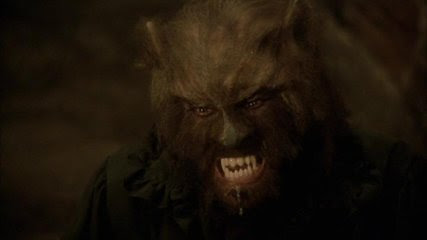
With a title like "Children of the Full Moon" in a program like Hammer House of Horror, one can accurately guess that werewolves will be afoot.  That said, Murray Smith's script does some singular things with such obligatory monsters, even going so far as to have a rug-pull midway through where we are made to believe that what we had previously witnessed was merely an acute nightmare.  Besides that narrative cliche, we also get the ole gag of a couple's car breaking down, them huffing it up to a spacious and isolated mansion to use the phone, said phone not working, the person living there being disturbingly chipper, and other curious hints that something odd is going down.  As far as actual lycanthropian shenanigans, they are few and far between, plus the scant makeup shots are hardly up to par with Hammer's The Curse of the Werewolf from nearly two decades prior.  It gets by to a point on its inventiveness, but it is still an unremarkable production overall.

Sunday, September 15, 2024

1970s Foreign Horror Part Twenty-Six

THE STRANGLER
(1970)
Dir - Paul Vecchiali
Overall: MEH
 
Lingering in the dense muck of forgotten giallos that continue to be rediscovered for contemporary genre enthusiasts, The Strangler, (L'étrangleur), serves as an aloof, French cousin to its more flashy Italian counterparts.  Focusing on a mercy-killing antagonist played with detached tranquility by Jacques Perrin, he seeks out women who give off an aura of not wanting to live, strangling them with a scarf after he witnessed a murder at a young and impressionable age.  On top of this, a police psychologist has chats with the killer without arresting him, a thief trails Perrin's actions so that he can make off with the victim's jewelry and whatnot, and a young woman is desperate enough to be used as bait so she embarks on a relationship with the aforementioned masquerading inspector.  Deliberately paced, director Paul Vecchiali affords minimal sensationalism as the kill scenes are done with an eerie calm and everyone involved seems in no hurry whatsoever to get to the bottom of things.  It creates an odd tone for what would otherwise be a conventional exploitation movie, (if "conventional" is the correct word), standing out from the crowd even if it is too indifferent to connect.
 
THE THIRD PART OF THE NIGHT
(1971)
Dir - Andrzej Żuławski
Overall: MEH

A busy and ambition debut from Polish filmmaker Andrzej Żuławski, The Third Part of the Night, (Trzecia część nocy), presents a Nazi-occupied urban landscape that is both grim and maddening in its cognitive navigation.  A collaboration between Żuławski and his father, (the latter of whom worked at the Weigel Institute in Lviv, Ukraine during World War II, where lice-breeding vaccines were produced via experimenting on desperate locals in exchange for protection from deportation), the director's penchant for the surreal co-mingles with the war-torn backdrop.  Early on, one of the characters proclaims that everything under such harrowing conditions is increasingly melding together, becoming the same oppressive torment from day to day.  This plays in to the narrative focus on doppelgängers, particularly the prominently uni-browed Leszek Teleszyński's continual hallucinations of seeing virtually every woman that he encounters as his recently murdered wife.  After a comparatively more straight-forward opening, things grow increasingly murky as the film plays out, leading to a barrage of set pieces that lose coherency while still remaining viscerally intense.  A sub-conscious nightmare of grave historical sufferings, it is a heavy watch even without the nebulous plot line frustrating things, but it is also a fully-realized vision for Żuławski that comes right out of the gate in his mostly renowned career.
 
TENDRE DRACULA
(1974)
Dir - Pierre Grunstein
Overall: MEH

For whatever reason, both Christopher Lee and Peter Cushing headed to France during the mid 1970s to make unfunny vampire comedies with actor Bernard Menez, the first of which was Tendre Dracula, (The Big Scare, Tender Dracula, or Confessions of a Blood Drinker, La Grande Trouille), followed by Dracula and Son two years later.  This one has the further novelty of Cushing making his only on-screen appearance as the titular Count, (kind of); a roll that his good buddy and frequent co-star Lee became famous for and would reprise for the final time in the aforementioned Dracula and Son.  As far as this head-scratching romp goes, it boasts an incomprehensible plot, delivered as a series of nonsensical set pieces like Cushing randomly looking like Béla Lugosi and wandering around outside while spying on people, Alida Valli carving her name into Menez' calf, two musical numbers out of nowhere, a hulking butler beating a chicken to death on a swinging rope, dream sequences involving a woman cut in half and dangling her legs, a film crew showing up out of nowhere while wearing white sheets, and a random orgy to close things out.  The nudity is liberal in quantity, nothing that happens is remotely funny, one-time director Pierre Grunstein stages everything awkwardly and lets the camera linger on shots for too long, and Cushing is miscast by spouting meandering monologues and having outbursts of rage against his usual pleasant demeanor.  On the plus side though, the crumbling Gothic château set design is fantastic with gigantic statues everywhere, blank masks adored on walls, mummified mannequins, plus tables and chairs made out of stone.

Friday, August 9, 2024

1960s British Horror Part Eighteen

THE NAKED EDGE
(1961)
Dir - Michael Anderson
Overall: GOOD

Gary Cooper closed out his feature film career with the Hitchcockian-styled thriller The Naked Edge; a stylized affair that makes its point with about twenty or so unnecessary minutes attached.  An adaptation of Max Ehrlich's novel First Train to Babylon and a co-production between the US and the UK that was shot and set in London, director Michael Anderson and cinematographers Erwin Hillier and Tony White unveil some flashy, distorted, Orson Welles-inspired camerawork from the get go, which gives the movie a flashy edge that disguises a monotonous plot.  Cooper and Deborah Kerr make a typical movie star couple where the man is twenty years older than his Mrs, but they provide the necessary star power to elevate the material, with Kerr in particular being ideally cast as a woman driven to the brink of a psychological meltdown as she doubts her own suspicions.  The story wisely withholds all of the answers until the closing moments, making this an exercise in marital paranoia first and foremost that explores how desperately one needs to believe that their spouse could never commit an unforgivable act. Though the conclusion is satisfying in one respect, it is also unintentionally clumsy and fails to tie up a string of loose ends, but at least Peter Cushing makes a cameo, which is always worth its weight in gold.
 
UNEARTHLY STRANGER
(1963)
Dir - John Krish
Overall: MEH

Though it is too chatty and sterile in presentation to elevate itself as a low-budget bit of genre fodder, Unearthly Stranger, (Beyond the Stars), has some unsettling intensity in fits and starts.  Playing off of the eerie concept that extraterrestrial entities have been living amongst us for some time, it concerns a scientific department that is working on a form of space travel that can be achieved via mind control, which forces the ever-keen eye of alien forces to intervene as to not let mankind venture into the stars.  The specifics of such a cockamamie and ludicrous idea are thankfully not dwelt upon as instead, the story plays out as a tale of paranoid domestic takeover, with good friends John Neville and Philip Stone eventually coming to terms with the fact that the former's charming wife is in fact more of a foreigner than they could have ever imagined.  Director John Krish plays such a scenario deadly serious, using Dutch-angled, claustrophobic closeups of sweaty and intense actors, plus he makes the most out of the modest budget with the invisible aliens emitting a deafening wind noise as they encroach upon their victims.  Hardly anything exciting happens until the last ten or so minutes and the character's banter quickly becomes monotonous, but it delivers some chills despite its minimal amount of characters or action-oriented moments.

THE BODY STEALERS
(1969)
Dir - Gerry Levy
Overall: WOOF

Though it tries to interject some mild sexiness and brings in George Sanders for some respectability, The Body Stealers, (Invasion of the Body Stealers, Thin Air), is a piss-pour production that arrives painfully dated by late 1960s standards.  The second of only two features to be directed by Gerry Levy, he and co-screenwriter Michael St. Clair's script is as talky as they get, made up of incessant banter between military men, bureaucrats, scientists, and Patrick Allen's ladies man air force investigator.  This goes on uninterrupted with zero set pieces until the last fifteen or so minutes where only the viewer with enough caffeine in their system will be awake enough to realize that extraterrestrials are at the heart of the inciting incident involving disappearing paratroopers.  Such a revelation is hardly jaw-dropping, (despite what the blaring musical cues on the soundtrack would dictate when such a revelation finally arrives), as anyone can judge from the title alone that we are dealing with yet another Invasion of the Body Snatchers clone.  The film is boring enough and D-rent enough to fit right in to the drive-in cheapies that were pumped out at an alarming rate a decade earlier, making this a daft and pointless sci-fi installment if ever there was one.  On that note, Doctor Who fans may recognize the silver spacecraft as the one belonging to the Daleks in Amicus' Daleks' Invasion Earth 2150 A.D. adaptation from three years prior.

Wednesday, June 21, 2023

1960s British Horror Part Fourteen

HOUSE OF MYSTERY
(1961)
Dir - Vernon Sewell
Overall: MEH
 
British writer/director Venon Sewell filmed Pierre Mills and Celia de Vilyars' French play L'Angoisse four times throughout his career, House of Mystery, (Das Landhaus des Dr. Lemmin), being the final such adaptation and one that was later presented on the American anthology series Kraft Mystery Theater.  Told as a flashback within a flashback that bounces between three different timelines, the structure is clunky, though there are some interesting ideas at play.  A combination of murder mystery, infidelity drama, and ghost story with some scientific experiments thrown in as well, the under an hour running time does not lend itself to expanding on anything going on.  While this gives it a rushed feel coupled with the shifting chronology, it is also incredibly talky and difficult to pay attention to due to a severe lack of action.  That said, the finale almost makes up for the lumbering bulk of the movie as it introduces a clever comeuppance scheme and an effective, spooky twist to go out on.  Said twist might be predictable and the sly, pseudoscience maneuver at the end by Peter Dyneley may seem silly, but they still provide refreshing components to an otherwise stock production. 
 
THE SKULL
(1965)
Dir - Freddie Francis
Overall: GOOD
 
Amicus Productions' second horror film and also the second to be directed by Freddie Francis, The Skull also serves as the company's first collaboration with screenwriter Robert Bloch.  The Psycho author's short story "The Skull of the Marquis de Sade" was reworked by Amicus co-founder and producer Milton Subotsky as well as Francis himself; such script noodling being a frequent practice at the time.  Low on dialog, (at least during the final act), loud on music, and drenched in creepy atmosphere, the simple narrative is given an effective treatment where several unfortunate blokes including Peter Cushing are all supernaturally terrorized by Marquis de Sade's skull.  Though a highly sensationalized explanation is given as do who de Sade was, wisely the fantastical elements are never fleshed-out which gives way to several bizarre, tense set pieces that have no logical footing.  The best and longest of these is the roughly twenty-five minute finale where Francis and cinematographer John Wilcox really lean into the otherworldly mood, basking in Cushing's futile attempt to out-will the evil forces at play.  Christopher Lee, Patrick Magee, Nigel Green, Patrick Wymark, and Michael Gough round out the familiar British horror players, making this one of the better non-Hammer films with Cushing and Lee sharing a few scenes together.

THE FROZEN DEAD
(1966)
Dir - Herbert J. Leder
Overall: MEH
 
The first of two Hammer-style horror movies from writer/director/producer Herbert J. Leder, The Frozen Dead is notable as one of the early ones to combine Nazis with zombies, be it in an off-hand, sugar-coating manner.  It is viscerally uncomfortable to center the entire story on exiled Nazis in hiding who have spent the last two decades since the war ended clandestinely conducing experiments on frozen soldiers in order to eventually resurrect their political party for world domination.  Sans a few non-specific Holocaust references, all real life Nazi atrocities are noticeably omitted and things instead proceed in a bog-standard, campy, mad scientist route.  A severed, telekinetic-powered head being kept alive with wires, severed arms being kept alive with wires, soldiers that are either virtually mindless or frozen, one woman looking like a normal person when she puts on a mask to cover her scars, and various other silliness give it plenty of a tongue-in-cheek, B-movie charm.  That said, Leder's script is too wordy and padded, so the end result cannot overcome its stagnant pacing issues.  At least Dana Andrews doing a German accent is amusing though.

Sunday, June 18, 2023

1960s British Horror Part Eleven

THE HOUSE IN MARSH ROAD
(1960)
Dir - Montgomery Tully
Overall: MEH
 
An adaptation of Laurence Meynell's novel of the same name, The House in Marsh Road, (Invisible Creature), is less a ghost story than an infidelity drama, though it has a couple of gripping moments and a grim ending to boot.  There are several problems in the presentation though, namely Montgomery Tully's stock direction, a lack of spooky atmosphere, and a completely ruining soundtrack that blares through almost every scene and in doing so, eliminates any and all would-be, nail-biting tension.  The performances are decent with Anita Sharp-Bolster as the no-nonsense, Irish housekeeper, Tony Wright as an unrepentant, dead-beat husband, and Sandra Dorne as his enchanting mistress standing out the best.  Curiously, the story itself utilizes its supernatural components so conservatively that large portions of the plotting play out without any need for or emphasis on ghostly activity.  The movie is notable as one of the first to actually use the word "poltergeist" as well as differentiate it from that of a conventional, wronged spirit simply lurking around with unfinished business.  Still, one is likely to forget that there is an otherworldly presence in the first place whether malicious or benevolent and in effect, the whole thing fails to utilize all of its ingredients sufficiently.
 
THEY CAME FROM BEYOND SPACE
(1967)
Dir - Freddie Francis
Overall: MEH
 
Released on a double bill with The Terrornauts, They Came from Beyond Space is a comparatively less laughably entry than its companion film, yet still wearing its piss-pour budget on its sleeve.  Even with director Freddie Francis on board who collects a paycheck here in between several other mostly better Hammer and fellow Amicus productions, most of the financing was apparently squandered on The Terrornauts, itself a pathetically cheap looking bit of science fiction stupidity.  Apparently there was not even enough money left over for an atmospheric, futuristic score as the jumpy jazz music we are given sounds more well equipped for a spy film or an episode of Batman.  While Francis still has a decent eye here or there and does not allow for the entire movie to be filmed with all of the lights on at least, it still looks low-rent with a minimal amount of special effects and goofy costumes/head gear.  All could be forgiven and would make a mediocre Doctor Who serial maybe if not for Amicus co-founder and producer Milton Subotsky's lame, simple-minded script which is an imitation of Invasion of the Body Snatchers, except with all of the menace replaced by a repetitive structure, hokey schmaltz, lazy plot holes, and a detrimental lack of action.
 
CORRUPTION
(1968)
Dir - Robert Hartford-Davis
Overall: MEH

Several variations of Eyes Without a Face have come and gone in its wake and Corruption is a rather sleazy one from exploitation director Robert Hartford-Davis.  The film miraculously scored Peter Cushing in the lead who portrays an obsessive yet emotionally-torn surgeon to the best of his abilities, but the trash-heavy presentation is far goofier than the cherish actor deserves.  Set in swinging London, there are moments that intentionally play off of Cushing's classier demeanor and reputation in more Gothic styled horror vehicles that clash with the vain, hedonistic behavior of some of the other characters, particularly his model girlfriend Sue Lloyd who is half his age.  Hokey violence, utterly awful use of a largely inappropriate musical score, and a comically silly ending make it a messy affair though.  The fact that the premise is already familiar and everyone watching knows perfectly well that it will all end unfortunately for everyone on screen, (no matter how much they try and convince themselves otherwise), leaves no room for any tension or shocks.  Instead it is mostly just a bunch of blaring jazz music, girls in skirts, and Cushing making ridiculous faces.

Wednesday, June 1, 2022

1970s American Horror Part Thirty-Two

STRAW DOGS
(1971)
Dir - Sam Peckinpah
Overall: MEH

The infamous home invasion thriller Straw Dogs was Sam Peckinpah's rather misguided exploration of sadism and misogyny, a film unpleasant enough to strike a great deal of well deserved criticism upon its release.  An adaptation of Gordon M. Williams' novel The Siege of Trencher's Farm, Peckinpah and co-screenwriter David Zelag Goodman reworked many of the earlier plot points, though they kept the final set piece intact where Dustin Hoffman and Susan George get besieged by drunken sociopaths in their rented, Cornish abode.  While the director takes his usual, unflinching approach to the brutality of the material and it is anything but glamorized, it nevertheless becomes murky as to what may be the intended takeaway.  Each character, (including the would-be relatable couple), exhibit irrational, destructive behavior which seems to suggest that there is a disturbing disregard for women either lurking subconsciously or right out in the open.  In this way, it presents a bias, cynical view that is made more uncomfortable by the movie's deliberate lack of warmth and its nearly two-hour running time.  A challenging movie to be sure, but whether it was intentional or not, it is hardly one that is intellectually fulfilling enough to revisit.

THE CRAZIES
(1973)
Dir - George A. Romero
Overall: MEH

Released the same year as the vastly superior yet quite different Season of the Witch, The Crazies i.e. "Unattractive Actors Yelling All of Their Lines - The Movie" is a miserable viewing experience that retreads many of George A. Romero's frequented themes in the least successful of ways.  It is essentially another zombie outbreak movie, except instead of flesh-eating ghouls, it has people gradually losing their grip on reality before resorting to aloof insanity or balls-out violence.  While it centers on a small band of blue collar characters, their dialog is as banal and occasionally even as loud as the other half of the story which focuses on scientists and military personnel spending a hundred percent of their scenes arguing with each other at peak volume.  A sense of hopelessly ill-prepared and unorganized chaos is certainly intentional on Romero's part, but the shoddy production values, (including awful stock music and poorly recorded, overlapping dialog), and relentless bickering makes it nearly unwatchable.  Romero loved to show human being's inability to cope with and overcome an apocalyptic event, but he was often able to explore such things in a far more engaging, potent, and not to mention atmospherically eerie way than here.

SHOCK WAVES
(1977)
Dir - Ken Wiederhorn
Overall: MEH

Indestructible Nazi zombies sounds like a swell idea on paper, but Shock Waves does not necessarily get by on its premise alone.  The full-length debut from Ken Wiederhorn, he and producer Reuben Trane were Columbia University graduates who had already won an Academy Award for their student film Manhattan Melody four years prior.  Though they were able to score Peter Cushing, (the same year that he appeared in Star Wars no less), Brooke Adams, and about a days worth of shooting with John Carradine, this is a noticeably low-budget affair despite its surprisingly schlock-less intentions.  The look of the SS undead is pretty striking and they make a menacing presence in part due to the fact that they do not act as slow, Romero-style flesh-eaters.  Instead, they are tactful, normal moving soldiers who just so happen to have the ability to live underwater for decades at a time.  Despite being enhanced to withstand any climate and kill without the need of any weapons, they still collapse within a few moments of having their goggles removed from their heads, so figure that one out.  The story has a fun gimmick, but there is hardly anywhere to go with it as the majority of the movie is the same characters prodding through knee-high water, hiding, and then just slowly getting picked off.

Wednesday, April 20, 2022

Hammer Dracula Sequels Part Two

SCARS OF DRACULA
(1970)
Dir - Roy Ward Baker
Overall: MEH
 
For their second Dracula sequel in one year and the sixth installment in the series overall, Hammer Films barely seems to be trying with Scars of Dracula.  Back in Transylvania yet opening with what looks to be the closing moments of the previous Taste the Blood of Dracula, a random bat spits blood on the vampire's ashes, then an angry mob burns his castle, he has another servant named Klove, (even though he also had one in Dracula: Prince of Darkness played by another actor), and we spend most of our time with some more relatively boring, younger characters than we do Dracula himself.  It is as if Hammer was in such a rush to squeeze another movie out of the series that they just grabbed a hodgepodge of cliches that were already overstaying their welcome and then haphazardly threw them together with no mind for continuity.  Some of this makes sense as it was partially constructed as a reboot in case Christopher Lee finally had enough of being emotionally blackmailed into keeping the crew working with his involvement.  There is some nasty bloodshed, Lee gets more dialog than usual, and Patrick Troughton is in it at least though.

DRACULA A.D. 1972
(1972)
Dir - Alan Gibson
Overall: MEH

Two years after retreading the same ground for the sixth time with Scars of Dracula, Hammer made the somewhat bold move to contemporize their titular vampire with Dracula A.D. 1972.  Warner Bros. commissioned Hammer to make two more films in the series that were set in the modern day after American International Pictures' Count Yorga, Vampire and its sequel had recently done solid enough business.  Though the change in locale gives this installment a shot in the arm from the same "rural, 19th century, superstitious, European town" setting, the script by Don Houghton is far from ingenious.  A spoiled, young bohemian resurrects Dracula for kicks and Van Helsing's decedent just happens to be part of his crew.  The return of Peter Cushing is another notable selling point and though he is not technically THEE Van Helsing but his grandson, he may as well be since he is an occult expert and ends up destroying the vampire by the usual means.  The hip, wah-wah guitar music by Manfred Man's Mike Vickers is positively awful and dates the film far more than the earlier, period-set Gothic ones.  Though it is nice to see Cushing and Lee back at each other's throats and we get a silly Satanic ceremony where Caroline Munroe gets bright red blood dumped all over her, the movie is regrettably still not that interesting.

THE SATANIC RITES OF DRACULA
(1973)
Dir - Alan Gibson
Overall: MEH
 
Hammer kept their titular vampire in the contemporary age once more for The Satanic Rites of Dracula, a direct sequel to the previous Dracula A.D. 1972 which once again reunites Christopher Lee and Peter Cushing as Van Helsing's occult expert descendant.  The writer director team of Don Houghton and Alan Gibson returns as well and the former's script is noticeably more ambitious than any other in the series.  Dracula's resurrection is given no expiation whatsoever as he clandestinely runs a secret society that is planning to unleash a skin melting plague on the populous.  Also, the movie is somehow a spy thriller with Satanism, plus Lee does a Béla Lugosi accent in one, (perhaps unintentionally), amusing scene.  Assuredly a mess, the first act is unfortunately a bore and as usual, Lee's absence throughout most of it is rather detrimental.  Things pick up a bit when he and Cushing finally get some screen time together, but the ending could be the dumbest out of any of the installments as Dracula gets stuck in a thorn bush, trips, and then lays there for several moments while Van Helsing breaks off a piece of a fence to stake him with.  A scrapping the barrel offering to be sure, it is rather a saving grace that Lee finally got his wish to never revisit the character again in a Hammer production after this.

THE LEGEND OF THE 7 GOLDEN VAMPIRES
(1974)
Dir - Roy Ward Baker/Chang Cheh
Overall: GOOD

Though it has its fare share of problems, the one and only joint production between Hammer and the Shaw Brothers in The Legend of the 7 Golden Vampires, (The 7 Brothers Meet Dracula), gets a decent amount of mileage out of its clashing of genres.  Filmed in Hong Kong with Peter Cushing staying on board and a small handful of English actors, it fits in seamlessly with Hammer's usual crop of horror sequels while simultaneously and unmistakably being a martial arts movie.  The visual realization of the undead fiends of the title as well as the set design of their lair is ghoulishly executed.  Some further advancements to the vampire mythos, (such as the fact that in the East, the image of the Buddha serves the same purpose to ward them off as does the crucifix out west), are also a nice addiction.  As far as the kung-fu goes, it is both a hindrance and an amusingly fun tweak to the formula.  Most of the earlier fight scenes spring up out of nowhere and stall the pacing quite a bit, yet everything becomes a lot more wickedly engaging when the putty-faced, zombie-esque vampires and their minions finally throw down with ninja flips and swords in the third act.  Dracula is pathetically wasted and shoehorned in there with Christopher Lee finally through with such nonsense and a very unmemorable John Forbes-Robinson stepping in and doing his best Lee impression with what he has to work with.  An interesting experiment to be sure, but quite a silly one as well.

Thursday, April 14, 2022

Hammer Dracula Sequels Part One

THE BRIDES OF DRACULA
(1960)
Dir - Terence Fisher
Overall: MEH
 
While director Terence Fisher, screenwriter Jimmy Sangster, and Peter Cushing as Doctor Van Helson all return, Christopher Lee briefly stepped away from the title role for the Horror of Dracula follow up The Brides of Dracula.  Said title is misleading as not only is the seminal, undead count nowhere to be found, but only two women fall victim to new vampire David Peel's diabolical charm and neither of them garnish hardly enough screen time to warrant a "bride" moniker.  In any event, there are some memorable, striking, bloody-eyed and fanged images here, plus Cushing brutally cauterizes a vampire bite with a scalding iron and holy water.  Unfortunately, the story leaves room for a lot of pacing lulls, particularly in the middle act which slows to a standstill with lackluster townsfolk and a random cameo from comic relief character actor Miles Malleson.  Also, this probably has the lamest vampire death in any Hammer film, though it does come after an efficiently heart-racing final showdown.  It is certainly a disappointing sequel and noticeably suffers from Lee's absence, but at least he would come back for the next six installments even if the quality, (or lack-thereof), of each was largely out of his hands.

DRACULA: PRINCE OF DARKNESS
(1966)
Dir - Terence Fisher
Overall: GOOD
 
The last Hammer Dracula film to have Terence Fisher behind the lens and the first to bring back Christopher Lee as the titular vampire, Dracula: Prince of Darkness fails to mention the previous, Christopher Lee-less The Brides of Dracula, instead serving as a proper follow-up to Horror of Dracula from eight years prior.  Opening with archive footage from the previous movie in case anyone in the audience forgot what they were seeing a sequel to, this entry helped further set the template for several that would follow.  Meaning that Dracula does not show up until at least halfway through the movie, comes back to "life" rather effortlessly, barely if at all speaks, and superstitious villagers act superstitiously.  This early in the franchise, simply having Lee back even as a blood-crazed mute is probably enough to hold over most Gothic horror buffs, but this one also benefits from a forceful performance from Hammer regular Andrew Keir as Dracula's holy man foible, who makes up for Peter Cushing's absence.  Lee's demise is both unique and pathetic, (Dracula can't swim, really?), but at least it continues the deviation from the usual stake through the heart undoing.  Though Barbara Shelley fills that particular demise quota here.

DRACULA HAS RISEN FROM THE GRAVE
(1968)
Dir - Freddie Francis
Overall: GOOD
 
Freddie Francis had the distinction of taking over for Terence Fisher in the director's chair for both their Frankenstein and Dracula series.  The forth installment Dracula Has Risen from the Grave is a direct sequel to the previous film and a more accurate title would have been "Dracula Has Risen from Being Delicately Frozen in Ice".  Christopher Lee thankfully gets some dialog again, though his screen time is still unfortunately limited.  He excels all the same though with blood-shot eyes and a vehemently cruel demeanor that is every bit as nasty as his many other portrayals of the undead count.  Scream queen Veronica Carlson makes her first appearance in a Hammer production, filling the role of "beautiful, innocent girl who unwillingly becomes engulfed by Dracula's spell".  The vampire mythos are given a mild update as now one must pray when staking Dracula through the heart, otherwise he will just be really uncomfortable thrashing around for a few minutes before pulling the device out.  This fits in cleverly enough with the story as our dashing, atheist hero, (Barry Andrews), has an altercation with his love interest's Monsignor Uncle, (Rupert Davis), and another priest becomes the vampire's feeble henchmen.  The faith-challenging angle is not really explored much, but it gives the familiar story an interesting enough backbone at least to layer some more atmospheric, ghastly fun on top of.

TASTE THE BLOOD OF DRACULA
(1970)
Dir - Peter Sasdy
Overall: MEH

The fifth Dracula installment for Hammer Studios Taste the Blood of Dracula is a bit of a frustrating effort.  Screenwriter Anthony Hinds returns with Peter Sandsy making his Hammer debut behind the lens and this far into the series, they were still able to tweak enough things for it not to be a complete rehash.  Opening with the ending of Dracula Has Risen from the Grave, it introduces the concept of Satanism for the first time in the series with a young, disgraced, heathen Lord, (Hammer mainstay Ralph Bates), trying to summon his "master" Dracula by way of an oddball ritual where he and a bunch of bored, wealthy hypocrites are supposed to drink the vampire's blood.  Both the way that the titular Count regains his Christopher Lee form and the way in which he mees his demise are either ingeniously bizarre or just plain lazy depending on how gracious the viewer is.  Dracula's revenge scheme is fun though, with some gruesome deaths and bosomy maiden hypnotism.  Speaking of bosoms, this was the first entry in the series to feature nudity which appears near the beginning of the film in a brothel run by a flamingly effeminate man-madame.  If it was not for the weak ending and maybe one too many sloppy plot points, this could be a more positive stand-out as opposed to just an unrealized one.

Sunday, April 3, 2022

Hammer Frankenstein Sequels Part One

THE REVENGE OF FRANKENSTEIN
(1958)
Dir - Terence Fisher
Overall: GOOD

The Curse of Frankenstein sequel The Revenge of Frankenstein began production three days after Horror of Dracula wrapped up with a script from Jimmy Sangster apparently tossed off within six weeks on a tight crunch before shooting began.  For such a rushed job, it is quite understandable that the plot basically boils down to "Dr. Frankenstein tries the same thing again" and this would indeed be the case for all six of Hammer's sequels in the series, more or less.  Some of these films had the good sense to throw in a gimmick to help differentiate themselves from each other and this one has a normal looking "monster" with none of the overtly deformed physical attributes.  Despite a couple of sluggish moments, it is an engaging and mostly well-paced end product despite its recycled nature.  Director Terence Fisher and star Peter Cushing stayed on board, both of whom would continue to work together on a number of films besides just several more Frankenstein ones.  Also returning was cinematographer Jack Asher who continues the vividly colorful yet atmospherically gloomy visual presentation.

THE EVIL OF FRANKENSTEIN
(1964)
Dir - Freddie Francis
Overall: MEH
 
Cinematographer turned director Freddie Francis takes his first and only crack at a Frankenstein sequel with The Evil of Frankenstein, Hammer Studio's third in the series.  Continuity is abandoned as the film rewrites the chain of events from the first movie while completely ignoring those of the second installment.  As this was one of but a handful of Hammer productions to be distributed by Universal in the States, they were allowed to use a Jack Pierce-inspired creature design, sans bolts in the neck.  While New Zealand wrestler Kiwi Kingston's flat-top, putty-covered look hardly resembles the one that immortalized Boris Karloff in the role, it is still fitting with Hammer's then updated, more grotesque aesthetics.  Though Anthony Hinds' script brings in some unique ideas like a mute peasant girl who befriends the monster and sleazy hypnotist who puts him under his control, Francis' direction is sadly lifeless with the material and it drags at regular intervals.  For his part and rather ironically considering the movie's title, Peter Cushing is comparatively less malevolent this round as the doctor, coming off more desperate and frustrated than anything.

FRANKENSTEIN CREATED WOMAN
(1967)
Dir - Terence Fisher
Overall: MEH

On paper, the gimmick utilized for Hammer's fourth Frankenstein film Frankenstein Created Woman is singular enough.  This time, the coldly determined doctor transfers the soul of an innocently guillotined man into that of a deformed innkeeper's daughter, removing her unfortunate physical features and turning her into a beautiful and possessed revenge machine.  Mainstay Hammer director Terence Fisher returns and in the lead, Cushing is once again as stubborn and arrogant as ever.  Similar to the previous The Evil of Frankenstein, his creation's murder spree is not due to his deliberate influence though.  The concept here is less tangibly scientific with just electrifying a mass of limbs and organs, instead switching gears to the metaphysical idea of whether or not a soul can survive and live on in a new body after death.  The plot structure is as predictable as ever though and the motif of ignoring the previous films in the series continues as Frankenstein is simply set up somewhere with a fresh new crop of townsfolk who presume that he is up to witchcraft and therefor cannot be trusted.  So while some elements are refreshing to the series, the standard, potboiler presentation is not quite enough to elevate it.

Monday, June 21, 2021

1980s Paul Naschy Part One

EL RETORNO DEL HOMBRE LOBO
(1980)
Dir - Paul Naschy
Overall: GOOD
 
A strong contender for the most quintessential and all-around best werewolf movie Paul Naschy ever made, El Retorno del Hombre Lobo, (The Return of the Wolf Man, The Craving, Night of the Werewolf), has many attributes coming together in the film's favor.  Most prominently of all is the production itself.  Cinematographer Alejandro Ulloa's photography is top-notch, endlessly drenching most frames in eerie, Gothic atmosphere.  The visual excellence is not limited to the camerawork though as Naschy's Waldemar Daninsky's werewolf makeup easily sets the benchmark not just for his many lycanthropian screen appearances, but wolfman movies in general.  Though many entries in the Daninsky series boasted numerous similarities between them, this is the only one that can be seen as a proper remake, updating 1971's La Noche de Walpurgis with the larger budget and a more classy, polished presentation.  Unfortunately, the pacing drags even as certain plot points are glossed over, which is also common with Nashy's works.  Still, this is undeniably a high, creative watermark for the Spanish wolfman and probably the last approaching-great film he would ever make.
 
MYSTERY ON MONSTER ISLAND
(1981)
Dir - Juan Piquer Simón
Overall: WOOF

Spanish schlock-master Juan Piquer Simón's Mystery on Monster Island, (Misterio en la isla de los monstruos), is a sort-of adaption of Jules Verne's Godfrey Morgan: A Californian Mystery.  A co-production between the US and Spain, it barely features Terence Stamp, Peter Cushing, and Paul Naschy within the first five minutes and is an unabashedly goofy adventure film with hilariously bad rubber suit monsters in place of terribly unfunny intended comedy.  Much of the latter problem falls on the shoulders of David Hatton, who plays a tortuously grating, bumbling professor who falls down and screams like a child in all of his scenes and is in a predominant amount of them.  Then they get a pet monkey and a savage, he tries to teach them proper etiquette, he screams at everything a whole lot more, and it is all about as endurable as you could imagine.  As they all get perpetually besieged by monsters and never run out of bullets until the plot tells them to, (bullets which never harm anything anyway), the film reuses about three pieces of stock music over and over again, occasionally at randomly inappropriate times.  At over an hour and forty minutes, the movie absolutely feels its length that is for sure.

PANIC BEATS
(1983)
Dir - Paul Naschy
Overall: MEH

A quasi-sequel of sorts to 1972's Horror Rises from the Tomb in that it features the same medieval warlock Alaric de Marnac, Paul Naschy took to the director chair this round with Panic Beats, (Latidos de Pánico).  In some ways it can be seen as almost a parody of Naschy films.  This time, three different women are either madly in love with him or pretending to be and the topsy-turvy, backstabbing adultery going on reaches comical levels.  Thankfully it all results in fun, gruesome comeuppance set pieces even though no gore is shown until a full hour and fifteen minutes in.  Naschy's knack for macabre visuals is limited in quantity here though high in quality, especially in the very Tales from the Crypt-esque ending.  The plot is pure nonsense, which is not uncommon in many of the man's works.  Lines like "We're both evil but I'm more evil than you, idiot!" will unmistakably garnish laughter, but the film itself is played both seriously and melodramatically.  It has the usual, silly Euro-horror charm in this respect, just less than would be preferable as most of the screen time is dedicated to endless expository dialog and characters complaining about not being able to wait to kill whoever they are married to in order to get all their inheritance.

Tuesday, July 28, 2020

1970s Vincent Price Part Two

SCREAM AND SCREAM AGAIN
(1970)
Dir - Gordon Hessler
Overall: MEH

Released the same year as The House the Dripped Blood and being the second pairing of Vincent Price with director Gordon Hessler, Scream and Scream Again was Amicus Productions' version of a hip, contemporary-set sci-fi thriller.  The horror tinged title is not the only misleading aspect as the three icons in the genre who receive top billing, (Price, Christopher Lee, and Peter Cushing together in one film for the first time), collectively have the least amount of screen time out of anyone present.  Not only that, but besides one brief moment near the end, they also share no scenes together.  Foiled expectations out of the way, what is left is an impressively confusing presentation.  For almost the entire film's duration, the plotting is so unapologetically obtuse that by the time it explains everything, (or tries to), in one gigantic expository dialog dump, there is still an alarming number of questions in place of answers.  While repeated viewings may make sense of a few more things, the drawn-out pacing and dated, unsuspenseful music also hinder the whole.  Too impenetrable to truly recommend, its complexity is somewhat admirable at least.

DR. PHIBES RISES AGAIN
(1972)
Dir - Robert Fuest
Overall: GOOD

It says a lot that a movie with an almost insultingly lazy, hole-ridden script following up an unarguable masterpiece within its genre can still get by on its stylish charm, violence, and of course Vincent Price in top, camp-fueled form.  While The Abominable Dr. Phibes wrapped up with an open-ended enough finale, it still unmistakably comes off that its sequel Dr. Phibes Rises Again rather concocted a premise out of the ether.  Wouldn't Phibes had mentioned something in the first film about sleeping for three years to go find the river of life in Egypt when the stars aligned?  In any event, things cruise along at a near-laughable rate and the storyline barely takes a breath to explain how Phibes' fancy bed right under his demolished house managed to go undiscovered, how he still has gallons of disposable income, a fully equipped, electricity-laced hide-out in a presumably unexplored cave in a different part of the world, elaborate murder contraptions at his disposal at all times, a beautiful assistant who just materializes to life after being burned to death in the last movie, and a police force who proclaims "he always comes back" when in fact this is actually the very first time that he has come back.  All of the goofy ideas mesh well enough with the intended humor and Price's expertly tongue-in-cheek performance.  Even if it is a mess compared to its predecessor, it is a damn fun mess to be sure.

ALICE COOPER: THE NIGHTMARE
(1975)
Dir -  Jorn H. Winther
Overall: GREAT

Given the chance to promote his first solo album Welcome to My Nightmare after the Alice Cooper band officially folded, good ole Vincent Furnier indulged his love of theatrics and horror movies with the television special Alice Cooper: The Nightmare.  Originally broadcast on ABC on April 25th, 1975, (a month and some change after the album was released), it is essentially a series of promotional music videos for every song off said record, plus "The Ballad of Dwight Fry", thankfully so.  The "Steven" and "The Awakening" segments are probably the creepiest while "Some Folks" and "Department of Youth" are the most kitsch-friendly.  Also, Vincent Price is in it, expanding his role as the "Black Widow" guy on the album as the Spirit of the Nightmare here.  Cooper's eventual wife Sheryl is spottable too as a dancer in a few sequences, namely as the title character in "Cold Ethyl".  All parties involved seem to be having a splendid time, Cooper and Price playing off of each other in such a hammy, fun way that it is a shame they did not work together on any further spook show projects.  Considering that WTMN is the strongest solo Alice album, there is not a weak moment present musically.  The overall production is excellently staged though as a camp-fueled, macabre variety hour.

Saturday, July 25, 2020

1970s Vincent Price Part One

CRY OF THE BANSHEE
(1970)
Dir - Gordon Hessler
Overall: MEH

The second film in so many years that had Vincent Price playing a malevolent witchhunter, (1968's Witchfinder General being the other one), Cry of the Banshee has a noticeable air of redundancy to it.  The same could be said about House of Usher and The Pit and the Pendelum from the previous decade though, which also can fairly be seen as two different versions of the same movie.  In any event, this would be the last pairing of Vincent Price and director Gordon Hessler, (with Christopher Wicking likewise returning to re-write the screenplay), and it is neither particularly unique nor terrible.  Price rarely participated in any horror movies squarely on the side of terrible, but he is also not really given too much to work with in order to elevate anything here beyond the realm of mediocrity.  The script is not without its share of inconsistencies and in fact a major plot point revolves around Price's Lord Edward Whitman acting quite out of character and letting a proven witch and her coven escape into the woods instead of doing away with them as he does anyone else who is simply accused of being in league with evil Pagan deities.  An opening title sequence by Terry Gilliam certainly helps a little bit though.

AN EVENING OF EDGAR ALLAN POE
(1970)
Dir - Kenneth Johnson
Overall: GOOD

This television production made by American International Pictures has a simple enough premise of Vincent Price in different period costumes and wigs reciting four different works from Edgar Allan Poe.  Primarily shot as a live theater piece, (Price is not literally sitting with a book of Poe's works in front of him, but has in fact memorized them as a monologue as he would on stage), Price is unhinged in the very best of ways.  Considering that most of Poe's works are from the perspective of an individual succumbing to madness, the horror icon lets loose here, enthusiastically sinking his thespian claws into each performance as feverishly as anyone ever has.  The camerawork has a hard time keeping up with his physical mannerisms occasionally, but otherwise the presentation is solid by making the most out of the minimal setup and only indulging in some production enhancements with the final "The Pit and the Pendulum" segment.  Aside from that one, other popular pieces "The Tell-Tale Heart" and "The Cask of Amontillado" are also present, though it is nice that the lesser-known "The Sphinx" is given a spotlight as well.

MADHOUSE
(1974)
Dir - Jim Clark
Overall: MEH

One of the final films by Amicus Productions, Madhouse whether intentionally or coincidentally represents sort of an end of an era for its star Vincent Price.  As the semi-autobiographical horror actor Paul Toombes, (Dr. Death), Price is haunted by his own real life movies, clips of which are shown from several.  While he was anything but washed up or bitter about his typecasting in horror, his prolific output in the genre did take a sabbatical after this film which pays homage to and also knowingly parodies some of his renowned and popular works from the previous decade and some change.  The premise starts off promising enough yet after awhile, it becomes a bit silly as so many people in and around Toombes' television comeback keep being outlandishly done away with while the production never gets shut down and no arrests ever get made.  Plot issues persist elsewhere, frequently becoming more odd and awkward as it goes on.  The spirit to make it a campy and macabre romp is present, but it never quite delivers.  At least not in the way that the Price movies it references and aspires to deliver.  The Dr. Death make-up is cool and Peter Cushing is dressed as Dracula in one scene though, so there is that.

Tuesday, July 7, 2020

1970s British Horror Part Fifteen

TROG
(1970)
Dir - Freddie Francis
Overall: WOOF

With respected cinematographer and occasional director of notable horror films Freddie Francis, screenwriter and Hammer director John Gilling, Joan Crawford in her final film appearance, horror mainstay Michael Gough, and even a lifted stop-motion sequence from Ray Harryhausen's work on The Animal World documentary all joining forces, it just goes to prove that sometimes a reliable crop of talent is not enough to stop a trainwreck.  Trog is one of the most famously bad movies ever made.  While there are moments of pure, utter ridiculousness leisurely sprinkled throughout, it all gets off to a trudgy start with a snore-inducing first act.  The camp eventually does go a long way, from Crawford's surprisingly professional performance amongst such nonsense, to Gough's cartoonishly forced villainous one, to every single moment that the title character wearing half of an ape costume from 2001: A Space Odyssey is on screen.  It cannot be stressed enough how atrociously hilarious said troglodyte looks.  Scenes of him walking around in broad daylight as the musical score whimsically tries to make him sympathetic just defines schlock.  There are ultimately too many boring moments to warrant it as a hall of fame anti-classic, but it comes close enough at times, that is for sure.

FRIGHT
(1971)
Dir - Peter Collinson
Overall: MEH

Formulaic yet occasionally successful, Fright was one of the many straight thriller entries in director Peter Collinson's filmography.  Scripted by Tudor Gates, (Barbarella, The Vampire Lovers, Lust for a Vampire, Twins of Evil), it plays to familiar tropes such as a babysitter being targeted in a remote house, the phone lines being cut, women being told that they are imagining things, and an escaped mental patient fulfilling the proto-slasher killer role.  We have all seen these patterns utilized to greater effect elsewhere and the way that they blandly pile on here is really the movie's only undoing.  Elsewhere, there are some tense moments and solid performances even if none of it ultimately elevates the vanilla presentation.  The way the sociopath uncontrollably confuses two of the characters really does not say much beyond "he's crazy".  Similarly, the more sexually charged nature of the movie, (the boyfriend gets a bit pushy in the pants, the babysitter randomly stops to admire her body in a mirror, and the killer inevitably forces himself on her), are more there as scandalous ingredients to make it a bit more edgy, which was becoming more common for the era.

THE UNCANNY
(1977)
Dir - Claude Héroux
Overall: MEH

The same year that he stared as Grand Moff Tarkin in Star Wars, Peter Cushing lent his name and talents to this unofficial Amicus anthology The Uncanny.  Actually a British/Canadian co-production between Cinévidéo and The Rank Organization, (though Amicus founder Milton Subotsky was on board as producer), it has all of the hallmarks of any other omnibus horror films made in that country, thankfully so.  Well, all the hallmarks except being good.  It is difficult enough to get each individual entry in an anthology movie to measure up to each other in quality when they can all pick from wildly different subject matter.  It is even more problematic to have them pigeonhole a sinister feline element into them.  Thus is the case with The Uncanny which features a fear of cats as a linking thread, never managing to make such a premise anything except laughably lame.  Not that it is really presented as anything to be taken that seriously.  While having a ghoulish, knowing charm is a commendable trait for such fare, the enjoyment factor is regrettably amiss here.  Poor Mr. Cushing.  There is a reason people talk about Star Wars more.