60. Rocky IV (1985)
Dir - Sylvester Stallone
When
watching me watch the forth installment to the Rocky franchise, you
would think both A) I suffer from severe Alzheimer's and do not know that it is
not 1985 anymore, B) think movies are real, and C) really like boxing
when in fact none of these things are true. That is because I get into
this movie and particularly the glorious, final Rocky Balboa/Ivan Drago
showdown to the point of jumping up and down and hollering like I have
actual money on the event. The first three Rocky films are great, but
Sylvester Stallone's montage-a-thon masterpiece in IV is one of the most
entertaining of all movies, regardless of genre. Often parodied and
laughed at, Stallone actually builds up the tension perfectly to the
epic title bout, which is as unrealistic and ridiculous as it is
fist-pumpingly awesome to watch.
59. 12 Angry Men (1957)
Dir - Sidney Lumet
I first
knew what 12 Angry Men was when we were forced to read and study it
aloud in one of my high school English classes. We then watched William Friedkin's 1997 remake instead of the much admired original from forty years prior,
(I assume because my teacher thought a room full of fifteen year olds would
be bored with a black and white movie). Well aware of the story by now,
I have since seen the 1957, Henry Fonda stared/produced vehicle several
times and it continually amazes me. Sidney Lumet was a veteran of
television direction when he was tasked with adapting Men as his first
feature and his work here is exceptional. Changing the camera angle and
lenses gradually throughout, a feeling of intense claustrophobia and
tension is raised as the twelve jurors sweat out their logic,
prejudices, and emotions on the hottest day of the year in their battle
to reckon with the concept of reasonable doubt.
58. Duck Soup (1933)
Dir - Leo McCarey
Ah
the world of the Brothers Marx. Duck Soup is the
Vaudeville-to-Hollywood, Jewish brothers family act's best film, but one
could just as easily pick A Night at the Opera and my personal favorite
moment from any of their movies takes place in A Night In Casablanca
and of course involves Harpo fucking with somebody. Story-wise there is nothing particularly stronger about Duck Soup, though it is amusing in
hindsight how the film bombed when released because it hit too
close to home in its absurd send-up of dictatorships and how silly of a
reason a war can get started. Really though, the gags are just flawless
here as every last Groucho insult kills, Chico delivers more solid puns
than anyone could, and Harpo cuts everything hanging off of everyone's
clothes for just over an hour.
57. Schindler's List (1993)
Dir - Steven Spielberg
On
Steven Spielberg's mind for ten full years before he was ready to
actually make it, Schindler's List showcases all of the technical film
language skill that the man had in spades, which in turn eclipses Thomas
Keneally's novel Schindler's Ark into something far more than an
elementary Holocaust movie, let a lone any kind of popcorn fare.
Spielberg's knack for over-dramatizing his films for emotional
manipulation does not get a justifiable complaint here, due in part to
how Liam Neeson's title character is as multi-layered as Ralph Fiennes'
Nazi commander Amon Göth is impossibly unsympathetic and diabolical.
Meaning that what war does to men is always different across the board,
just as men are different themselves to begin with. The dent that Oskar
Schindler made to the Jewish people's legacy may seem small to him in
his emotional breakdown, but the generations that survived because of
his gradual selflessness cannot be undermined and the film itself is a
beautiful and harrowing milestone of human good overcoming evil.
56. Big Trouble in Little China (1986)
Dir - John Carpenter
John
Carpenter, (easily one of the finest horror filmmakers of all time),
was on a role by 1986, delivering nearly a film a year since Halloween.
After 1984's Starman and Escape from New York three years earlier, Carpenter's further willingness to step outside
of the horror genre was rewarded tenfold with the utterly amazing Big
Trouble in Little China. If this is not the king of all supernatural ninja epics, (with a side of guns and a John Wayne impression), then
seriously what is? The tones of snappy, Golden Era Hollywood comedy, ridiculous kung fu movies, and big dumb 80s action are masterfully
handled by Carpenter, plus the arrogant ridiculousness of Kurt Russel's
Jack Burton easily turns the character into one of the best,
unintentional cinematic heroes of all time. Few of my childhood favorites hold up this well and all these years later, the fight scenes are still all the awesome and Thunder blowing himself up is still one of the funniest things in any movie.
55. Unforgiven (1992)
Dir - Clint Eastwood
Clint
Eastwood wisely sat on David Peoples script for Unforgiven for over a
decade until he was old enough in real life to play the worn-down, now
tamed, women and children murdering, no good son of a bitch Will Munny.
Time indeed is a heavy theme in probably Eastwood's finest directorial effort,
but so is the fact that most men cannot really run and stay gone from
themselves if the circumstances will not allow it. Gene Hackman's Little Bill
is as grey a character as Munny is. One of them sobered up for the
love of a woman years ago and quit their evil ways while the other took a cushy
Sheriff position in a small Wyoming town and revels in his tough guy
legend, but only when the situation calls for it as he is just as much at
home when building a house for himself to retire in.
54. Eyes Wide Shut (1999)
Dir - Stanley Kubrick
Many
view Stanley Kubrick's final opus Eyes Wide Shut as a slightly
unfinished work as the director only got to screen it once before his
death, at which point his collaborators and Warner Bros. finished some
technical details, (and more infamously added CGI bodies to cover up the
hardcore thrusting for an R rating). Even with that all being the case
though, it is another masterpiece made by a man who seemed only capable
of delivering such things. Most of the cast speaks very slowly and
precisely, as if to heighten the tension as Kubrick styles the Austrian
novella from Arthur Schnitzler as a creepy thriller, even if that is not
what it is. The equally unnerving and fascinating orgy scene is the
centerpiece and sums up Eyes Wide Shut to a tee; where sexual jealousy,
curiosity, fantasy, and reality flirt with each other to a dangerous
point, leaving us with way more questions than answers by film's end.
53. Help! (1965)
Dir - Richard Lester
Hardly
anyone thinks that The Beatles' second movie Help! is superior to A
Hard Day's Night, but that is where I come in. Since always, I have fancied
their and Richard Lester's second film collaboration over the first and
still remarkable one, if for any other reason than because it is
noticeably more ridiculous. With the influence of The Goon Show reigning heavy, (a radio program that The Beatles were all fans of), there is a direct link to be made between
the numerous bonkers and random silliness in Help! to the work of Monty
Python just a few years later. Look no further than the tiger that can
only be tamed by singing "Ode to Joy" from Beethoven's 9th or the out of
nowhere, seconds long "intermission", which doubles as my favorite
moment in any Beatles movie. Technically being a musical, you cannot possibly do better than one made up of Beatles songs so in the
soundtrack department, this is naturally as good as it gets.
52. Being John Malkovich (1999)
Dir - Spike Jonze
As
arguably the most ingenious screenwriter to emerge in recent memory,
Charlie Kaufman's first produced work, (also marking Spike Jonze's
directorial debut), Being John Malkovich set the bar ludicrously high as
far as how good and how on drugs his films were going to be. Adaptation
and certainly Eternal Sunshine of the Spotless Mind are close in quality to Malkovich, but this one just ups the insanity to
such a gleeful level that it gives it a bonkers edge like nothing else.
Kaufman randomly wrote it for fun, with the simple premise of telling a
story of a man in love with someone that he was not married to. How that
turned into the finished product involving puppets, a 7th and 1/2 floor,
a slew of odd-ball characters, Charlie Sheen randomly, and of course
John Malkovich going into his own head is what separates Kaufman from
everyone else.
51. No Country for Old Men (2007)
Dir - Joel and Ethan Coen
As
the Coen brothers dankest and most hopelessly dire movie, many rank No
Country for Old Men alongside Fargo as the filmmakers dramatic finest hour. I have
always preferred the aforementioned Fargo less than others, but where
No Country is concerned, I wholeheartedly concur with the praise.
Surface similarities abound here with much of the brother's other work,
(the desert landscape, a sheriff as protagonist, brutal violence), but
the humor is minimal, the music even more so, and the film stays
grounded to reality much more than the Coen's usually allow. Javier
Bardem's villain is one for the books, his Anton Chigurh embodying the
impending doom of fate, not only for nearly everyone he comes across,
but the "country" as a whole; where time moves on and what once was
comprehensible becomes more and more uncertain and distressing.
Saturday, December 9, 2017
Thursday, December 7, 2017
100 FAVORITE NON-HORROR FILMS 70 - 61
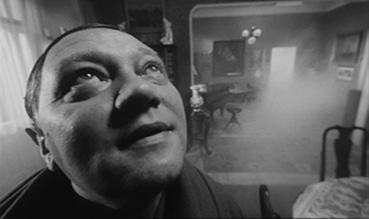
70. The Cremator (1969)
Dir - Juraj Herz
An expert on Czech cinema I assuredly am not, but Juraj Herz's second offering, (and the one that has maintained a considerably positive reputation ever since it was released), The Cremator suits me exceptionally fine. This is another one that rides the thin line of horror as a romantically disturbed Czech-with-a-drop-of-German-blood cremator succumbs to further madness as the First Czech Republic turns over to Nazi Germany at the brink of World War II. Rudolf Hrušínský's title character is wonderfully disturbing from the opening scene, constantly narrating his own life with a Peter Lorre level of creepiness, which is fitting since Herz adopts much German Expressionism from the directing chair as well
Dir - Alfred Hitchcock
My preferences instinctively leaning towards horror, it is no surprise that Psycho and The Birds are my go-to Alfred Hitchcock picks. Yet outside of those gems, you have everything from Rebeca, Notorious, Strangers On a Train, North By Northwest, and even Vertigo which most people besides me and my brother seem to lose their marbles over. I am as fond of Rear Window as the next bloke and whenever I revisit handfuls of Hitchcock's work, this one has enough of an edge over most. One of the director's trademark "gimmick" movies, Window exists entirely in a single Manhattan apartment and explores the concept of voyeurism as it pertains to, (of course), a murder mystery. Hitchcock loved casting James Stewart against the actor's more wholesome, American good guy persona and he portrays another grey-colored, almost accidental anti-hero whose selfish need to be nosy nearly undoes him and the woman that he fights caring about.
67. Intolerance (1916)
Dir - D.W. Griffith
If there was ever a movie to make you long for the days when they were made without computers, the hundred-plus year old Intolerance is a mighty fine candidate. The film is D.W. Griffith's follow-up/part answer to the largely successful and racist The Birth of a Nation which broke box-office records and from a technical stand-point, ushered in then-contemporary filmmaking structures like nothing before it. Griffith expanded his original modern story of crime, reform, and poverty to include three more tales throughout the ages, all of which are inner-cut at an increasingly climactic pace. A century later, the fall of Babylon sequence remains the most breathtaking. Few movie sets ever built are as impressive and Griffith's attention to detail, use of several thousand extras, and his own insistence on self-financing much of the film to have it be as overwhelmingly grand as possible, make Intolerance arguably the finest moment of the silent-film era.
66. Malcolm X (1992)
Dir - Spike Lee
I have actually only seen three Spike Lee joints, (which is odd in that I like all of them), so I cannot speak from an expert's standpoint in saying that his 1992 Malcolm X biopic is his best film. Yet I have seen plenty of biopics and few cinematic biographies of any kind are on par with this one. The scope alone is wildly impressive as it focuses on not just a few brief years of its subject's life with some flashbacks thrown in, but instead in much detail on nearly every major element in the real Malcolm X's fascinating thirty-nine years on this planet. This was a dream project for Lee who had been determined to make a film about X long before he had the clout to make it happen and the filmmaker pulls out all of the stops. At over three hours, it moves at a enthralling and stylish pace, (cinematographer Ernest Dickerson deserving a nod of his own), and the complexities and ever-morphing nature of Malcolm X as a human being are never compromised.
65. The Searchers (1956)
Dir - John Ford
As fine a choice as there is for the greatest Western ever made, John Ford and John Wayne's ultimate masterpiece would be The Searchers. Arizona and Utah's shared Monument Valley never looked more breathtaking, (no small feat), even after Ford had utilized the landscape's natural beauty again and again by this point. Plus Wayne who was a long established Hollywood, tough-guy icon has his most defining roll as the racist-driven, proud-to-a-fault, ex-Confederate Ethan Edwards. There are moments of seemingly out-of-place humor in The Searchers, (perhaps most clearly in the wedding scene), but this still excels as a tale of obsession and family pride juuuuust overcoming racism, all with a gorgeous desert backdrop like no other.
64. Sunset Boulevard (1950)
Dir - Billy Wilder
One of Billy Wilder's most beloved works, Sunset Boulevard is as quintessential of a Hollywood movie as has ever been made, cutting awfully close to home which is a big part of its success. Gloria Swanson's actual career went almost exactly the same as the perpetually wackadoo Norma Desmond, (minus the crazy), and her butler/former husband/protector-enforcer of her delusion Max is played by Eric Von Stroheim whose real life fate was also specifically similar. Cameo's by Buster Keaton and Cecil B. DeMille also further keep Sunset Boulevard only a few steps away from fiction. Wilder and cinematographer John F. Seitz maintain a morbid, noir atmosphere throughout and William Holden's cynical and flawed Joe Gillis is as believable as he is funny.
63. Raging Bull (1980)
Dir - Martin Scorsese
Martin Scorsese's brutal, universally hailed masterwork Raging Bull tells a story that has been told a thousand different ways before about a man whose inner demons become his downfall. Yet there are not many portrayals as amazing as this. Robert De Niro, (in the most technically dazzling on-screen transformation of his career), championed Jake LaMotta's biography being turned into a movie, eventually convincing a recovering-from-a-drug-overdose/not-at-all-a-boxing fan Scorsese to do it. The director went full-throttle with the most striking fight scenes that anyone had ever seen, with editing and sound design in unison while keeping the camera on the opposite end of the punches in the ring. Joe Pesci and Cathy Moriarty, (both in career-making roles), are also superb and Bull transcends a simple boxing movie by rewarding us with an equally powerful and uncomfortable depiction of jealousy and, well, RAGE run rampant.
62. Touch of Evil (1958)
Dir - Orson Welles
The career-defining masterpiece status of Citizen Kane cannot be logically denied by anyone, ergo Touch of Evil by default can be hailed as the second greatest film that Orson Welles ever made. Nearly two decades after Kane, Welles was very overweight and very eager to have a go at another A-list-casted Hollywood vehicle. Thus given the chance, he chose the Whit Masterson novel Badge of Evil to adapt, allegedly after telling producer Albert Zugsmith to give him the worst possible script that he had laying around so that he could re-write it and make it brilliant. Never a humble bloke that Welles fellow. There is the famous , opening three minute long shot, lack of opening credits, shocking pre-rape scene, a handful of delightful cameos, and enough wildly clever camera angels to raise Evil into the highest tier of film noir. The performances are superb across the board, but Welles even hogs the best of those for himself as the bloated, limping, corrupt mountain of a police captain Hank Quinlan.
61. Natural Born Killers (1994)
Dir - Oliver Stone
Likely the most polarizing, majorly released film of the 90s, Oliver Stone's brutal and hilarious Natural Born Killers was the perfect satire for the perfect age of media-crazed violence. Mostly from what I have seen, the people who do not get it and think that this film is merely glorifying mass murder for entertainment's sake are the ones who vehemently dislike it. Stone has long been a challenging filmmaker in that he strives to divide his audience. When you make a biopic about George W. Bush and an over three-hour movie about the John F. Kennedy assassination conspiracy, that will happen. Yet Killers takes the director's calling to force the viewer to question the society that they live in to its bloody, surreal, and way over-the-top zenith. Furthermore, it remains my favorite of his works for that very reason.
Dir - Juraj Herz
An expert on Czech cinema I assuredly am not, but Juraj Herz's second offering, (and the one that has maintained a considerably positive reputation ever since it was released), The Cremator suits me exceptionally fine. This is another one that rides the thin line of horror as a romantically disturbed Czech-with-a-drop-of-German-blood cremator succumbs to further madness as the First Czech Republic turns over to Nazi Germany at the brink of World War II. Rudolf Hrušínský's title character is wonderfully disturbing from the opening scene, constantly narrating his own life with a Peter Lorre level of creepiness, which is fitting since Herz adopts much German Expressionism from the directing chair as well
Dir - Kenji Mizoguchi
Considered
part of the holy trinity of Japan's all time finest filmmakers along
with Akira Kurosawa and Yasujirō Ozu, Kenji Mizogushi died only three
years after making Ugetsu at a time when his final crop of films were
becoming truly revered. Others such as The Life of Oharu and Sansho the
Bailiff are equally on par and speak of other doomed individuals, but
Ugetsu is a more cautionary tale of overcoming the nature of pride and
greed that resonated as much with the Post-War audience of the time as
it does with anyone today. As Mizoguchi was exquisitely skilled at doing, Ugetsu is
framed with alluring shots, (the singing ghost of a noblewoman's father,
a fog-ridden journey down a desolate lake, a lovemaking moment that
pans from bath, to rock, to grass, etc), that voice just as much as the
dialog does in exploring its evocative themes.
68. Rear Window (1954)
Dir - Alfred Hitchcock
My preferences instinctively leaning towards horror, it is no surprise that Psycho and The Birds are my go-to Alfred Hitchcock picks. Yet outside of those gems, you have everything from Rebeca, Notorious, Strangers On a Train, North By Northwest, and even Vertigo which most people besides me and my brother seem to lose their marbles over. I am as fond of Rear Window as the next bloke and whenever I revisit handfuls of Hitchcock's work, this one has enough of an edge over most. One of the director's trademark "gimmick" movies, Window exists entirely in a single Manhattan apartment and explores the concept of voyeurism as it pertains to, (of course), a murder mystery. Hitchcock loved casting James Stewart against the actor's more wholesome, American good guy persona and he portrays another grey-colored, almost accidental anti-hero whose selfish need to be nosy nearly undoes him and the woman that he fights caring about.
Dir - D.W. Griffith
If there was ever a movie to make you long for the days when they were made without computers, the hundred-plus year old Intolerance is a mighty fine candidate. The film is D.W. Griffith's follow-up/part answer to the largely successful and racist The Birth of a Nation which broke box-office records and from a technical stand-point, ushered in then-contemporary filmmaking structures like nothing before it. Griffith expanded his original modern story of crime, reform, and poverty to include three more tales throughout the ages, all of which are inner-cut at an increasingly climactic pace. A century later, the fall of Babylon sequence remains the most breathtaking. Few movie sets ever built are as impressive and Griffith's attention to detail, use of several thousand extras, and his own insistence on self-financing much of the film to have it be as overwhelmingly grand as possible, make Intolerance arguably the finest moment of the silent-film era.
66. Malcolm X (1992)
Dir - Spike Lee
I have actually only seen three Spike Lee joints, (which is odd in that I like all of them), so I cannot speak from an expert's standpoint in saying that his 1992 Malcolm X biopic is his best film. Yet I have seen plenty of biopics and few cinematic biographies of any kind are on par with this one. The scope alone is wildly impressive as it focuses on not just a few brief years of its subject's life with some flashbacks thrown in, but instead in much detail on nearly every major element in the real Malcolm X's fascinating thirty-nine years on this planet. This was a dream project for Lee who had been determined to make a film about X long before he had the clout to make it happen and the filmmaker pulls out all of the stops. At over three hours, it moves at a enthralling and stylish pace, (cinematographer Ernest Dickerson deserving a nod of his own), and the complexities and ever-morphing nature of Malcolm X as a human being are never compromised.
65. The Searchers (1956)
Dir - John Ford
As fine a choice as there is for the greatest Western ever made, John Ford and John Wayne's ultimate masterpiece would be The Searchers. Arizona and Utah's shared Monument Valley never looked more breathtaking, (no small feat), even after Ford had utilized the landscape's natural beauty again and again by this point. Plus Wayne who was a long established Hollywood, tough-guy icon has his most defining roll as the racist-driven, proud-to-a-fault, ex-Confederate Ethan Edwards. There are moments of seemingly out-of-place humor in The Searchers, (perhaps most clearly in the wedding scene), but this still excels as a tale of obsession and family pride juuuuust overcoming racism, all with a gorgeous desert backdrop like no other.
64. Sunset Boulevard (1950)
Dir - Billy Wilder
One of Billy Wilder's most beloved works, Sunset Boulevard is as quintessential of a Hollywood movie as has ever been made, cutting awfully close to home which is a big part of its success. Gloria Swanson's actual career went almost exactly the same as the perpetually wackadoo Norma Desmond, (minus the crazy), and her butler/former husband/protector-enforcer of her delusion Max is played by Eric Von Stroheim whose real life fate was also specifically similar. Cameo's by Buster Keaton and Cecil B. DeMille also further keep Sunset Boulevard only a few steps away from fiction. Wilder and cinematographer John F. Seitz maintain a morbid, noir atmosphere throughout and William Holden's cynical and flawed Joe Gillis is as believable as he is funny.
63. Raging Bull (1980)
Dir - Martin Scorsese
Martin Scorsese's brutal, universally hailed masterwork Raging Bull tells a story that has been told a thousand different ways before about a man whose inner demons become his downfall. Yet there are not many portrayals as amazing as this. Robert De Niro, (in the most technically dazzling on-screen transformation of his career), championed Jake LaMotta's biography being turned into a movie, eventually convincing a recovering-from-a-drug-overdose/not-at-all-a-boxing fan Scorsese to do it. The director went full-throttle with the most striking fight scenes that anyone had ever seen, with editing and sound design in unison while keeping the camera on the opposite end of the punches in the ring. Joe Pesci and Cathy Moriarty, (both in career-making roles), are also superb and Bull transcends a simple boxing movie by rewarding us with an equally powerful and uncomfortable depiction of jealousy and, well, RAGE run rampant.
62. Touch of Evil (1958)
Dir - Orson Welles
The career-defining masterpiece status of Citizen Kane cannot be logically denied by anyone, ergo Touch of Evil by default can be hailed as the second greatest film that Orson Welles ever made. Nearly two decades after Kane, Welles was very overweight and very eager to have a go at another A-list-casted Hollywood vehicle. Thus given the chance, he chose the Whit Masterson novel Badge of Evil to adapt, allegedly after telling producer Albert Zugsmith to give him the worst possible script that he had laying around so that he could re-write it and make it brilliant. Never a humble bloke that Welles fellow. There is the famous , opening three minute long shot, lack of opening credits, shocking pre-rape scene, a handful of delightful cameos, and enough wildly clever camera angels to raise Evil into the highest tier of film noir. The performances are superb across the board, but Welles even hogs the best of those for himself as the bloated, limping, corrupt mountain of a police captain Hank Quinlan.
61. Natural Born Killers (1994)
Dir - Oliver Stone
Likely the most polarizing, majorly released film of the 90s, Oliver Stone's brutal and hilarious Natural Born Killers was the perfect satire for the perfect age of media-crazed violence. Mostly from what I have seen, the people who do not get it and think that this film is merely glorifying mass murder for entertainment's sake are the ones who vehemently dislike it. Stone has long been a challenging filmmaker in that he strives to divide his audience. When you make a biopic about George W. Bush and an over three-hour movie about the John F. Kennedy assassination conspiracy, that will happen. Yet Killers takes the director's calling to force the viewer to question the society that they live in to its bloody, surreal, and way over-the-top zenith. Furthermore, it remains my favorite of his works for that very reason.
Tuesday, December 5, 2017
100 FAVORITE NON-HORROR FILMS 80 - 71
80. Yankee Doodle Dandy (1942)
Dir - Michael Curtiz
An almost insultingly patriotic bio-pic made during WWII, Yankee Doodle Dandy might seem like something that would hardly be relevant or held in such high esteem as its same-year, wildly different Michael Curtiz cinematic sibling Casablanca. Most peoples' fondness for Dandy stems almost entirely on James Cagney's against-type performance as George M. Cohan; a real-life, effortlessly optimistic song and dance maverick who in the early 20th century was dubbed "The Man Who Owned Broadway" and for good reason. His plays were everywhere, he starred in most of them, and wrote "Over There" and "You're a Grand Old Flag", amongst oodles more. Though he and his Hollywood-ized counterpart in Cagney are assuredly likeable, I love this movie for its very unique structure as having virtually no conflict and remaining thoroughly positive throughout its two-hour running time.
79. I'm Gonna Git You Sucka (1988)
Dir - Keenen Ivory Wayans
If there was ever a film genre that was thoroughly ripe for parody, blaxplotation is doubtlessly that genre. Two years before launching In Living Color, Keenen Ivory Wayans wrote, directed, and cast himself as Jack Spade in I'm Gonna Git You Sucka which is almost unmistakably the funniest movie on earth. Featuring a slew of genre regulars making fun of their own cinematic history, a hefty amount of future Color cast members, and best of all, Isaac Hayes and Jim Brown, Sucka is on par with the Abraham/Zucker brothers ability to make every frame and line of dialog in a movie both uniformly stupid and piss-yourself-hilarious. It sails through so many moments of comic genius that several views are not only advisable but also mandatory.
78. The Fisher King (1991)
Dir - Terry Gilliam
Monty Python co-founder and ergo one of my favorite human beings of all time Terry Gilliam set out to challenge himself with his sixth film and best that he ever directed outside of the Pythons, 1991's The Fisher King. Gilliam chose to work with an existing script from an author besides himself and also wanted to shoot with a far smaller budget than his last several outings, (Time Bandits, Brazil, and The Adventures of Barron Munchausen directly proceeded this). The comparatively stripped down King is still whimsical in a way that Gilliam films persistently are, but the story is emotionally beautiful and benefits from a first-class cast. I will never claim to be the biggest Robin Williams fan, but he practically and pleasantly owns this movie. It also does not hurt that Manhattan is my favorite city and I, (like Harry Nilsson), very much like New York in June.
77. The Philadelphia Story (1940)
Dir - George Cukor
Deliberately designed as a comeback vehicle to silence Katherine Hepburn's "box office poison" reputation at the time, The Philadelphia Story likewise scored fired-Gone with the Wind director George Cukor and A-listers Jimmy Stewart and Cary Grant. It also remains a paramount romantic comedy. Part of the "comedy of remarriage" sub-genre of the day, I appreciate the subtle humorous touches, such as Jimmy Stewart silently opening up his jacket to show the butler that he is not a thief. Yet the script, (based of Philip Barry's play which also stared Hepburn), from Donald Ogden Stewart and the hilariously named Waldo Salt is as witty as they come. In particular, Cary Grant hardly seems at a loss for words at any moment, delivering a perfectly timed quip at each and every opportunity.
76. From Here to Eternity (1953)
Dir - Fred Zinnermann
Now THIS is how you dance around homosexuality, army misconduct, venereal disease, and prostitution in a Code-era, A-list cast American novel adaptation. Scripted from James Jones' legendary book of the same name, From Here to Eternity was one of those perfectly sculpted Postwar Hollywood productions that reworked its censorship issues and ended up becoming as iconic as the source material that it was based on. Eternity also features one of the best casts ever assembled. It easily has the ultimate screen performances from both Montgomery Clift and Frank Sinatra, with an odious Ernest Borgnine, plus a rolling around the beach in their swimsuits Burt Lancaster, (in one of the manliest of all film portrays), and Deborah Kerr being just as great.
75. A Christmas Story (1983)
Dir - Bob Clark
I have debated whether or not this movie "counts" on a list like this since it is exclusively watchable only during the month of December. Yet a lot of people, (not I mind you), only watch horror movies throughout October so, fuck it. There are not many films that I have seen more than Bob Clark's A Christmas Story and fewer still that remain required viewing each and every yuletide season. It would be one thing if Ralphie Parker's longing for a Red Rider bee-bee gun was just an annual trip down nostalgia lane, but the comedy holds up flawlessly. The Night Stalker himself Darren McGavin steals all of his moments here as he and the furnace locked in epic battle can still bring me to hysterics. Plus I of course shall forever shall pronounce "fragile" with an Italian accent.
74. Ran (1985)
Dir - Akira Kurosawa
One of the last and certainly MOST epic of all of Akira Kurosawa works, 1985's Ran was also the most expensive film he ever made and surely within the realm of his best. Another re-envisioning of classic Shakespeare, (this time King Lear), Kurosawa's tale of an aging warlord during the Sengoku period who abdicates his rulings to his three sons is the bleakest and most thematic of the director's career. The absence of god, the self-destructive vileness and ego of man, the worst aspects of human nature bringing forth chaos; they all weave beautifully and brutally throughout. Exaggerated and haunting performances, (from Tatsuya Nakadai as the doomed Lord Hidetora Ichimonji in particular), are all generally showcased in long, vast takes, as are Kurosawa's usually incredible battle sequences. The best of these is played out dialog-less over Toru Takemitsu's low-key score that makes for one of the single best moments in world cinema.
73. Clue (1985)
Dir - Jonathan Lynn
For his debut outing, (and two films behind My Cousin Vinny), English director Jonathan Lynn worked with a script from 80s comedy guru John Landis that turned the Hasbro board game Clue into a Cold War era, blackmail-themed, whodunit murder mystery. With a cast this good, (including but not limited to Michael McKean, Christopher Lloyd, Madeline Kahn, and Tim Curry in my personal favorite role of his many, many amazing ones), Lynn could almost simply just let the cameras go on his actors doing their shtick. Yet this boasts one of the most convoluted and frantic plots out of any wacky 80s comedy, with enough pratfalls and hilarious set pieces to match the overlapping and confused dialog. Out of any movie from my childhood and without me even realizing it, Clue morphed my tiny brain into understanding and appreciating not only perfect comedic timing, but also how intricate a screenplay could be.
72. Contempt (1963)
Dir - Jean-Luc Godard
Coupled with a large budget for the first time, the French New Wave's most influential critic-turned director Jean-Luc Godard made a movie about Homer's The Odyssey, a husband and wife's relationship coming to an end, and how much Godard himself did not like to be told what to do by his producers. The title alone is therefor hilariously appropriate. This is also one of Godard's most visually beautiful films and on the long list of his more technically impressive ones. The scenes at the Casa Malaparte in Italy are lovely, even as there are lines of dialog that poke fun at the film within a film's use of CinemaScope and how great it looks. The director's always-present use of really long tracking shots provide Contempt's greatest scene where Brigitte Bardot and Michel Piccoli have a complete communication breakdown in their apartment.
71. Caddyshack (1980)
Dir - Harold Ramis
From a plot standpoint, Harold Ramis' Caddyshack hardly stands up as a masterpiece. Yet this may be the best example of how letting top-notch comedic actors loose on set to virtually ignore the script can inadvertently makes the end result far superior. The only moments in Caddyshack that are not laugh-out-loud funny are the ones that follow the "story". Everywhere else from Bill Murry spit-balling whatever came into his head, Ted Knight's endless frustration at everything, made up on the spot scenes between actors, Chevy Chase being a smirking weirdo, and Rodney Dangerfield doing his stand-up act that was already funnier than any film script could ever be, make this one of the most essential comedies of that entire decade.
Dir - Michael Curtiz
An almost insultingly patriotic bio-pic made during WWII, Yankee Doodle Dandy might seem like something that would hardly be relevant or held in such high esteem as its same-year, wildly different Michael Curtiz cinematic sibling Casablanca. Most peoples' fondness for Dandy stems almost entirely on James Cagney's against-type performance as George M. Cohan; a real-life, effortlessly optimistic song and dance maverick who in the early 20th century was dubbed "The Man Who Owned Broadway" and for good reason. His plays were everywhere, he starred in most of them, and wrote "Over There" and "You're a Grand Old Flag", amongst oodles more. Though he and his Hollywood-ized counterpart in Cagney are assuredly likeable, I love this movie for its very unique structure as having virtually no conflict and remaining thoroughly positive throughout its two-hour running time.
79. I'm Gonna Git You Sucka (1988)
Dir - Keenen Ivory Wayans
If there was ever a film genre that was thoroughly ripe for parody, blaxplotation is doubtlessly that genre. Two years before launching In Living Color, Keenen Ivory Wayans wrote, directed, and cast himself as Jack Spade in I'm Gonna Git You Sucka which is almost unmistakably the funniest movie on earth. Featuring a slew of genre regulars making fun of their own cinematic history, a hefty amount of future Color cast members, and best of all, Isaac Hayes and Jim Brown, Sucka is on par with the Abraham/Zucker brothers ability to make every frame and line of dialog in a movie both uniformly stupid and piss-yourself-hilarious. It sails through so many moments of comic genius that several views are not only advisable but also mandatory.
78. The Fisher King (1991)
Dir - Terry Gilliam
Monty Python co-founder and ergo one of my favorite human beings of all time Terry Gilliam set out to challenge himself with his sixth film and best that he ever directed outside of the Pythons, 1991's The Fisher King. Gilliam chose to work with an existing script from an author besides himself and also wanted to shoot with a far smaller budget than his last several outings, (Time Bandits, Brazil, and The Adventures of Barron Munchausen directly proceeded this). The comparatively stripped down King is still whimsical in a way that Gilliam films persistently are, but the story is emotionally beautiful and benefits from a first-class cast. I will never claim to be the biggest Robin Williams fan, but he practically and pleasantly owns this movie. It also does not hurt that Manhattan is my favorite city and I, (like Harry Nilsson), very much like New York in June.
77. The Philadelphia Story (1940)
Dir - George Cukor
Deliberately designed as a comeback vehicle to silence Katherine Hepburn's "box office poison" reputation at the time, The Philadelphia Story likewise scored fired-Gone with the Wind director George Cukor and A-listers Jimmy Stewart and Cary Grant. It also remains a paramount romantic comedy. Part of the "comedy of remarriage" sub-genre of the day, I appreciate the subtle humorous touches, such as Jimmy Stewart silently opening up his jacket to show the butler that he is not a thief. Yet the script, (based of Philip Barry's play which also stared Hepburn), from Donald Ogden Stewart and the hilariously named Waldo Salt is as witty as they come. In particular, Cary Grant hardly seems at a loss for words at any moment, delivering a perfectly timed quip at each and every opportunity.
76. From Here to Eternity (1953)
Dir - Fred Zinnermann
Now THIS is how you dance around homosexuality, army misconduct, venereal disease, and prostitution in a Code-era, A-list cast American novel adaptation. Scripted from James Jones' legendary book of the same name, From Here to Eternity was one of those perfectly sculpted Postwar Hollywood productions that reworked its censorship issues and ended up becoming as iconic as the source material that it was based on. Eternity also features one of the best casts ever assembled. It easily has the ultimate screen performances from both Montgomery Clift and Frank Sinatra, with an odious Ernest Borgnine, plus a rolling around the beach in their swimsuits Burt Lancaster, (in one of the manliest of all film portrays), and Deborah Kerr being just as great.
75. A Christmas Story (1983)
Dir - Bob Clark
I have debated whether or not this movie "counts" on a list like this since it is exclusively watchable only during the month of December. Yet a lot of people, (not I mind you), only watch horror movies throughout October so, fuck it. There are not many films that I have seen more than Bob Clark's A Christmas Story and fewer still that remain required viewing each and every yuletide season. It would be one thing if Ralphie Parker's longing for a Red Rider bee-bee gun was just an annual trip down nostalgia lane, but the comedy holds up flawlessly. The Night Stalker himself Darren McGavin steals all of his moments here as he and the furnace locked in epic battle can still bring me to hysterics. Plus I of course shall forever shall pronounce "fragile" with an Italian accent.
74. Ran (1985)
Dir - Akira Kurosawa
One of the last and certainly MOST epic of all of Akira Kurosawa works, 1985's Ran was also the most expensive film he ever made and surely within the realm of his best. Another re-envisioning of classic Shakespeare, (this time King Lear), Kurosawa's tale of an aging warlord during the Sengoku period who abdicates his rulings to his three sons is the bleakest and most thematic of the director's career. The absence of god, the self-destructive vileness and ego of man, the worst aspects of human nature bringing forth chaos; they all weave beautifully and brutally throughout. Exaggerated and haunting performances, (from Tatsuya Nakadai as the doomed Lord Hidetora Ichimonji in particular), are all generally showcased in long, vast takes, as are Kurosawa's usually incredible battle sequences. The best of these is played out dialog-less over Toru Takemitsu's low-key score that makes for one of the single best moments in world cinema.
73. Clue (1985)
Dir - Jonathan Lynn
For his debut outing, (and two films behind My Cousin Vinny), English director Jonathan Lynn worked with a script from 80s comedy guru John Landis that turned the Hasbro board game Clue into a Cold War era, blackmail-themed, whodunit murder mystery. With a cast this good, (including but not limited to Michael McKean, Christopher Lloyd, Madeline Kahn, and Tim Curry in my personal favorite role of his many, many amazing ones), Lynn could almost simply just let the cameras go on his actors doing their shtick. Yet this boasts one of the most convoluted and frantic plots out of any wacky 80s comedy, with enough pratfalls and hilarious set pieces to match the overlapping and confused dialog. Out of any movie from my childhood and without me even realizing it, Clue morphed my tiny brain into understanding and appreciating not only perfect comedic timing, but also how intricate a screenplay could be.
72. Contempt (1963)
Dir - Jean-Luc Godard
Coupled with a large budget for the first time, the French New Wave's most influential critic-turned director Jean-Luc Godard made a movie about Homer's The Odyssey, a husband and wife's relationship coming to an end, and how much Godard himself did not like to be told what to do by his producers. The title alone is therefor hilariously appropriate. This is also one of Godard's most visually beautiful films and on the long list of his more technically impressive ones. The scenes at the Casa Malaparte in Italy are lovely, even as there are lines of dialog that poke fun at the film within a film's use of CinemaScope and how great it looks. The director's always-present use of really long tracking shots provide Contempt's greatest scene where Brigitte Bardot and Michel Piccoli have a complete communication breakdown in their apartment.
71. Caddyshack (1980)
Dir - Harold Ramis
From a plot standpoint, Harold Ramis' Caddyshack hardly stands up as a masterpiece. Yet this may be the best example of how letting top-notch comedic actors loose on set to virtually ignore the script can inadvertently makes the end result far superior. The only moments in Caddyshack that are not laugh-out-loud funny are the ones that follow the "story". Everywhere else from Bill Murry spit-balling whatever came into his head, Ted Knight's endless frustration at everything, made up on the spot scenes between actors, Chevy Chase being a smirking weirdo, and Rodney Dangerfield doing his stand-up act that was already funnier than any film script could ever be, make this one of the most essential comedies of that entire decade.
Sunday, December 3, 2017
100 FAVORITE NON-HORROR FILMS 90 - 81
Dir - Penelope Spheeris
Is it silly to put this instead of The Blues Brothers as the sole Saturday Night Live film inclusion? Call it a generational thing then. Both movies are highly quotable and contain no shortage of remarkably funny scenes, but Wayne's World is something perhaps a tad more special for the thirteen-at-the-time-year-old me. Like most comedies that warrant a placement on this list, the script from Mike Myers and Bonnie and Terry Turner here is yet another that is ceaselessly quotable, (pralines and dick ice cream anyone?). Plus truer than many films of its kind, the cameos almost steal it, particularly Alice Cooper's impassioned speech about the pronunciation of Mill-e-walk-aye and Ed O'Neill's about the world being a twisted place.
89. L'Age d'Or (1930)
Dir - Luis Buñuel
After making history and heads spin with their first collaboration Un Chien Andalou, Luis Buñuel and Salvador Dali basically attempted the fuller-length version with the following L'Age d'Or. Dali for his part exited early on as he and the director could not see eye-to-eye in the writing phase, so the resulting d'Or is primarily Buñuel's vision as he does what he always does best; making fun of bourgeois society, social norms, and religion. This remains one of the earliest and most terrific surrealist comedies there is, featuring a couple that is forever thwarted in their attempts to fornicate and in their frustration, the guy punches women and performs fellatio on the toe of a statue. This is all before a giraffe gets thrown out of a window and Jesus rapes and kills a woman in an ode to Marquis de Sade's 120 Days of Sodom.
88. East of Eden (1955)
Dir - Elia Kazan
The first staring vehicle for James Dean and the only of his movies to be released before his fatal, now mythical car crash was the John Steinbeck novel adaptation East of Eden. Focusing on the second half of the book, Eden's premise is a re-telling of the Cain and Abel fairy-tale and besides being Dean's paramount work, it is likewise one of Elia Kazan's most impressive achievements. The director plays Dean like an instrument, letting the endlessly brooding, misunderstood actor improvise much of his behavior while both riling and manipulating the rest of the cast with it. Kazan also turned CinemaScope camera restrictions into full advantages, utilizing Dutch angles and the like to warp what was on screen both subtly and blatantly.
87. Major League (1989)
Dir - David S. Ward
Sports movies generally shoot right past my radar as I have as much interest in sports as I do politics, but 1989's Major League gets a pass for being a film I remember seeing in the theater as a kid and loving then as I do now. It is easy to long for the days when R-rated comedies were the norm, ("the days" meaning "the 80s"), and it says something indeed that a movie about easily the most boring sport in the history of the cosmos can remain such a mandatory bit of cinema. Regardless of subject matter, like most all of the best comedies, Major League boasts a pitch-perfect, (har, har), cast including Charlie Sheen, James Gammon, Dennis Haysbert, Corbin Berson, Bob Uecker, Tom Berringer, and a young Wesley Snipes, all of whom knock it out of the pa... Never mind. I will not even finish that one.
86. All the President's Men (1976)
Dir - Alan J. Pakula
Exposing the Watergate Scandal for the Washington Post throughout 1972 and 1973, Carl Bernstein and Bob Woodward's investigative reporting was permanently championed as perhaps the finest ever done. The script for their book on the affair All the President's Men was scrutinized over by both journalists, screenwriter William Goldman, Robert Redford, (who bought the book rights), and director Alan J. Pakula to optimize its authenticity. The stylistically stripped down and tensely structured final product easily stands as the most faithful representation of high tension journalism in any movie, where all of the sleepless hours of desperation, frustration, and paranoia are on full display.
85. Corn's-a-Poppin' (1956)
Dir - Robert Woodburn
Corn's-a-Poppin's mere existence is an anomaly. Long listed on Robert Altman's biography as a co-screenwriter, hardly anyone out there ever even bothered to see if it still existed until a print beyond randomly showed up in Madison Wisconsin and has been under a restoration in Chicago ever since. Filmed in Kansas City by non-actors and clearly non-filmmakers who do not even know how to point a camera properly, this is large parts "What the fuck am I watching?", part almost-competent musical, and all delightfully impossible to tell if we are supposed to laugh AT or WITH it. It fits into no genre whatsoever. My wife described it as something our children, (then all under the age of ten), would make if given the chance to make a movie. Yet its charm is undeniable, Robert Altman's grave-spinning be dammed.
84. Andrei Rublev (1966)
Dir - Andrei Tarkovsky
Using the real life story of the 15th century, iconic religious icon painter/monk Andrei Rublev as a loose guide, Andrei Tarkovsky examines his medieval, Russian homeland for over three-hours in arguably his most spectacular film out of the seven-ish he ever made. Tarkovsky's work is deliberately slow, (which I mind not at all), but ironically being his longest movie and broken up into nine chapters, this is the first one that I had no trouble at all NOT dozing off while watching. It is far more fun than aggravating to argue one's favorite Tarkovsky movie since they are all such marvelous experiences and in Andrei Rublev, the themes of art, religion, and suffering are back-dropped with an often brutal and frightening historical context.
83. Glengarry Glen Ross (1992)
Dir - James Foley
This is what happens when you take an urgently word-heavy play loaded to the brim with profanity, throw a bunch of film-acting beasts at the material, and let the cameras capture the hectically entertaining results. James Foley's adaptation of the prolific playwright David Mamet's real estate agent locker-room nightmare, dialog tour de force Glengarry Glen Ross has a script with lines so sensationally good that most actors would probably do it for free. In fact many of the players here did take a pay cut to chew the scenery while laying into these characters and what a wondrous outcome it was. Jack Lemmon perhaps never did a finer job on screen than the beaten down and desperate Shelley "The Machine" Levene, Al Pacino seems born to play the cocksure agent Ricky Roma, Kevin Spacey oozes as the young, coldly frustrated boss, and Alec Baldwin comes inches away from steeling the entire movie with his sole, celebrated speech and cameo.
82. Young Frankenstein (1974)
Dir - Mel Brooks
In limiting myself to but one Mel Brooks joint for this list, perhaps it is my love of the horror movie that allows me to continue to come back to Young Frankenstein for inclusion. Blazing Saddles and Space Balls just as rightfully could also belong though. There is a charm to Young Frankenstein that is similar to Looney Tunes cartoons where I do not even remember seeing this for the first time. It has instead just always been in my very psyche. Brooks and star/co-writer Gene Wilder flawlessly send-up the wonderful, black and white, Universal horror movies of the 30's and 40's, (all of which I very much adore), but there are also plenty of isolated moments that children such as my own can burst into hysterics over. Of course there are also lots of naughty jabs that go right over their heads.
81. Man with a Movie Camera (1929)
Dir - Dziga Vertov
Director/editor team Dziga Vertov and wife Yelizaveta Svilova formed a film movement in Russia known as the Kinoks who employed a realism-over-fiction form of cinema that aimed to portray modern Communism not only as favorably as possible, but also film itself as the truest evolution of movie making. Ignoring all of the political inclinations of Man with a Movie Camera, the amount of film-language innovation alone make this pretty much an essential history lesson. Faster paced than anything of its day, it dazzlingly cruises along with split screens, Dutch angles, extreme close-ups, double exposures, freeze frames, and backwards, fast, and slow motion cuts, growing more and more fascinating with each and every frame.
Friday, December 1, 2017
100 FAVORITE NON-HORROR FILMS 100 - 91
100. The Great Dictator (1940)
Dir - Charles Chaplin
Charlie Chaplin's impact on American cinema is incalculable and his work in the silent era and "little tramp" character specifically have always been iconic. His first talkie though, (after City Lights and Modern Times both stubbornly and brilliantly stuck more-or-less to the silent format), The Great Dictator is my favorite of his works if for any other reason than because of the goddamn balls it took to make it. Chaplin began writing Dictator before Adolph Hitler invaded Poland, but he finished filming it six months later and allegedly arranged to have a copy sent directly to das Führer himself. This was all after the Nazi party published a book that called Chaplin a "disgusting Jewish acrobat", making Dictator an enormously bold and of course very funny "fuck you" to that regime. Also, Chaplin was not Jewish which further shows what those dumb-ass Nazis knew.
99. Amadeus (1984)
Dir - Miloš Forman
Miloš Forman's Amadeus was certainly a gamble for its time; a two hour period piece showcasing the work of the world's most famous classical composer hardly screams "box office gold" for 1984. Amadeus is also hardly a faithful telling of historical event as the arduous relationship between Mozart and Antonio Salieri which is the movie's very core is in fact complete fabrication. Yet it does not set out to be "faithful". Instead, its genius lies in how it is framed as an overly dramatic and comedic study of how genius itself is melodramatically skewed, in this case from the self-depreciating, jealous mind of Salieri. My brother and I have an ongoing disagreement as to whether or not this movie is a comedy, me very much insisting that it is. We are certainly meant to laugh at Tom Hulce's girlish giggle each and every time as well as his on-screen buffoonery, F. Murray Abraham's over the top pompousness, Jeffery Jones childlike nobility, and Elizabeth Berridge's playful and affectionate "Wolfie" hollers.
98. Greed (1924)
Dir - Erich von Stroheim
As far as pretentiously ambitious filmmakers are concerned, few were as career-cursed as Austrian born Erich von Stroheim. His dream project for many years was bringing Frank Norris' poverty-to-wealth-to-extreme poverty-to-murder novel McTeague to cinematic life. Yet by the time he got to make it, he had already been run out of Universal for consistently going over budget on his projects and did the same thing to the umpteenth degree here, turning in a meticulously detailed nine hour version now dubbed Greed. His nemesis studio manager Irving Thalberg follow him to his new studio to butcher the film down to a 140 minute version fit for release, which still only saw moderate success once it was. In between the two extremes though, a still imposing four hour print of Greed was made with von Stroheim's blessing, only to be long lost just as its original had been. Refurbished by Turner Classic Movies in 1999 using hundreds of stills and restoring several sub-plots, it remarkably stands up as one of the most uncompromising looks at the unfavorable side of human nature and avarice ever committed to screen.
97. Top Hat (1935)
Dir - Mark Sandrich
Ten Fred Astaire and Ginger Rogers on-screen collaborations exist and probably the most beloved would be Top Hat. Constant director Mark Sandrich and supporting goof-balls Edward Everett Horton, (who seems perpetually confused), Eric Blore, (who simultaneously seems as creepy as he is gay), and Erik Rhodes, (who seems incapable of not talking in third person as much as he cannot control his Italian accent), all help the screwball Astaire/Rogers flirtation along, keeping the laughs constant. The dance moments contain their usual flair, but never go overboard and "Cheek to Cheek" remains one of those songs that all of us have heard without remembering initially where. I generally prefer musicals when they cannot control their silliness and Top Hat is as delightfully giddy as they get.
96. The Fellowship of the Ring (2001)/The Two Towers (2002)/The Return of the King (2003)
Dir - Peter Jackson
If you were to tell me that the guy who made my favorite movie about drug taking, swearing, criminal Muppets Meet the Feebles and the goriest movie ever made Brain Dead would take on J.R. Tolkien's Lord of the Rings trilogy and by the last installment even win an Oscar for it, I would have rightfully had you committed. I was on board before opening day on how daft on paper that premise sounded alone, though I was as much a Tolkien fan as I was a Jackson one. The resulting trilogy, (released over three years and lasting over nine-hours), contains some of the least embarrassing looking CGI there has yet been and is as faithful a presentation of Tolkien's Middle Earth as one could hope for. These films were an event, (least of all for the actors and crew involved who dedicated several years of their lives to the project), and it is an emotionally-driven, technically dazzling film epic that is as mandatory as any movie experience so far this century.
95. This Is Spinal Tap (1984)
Dir - Rob Reiner
The benchmark mockumentary of probably all times is Rob Reiner, Christopher Guest, Michael McKean, and Harry Shearer's This Is Spinal Tap. A stone(henge)'s throw away from fiction, Tap pretty much optimizes everything that can and does go wrong/funny with pick-any-famous-rock band from the 70s-early 80s. Intentionally or not, many of the set pieces are direct anecdotes out of known band's histories, but laughing along at the absurdity is only part of the film's charm. The main cast, (all of whom would go on to further great work), are more than competent musicians themselves, lending a level of not just quality but authenticity to these songs, all of which pretty much kick-ass. Are the lyrics to "Big Bottom" really any more ridiculous than "Wang Dang Sweet Poontang" if we are to compare? Speaking of comparing, I often size-up This Is Spinal Tap to the BBC Comic Strip Bad News segments, which take a cartoonishly over-the-top and arguably even more hilarious approach to similar subject matter.
94. Conan the Barbarian (1982)
Dir - John Milius
Long before Arnold Schwarzenegger turned into a very old, walking parody of himself that seems hellbent on revisiting his old franchises until he drops dead, (this one included), the seven-time Mr. Olympia winner became a household name with Conan the Barbarian. Original American Zoetrope member John Milius brought the Robert E. Howard title-character to the screen for the first time, using a script from none other than Oliver Stone. The long, slow moving sections of Basil Poledouris' chanty score over exquisite scenery often proves mesmeric and I personally consider this to be Schwarzenegger's finest performance. This is not because he barely has any dialog in it, but also because as an enormous, perfectly sculpted human specimen, Schwarzenegger embodies the anti-hero Barbarian to a tee.
93. The Third Man (1949)
Dir - Carol Reed
Post-War film noir, (hey Marge that rhymes and you know it rhymes), has few finer and more stylized gems than Carol Reed's The Third Man. Written by Graham Greene off of his own novella and set and shot on location in Allied-occupied Vienna, Man features layers of conflicting sound, dialog, and images that make the whole thing seem wonderfully askew. Anton Karas' famous zither-composed score is jaunty and almost intentionally distracting. Orson Welles' Harry Lime is both despised, adored, and used by various different people and depending on the circumstances that they are in, he is varying levels of "bad guy". There are dominant Dutch angles used and most of the battle-torn characters as well as the city itself are portrayed in shadows, further tilting everything AND everyone. Least we forget one of film's all time greatest chase scenes and character reveals.
92. The Battle of Algiers (1966)
Dir - Gillo Pontecorvo
This might be the most realistic war film ever made. Shot in the deliberate neorealism, "guerilla" newsreel style, Italian filmmaker Gillo Pontecorvo's and cinematographer Marcello Gatti's handheld camera work and use of non-actors, real locations, and a massive amount of extras make it almost impossible to believe that no stock documentary footage of the actual events were used. The Battle of Algiers was inspired by the campaign account of Saâdi Yacef, who also stars in the film playing a composite character of himself. Brilliantly, Pontecorvo's fly-on-the-wall vision here never proves insensitive to either the French or Algerian sides, (though it certainly leans more sympathetically towards the latter), and the horror and often pointlessness of it all is never pandering nor barely dramatized.
91. The Navigator (1924)
Dir - Donald Crisp/Buster Keaton
I marathoned a good number of Buster Keaton joints recently; The General, Steamboat Bill Jr., and my brother's favorite Our Hospitality, etc. The Great Stone Face is a very difficult if not impossible chap NOT to fall for, (get it, because he falls a lot?), and The Navigator, (one of his biggest movies at the box office and probably his over-all goofiest), just tickled me to no end. It is the usual situation; Keaton accidentally finds himself in a dire situation, he never changes his expression, and hilarity ensues. More moments in this one than usual had me laughing out loud from Keaton and leading lady Kathryn McGuire thinking their ship is haunted, Keaton having his chauffeur drive him across the street, to easily the funniest wedding proposal scene of all time.
Dir - Charles Chaplin
Charlie Chaplin's impact on American cinema is incalculable and his work in the silent era and "little tramp" character specifically have always been iconic. His first talkie though, (after City Lights and Modern Times both stubbornly and brilliantly stuck more-or-less to the silent format), The Great Dictator is my favorite of his works if for any other reason than because of the goddamn balls it took to make it. Chaplin began writing Dictator before Adolph Hitler invaded Poland, but he finished filming it six months later and allegedly arranged to have a copy sent directly to das Führer himself. This was all after the Nazi party published a book that called Chaplin a "disgusting Jewish acrobat", making Dictator an enormously bold and of course very funny "fuck you" to that regime. Also, Chaplin was not Jewish which further shows what those dumb-ass Nazis knew.
99. Amadeus (1984)
Dir - Miloš Forman
Miloš Forman's Amadeus was certainly a gamble for its time; a two hour period piece showcasing the work of the world's most famous classical composer hardly screams "box office gold" for 1984. Amadeus is also hardly a faithful telling of historical event as the arduous relationship between Mozart and Antonio Salieri which is the movie's very core is in fact complete fabrication. Yet it does not set out to be "faithful". Instead, its genius lies in how it is framed as an overly dramatic and comedic study of how genius itself is melodramatically skewed, in this case from the self-depreciating, jealous mind of Salieri. My brother and I have an ongoing disagreement as to whether or not this movie is a comedy, me very much insisting that it is. We are certainly meant to laugh at Tom Hulce's girlish giggle each and every time as well as his on-screen buffoonery, F. Murray Abraham's over the top pompousness, Jeffery Jones childlike nobility, and Elizabeth Berridge's playful and affectionate "Wolfie" hollers.
98. Greed (1924)
Dir - Erich von Stroheim
As far as pretentiously ambitious filmmakers are concerned, few were as career-cursed as Austrian born Erich von Stroheim. His dream project for many years was bringing Frank Norris' poverty-to-wealth-to-extreme poverty-to-murder novel McTeague to cinematic life. Yet by the time he got to make it, he had already been run out of Universal for consistently going over budget on his projects and did the same thing to the umpteenth degree here, turning in a meticulously detailed nine hour version now dubbed Greed. His nemesis studio manager Irving Thalberg follow him to his new studio to butcher the film down to a 140 minute version fit for release, which still only saw moderate success once it was. In between the two extremes though, a still imposing four hour print of Greed was made with von Stroheim's blessing, only to be long lost just as its original had been. Refurbished by Turner Classic Movies in 1999 using hundreds of stills and restoring several sub-plots, it remarkably stands up as one of the most uncompromising looks at the unfavorable side of human nature and avarice ever committed to screen.
97. Top Hat (1935)
Dir - Mark Sandrich
Ten Fred Astaire and Ginger Rogers on-screen collaborations exist and probably the most beloved would be Top Hat. Constant director Mark Sandrich and supporting goof-balls Edward Everett Horton, (who seems perpetually confused), Eric Blore, (who simultaneously seems as creepy as he is gay), and Erik Rhodes, (who seems incapable of not talking in third person as much as he cannot control his Italian accent), all help the screwball Astaire/Rogers flirtation along, keeping the laughs constant. The dance moments contain their usual flair, but never go overboard and "Cheek to Cheek" remains one of those songs that all of us have heard without remembering initially where. I generally prefer musicals when they cannot control their silliness and Top Hat is as delightfully giddy as they get.
96. The Fellowship of the Ring (2001)/The Two Towers (2002)/The Return of the King (2003)
Dir - Peter Jackson
If you were to tell me that the guy who made my favorite movie about drug taking, swearing, criminal Muppets Meet the Feebles and the goriest movie ever made Brain Dead would take on J.R. Tolkien's Lord of the Rings trilogy and by the last installment even win an Oscar for it, I would have rightfully had you committed. I was on board before opening day on how daft on paper that premise sounded alone, though I was as much a Tolkien fan as I was a Jackson one. The resulting trilogy, (released over three years and lasting over nine-hours), contains some of the least embarrassing looking CGI there has yet been and is as faithful a presentation of Tolkien's Middle Earth as one could hope for. These films were an event, (least of all for the actors and crew involved who dedicated several years of their lives to the project), and it is an emotionally-driven, technically dazzling film epic that is as mandatory as any movie experience so far this century.
95. This Is Spinal Tap (1984)
Dir - Rob Reiner
The benchmark mockumentary of probably all times is Rob Reiner, Christopher Guest, Michael McKean, and Harry Shearer's This Is Spinal Tap. A stone(henge)'s throw away from fiction, Tap pretty much optimizes everything that can and does go wrong/funny with pick-any-famous-rock band from the 70s-early 80s. Intentionally or not, many of the set pieces are direct anecdotes out of known band's histories, but laughing along at the absurdity is only part of the film's charm. The main cast, (all of whom would go on to further great work), are more than competent musicians themselves, lending a level of not just quality but authenticity to these songs, all of which pretty much kick-ass. Are the lyrics to "Big Bottom" really any more ridiculous than "Wang Dang Sweet Poontang" if we are to compare? Speaking of comparing, I often size-up This Is Spinal Tap to the BBC Comic Strip Bad News segments, which take a cartoonishly over-the-top and arguably even more hilarious approach to similar subject matter.
94. Conan the Barbarian (1982)
Dir - John Milius
Long before Arnold Schwarzenegger turned into a very old, walking parody of himself that seems hellbent on revisiting his old franchises until he drops dead, (this one included), the seven-time Mr. Olympia winner became a household name with Conan the Barbarian. Original American Zoetrope member John Milius brought the Robert E. Howard title-character to the screen for the first time, using a script from none other than Oliver Stone. The long, slow moving sections of Basil Poledouris' chanty score over exquisite scenery often proves mesmeric and I personally consider this to be Schwarzenegger's finest performance. This is not because he barely has any dialog in it, but also because as an enormous, perfectly sculpted human specimen, Schwarzenegger embodies the anti-hero Barbarian to a tee.
93. The Third Man (1949)
Dir - Carol Reed
Post-War film noir, (hey Marge that rhymes and you know it rhymes), has few finer and more stylized gems than Carol Reed's The Third Man. Written by Graham Greene off of his own novella and set and shot on location in Allied-occupied Vienna, Man features layers of conflicting sound, dialog, and images that make the whole thing seem wonderfully askew. Anton Karas' famous zither-composed score is jaunty and almost intentionally distracting. Orson Welles' Harry Lime is both despised, adored, and used by various different people and depending on the circumstances that they are in, he is varying levels of "bad guy". There are dominant Dutch angles used and most of the battle-torn characters as well as the city itself are portrayed in shadows, further tilting everything AND everyone. Least we forget one of film's all time greatest chase scenes and character reveals.
92. The Battle of Algiers (1966)
Dir - Gillo Pontecorvo
This might be the most realistic war film ever made. Shot in the deliberate neorealism, "guerilla" newsreel style, Italian filmmaker Gillo Pontecorvo's and cinematographer Marcello Gatti's handheld camera work and use of non-actors, real locations, and a massive amount of extras make it almost impossible to believe that no stock documentary footage of the actual events were used. The Battle of Algiers was inspired by the campaign account of Saâdi Yacef, who also stars in the film playing a composite character of himself. Brilliantly, Pontecorvo's fly-on-the-wall vision here never proves insensitive to either the French or Algerian sides, (though it certainly leans more sympathetically towards the latter), and the horror and often pointlessness of it all is never pandering nor barely dramatized.
91. The Navigator (1924)
Dir - Donald Crisp/Buster Keaton
I marathoned a good number of Buster Keaton joints recently; The General, Steamboat Bill Jr., and my brother's favorite Our Hospitality, etc. The Great Stone Face is a very difficult if not impossible chap NOT to fall for, (get it, because he falls a lot?), and The Navigator, (one of his biggest movies at the box office and probably his over-all goofiest), just tickled me to no end. It is the usual situation; Keaton accidentally finds himself in a dire situation, he never changes his expression, and hilarity ensues. More moments in this one than usual had me laughing out loud from Keaton and leading lady Kathryn McGuire thinking their ship is haunted, Keaton having his chauffeur drive him across the street, to easily the funniest wedding proposal scene of all time.
100 FAVORITE NON-HORROR FILMS
Five years ago, I started this blog for the then sole purpose of posting my 100 Favorite Horror Films list. The journey I took in making that list was one that I was really on my whole life as I dove headlong into research as well as re-visiting films that I had seen since being a wee lad. I have since expanded this blog's purposes to act as my horror film journal more or less, keeping track of what I am watching and what my thoughts are on what I am watching. Plus, lists about comic book characters, songs, drummers, and singers I love and hate. Basically stupid, time killing word-fodder for anyone out there who has an afternoon to kill and wants to read another asshole's opinions on the interwebs.
Well I figured the five year anniversary of all these silly writings and my initial granddaddy horror movie list was the ideal time to rank all of the movies that I could not include on that one. This brings us to my accurately dubbed 100 Favorite Non-Horror Films. I went over some of my definitions of what a horror movie is to me in that original list and it should take hardly any words to explain what type of film does not belong in that category. Out of all the millions of movies that anyone has ever made, it stands to reason that most of them are not going to have ghosts or boo-scares in them. It also stands to reason that a lot of them are going to be damn amazing.
![]() |
| Some even transcend time and space. |
A little backstory, if I may. Around the age of nineteen or twenty, me and my brother made a joint decision to expand our then limited horizons as far as both music and film were concerned. We had taken our interests in classic rock and metal, (influenced by our family and classmates), as far as we felt we could, so we consulted critical publications on what else was out there, as well as looking into entire genres of music that we had completely ignored or previously written off. The rule was "There are no bad genres of music; only bad or good music". Three-thousand and counting CDs in my collection later, that quest is still going steady.
Far as film was concerned, we took a similar, non-verbal oath. It was a combination of my age at the time and an inner urge for enlightenment mixed with having been bamboozled enough by doing the normal movie-goer thing, which was seeing a trailer for a movie and saying "Ooo, that Lost In Space remake looks cool!". So basically, it was the perfect time where the allure of popcorn fair had faded and we began thinking, "What really great movies did we possibly miss?". Spoiler; there were many.
![]() |
| Per example, I had not even heard of these two hopeless romantics yet. |
At this writing, my brother's dedication to "real movies", (as we like to knowingly/pompously call them), is unwavering. He has amassed an encyclopedic knowledge of film history and it is honestly quicker to send him a text if I have a question on anything instead of looking it up myself. I, as you could imagine, went a different route and tried to explore the horror film specifically. It remains the one area of the cinema that I have more tidbits of information amassed in my cranium than he does.
Where am I going with all this nonsense? Well, my brother made his own MyWorldofFilm blog while he was in college, which gave me the idea to do my own horror/lists one. He also ranked his favorite films ever made, (inclusive to horror, as this current list of mine is not), several years ago. So as I tackled one particular film genre as an on-going obsession, he took all of it on. Though now seems the ripe time to likewise rank together the best of "everything else" that I have seen outside of the horror film.
![]() |
| Occasionally, WELL outside of the horror film. |
If done with at least somewhat of a serious dedication, list making is fun to examine your own preferences and feelings about the things you appreciate. At this point in my life, I am WAAAAAAAY behind my brother as far as the amount of movies that he has seen and the information surrounding them that he has gathered, but I have still certainly seen quite a lot. Plus it is not like I just started liking movies when I turned twenty. This list is a pretty fair combination of films that I had fallen in love with since being a little kid watching them endlessly on HBO or as recently as this month where I finally got around to them.
The word "favorite" is important. I have no interest in trying to rank the "best" of anything. Art is all subjective anyway and there are so many technically perfect and proficient films out there that only judging them on their historical importance would be a bore. I like plenty of iconic, game-changing movies. I also like plenty of ridiculous action movies and comedies, (often the same thing), from my childhood. Both of these things will be very noticeable. Alas though, you cannot give all of them a spot and the numbering and inclusions of what is here all goes along with my whim at this time in my life. So here they are, ten at a time, building up all exciting like to the numero uno spot...
![]() |
| Speaking of art |
Subscribe to:
Posts (Atom)