Thursday, May 11, 2023

Foreign Silent Horror Part Six

A PAGE OF MADNESS
(1926)
Dir - Teinosuke Kinugasa
Overall: GOOD
 
The experimental film A Page of Madness, (Kurutta Ichipeiji), is a unique, fascinating relic of post World War I Japanese cinema.  A work by the avant-garde literary group Shinkankakuha/School of New Perceptions, (which included novelist, co-screenwriter, and future Nobel Price winner Yasunari Kawabata), the story is nebulous to follow without the convenience of intertitles.  Still, director Teinosuke Kinugasa makes the primary focus a sort of visual, naturalistic representation of mental turmoil while still maintaining a narrative through-line.  In this regard, it is more closely related to Sergei Eisenstein's montage tactics and utilizes a barrage of advanced techniques from the era.  The story can also be seen as an Asian cousin to The Cabinet of Dr. Caligari since it takes place in an insane asylum and regularly morphs into hallucinations as well as flashbacks.  Though certainly surreal, this is a far less fantastical movie than Caligari as it contains more grounded performances as well as grimy, lived-in sets that German Expressionism rarely allowed.  The striking cinematography still relies heavily on shadows though and it gradually develops a ghostly atmosphere even if it is not explicitly in the supernatural realm.

METROPOLIS
(1927)
Dir - Fritz Lang
Overall: GREAT

Along with D.W. Griffith's Intolerance, the most visually extravagant and extraordinary of all silent films is likely Fritz Lang's seminal science fiction masterpiece Metropolis, one of several benchmarks of German Expressionism.  Very much a reaction to the country's post World War I Weimar period as well as industrial modernization, Lang and screenwriter Thea von Harbou lay out simplistic, heavy-handed themes in their dystopian tale of the perversely wealthy living off of and above the toiling suffrage of the poor labor force, with religious allegory, nods to Marry Shelley's Frankenstein, and H.G. Wells' utopian aspirations also thrown in.  Mostly though, the film is a triumph from a production standpoint.  Utilizing a substantial budget, (more than three and a half times the amount initial granted), Lang spent seventeen months and well over three-hundred shooting days to painstakingly achieve the movie's grandiose aesthetic.  The use of miniatures, mobile camera movement, the Schüfftan process of utilizing mirrors for optical trickery, and countless extras as well as the Art Deco set design create a massive, complex landscape that is endlessly exciting.  This is somewhat opposed to most cinematic works from the silent era that suffer from moderate to slow pacing, since there is so much impressive detail and quick cutting to keep things cruising at such a rate that multiple views are required to fully take it all in.  Various cuts of the movie exist and musical soundtracks have been recorded for it over the near century since its first released, but chose any and a rewarding experience will truly be had.

ALRAUNE
(1928)
Dir - Henrik Galeen
Overall: MEH

Though some of the personnel here had already done important work in German Expressionism, (including director Henrik Galeen, filmmaker/actor Paul Wegener, and starlet Brigitte Helm), Alraune is a primarily unengaging drama with only the vaguest of fantasy/sci-fi narrative connections.  The third such adaptation of Hanns Heinz Ewer's novel of the same name, it is probably still the most well-known and likely so due to Helm's sultry title role which was overtly sexual in nature for the time.  Helm exhibits a striking, mad, lustful aura that is scene steeling for the many moments where she is front and center.  It is the story itself and Galeen's largely flat presentation of it that is lackluster.  There is no atmosphere or captivating camerawork typical of the Expressionist time period and the obsessive, paternal relationship between Wegener's Prof. Jakob ten Brinken and Helm's wild, "born from a mandrake root" seductress plays out in a bog-standard manner with no gripping revelations or set pieces of any kind.  Perhaps more exciting for its era, it has very little if anything to entice modern audience members; even those who have a particular penchant for silent cinema.

Wednesday, May 10, 2023

1930s Foreign Horror Part Four

LE GOLEM
(1936)
Dir - Julien Duvivier
Overall: MEH

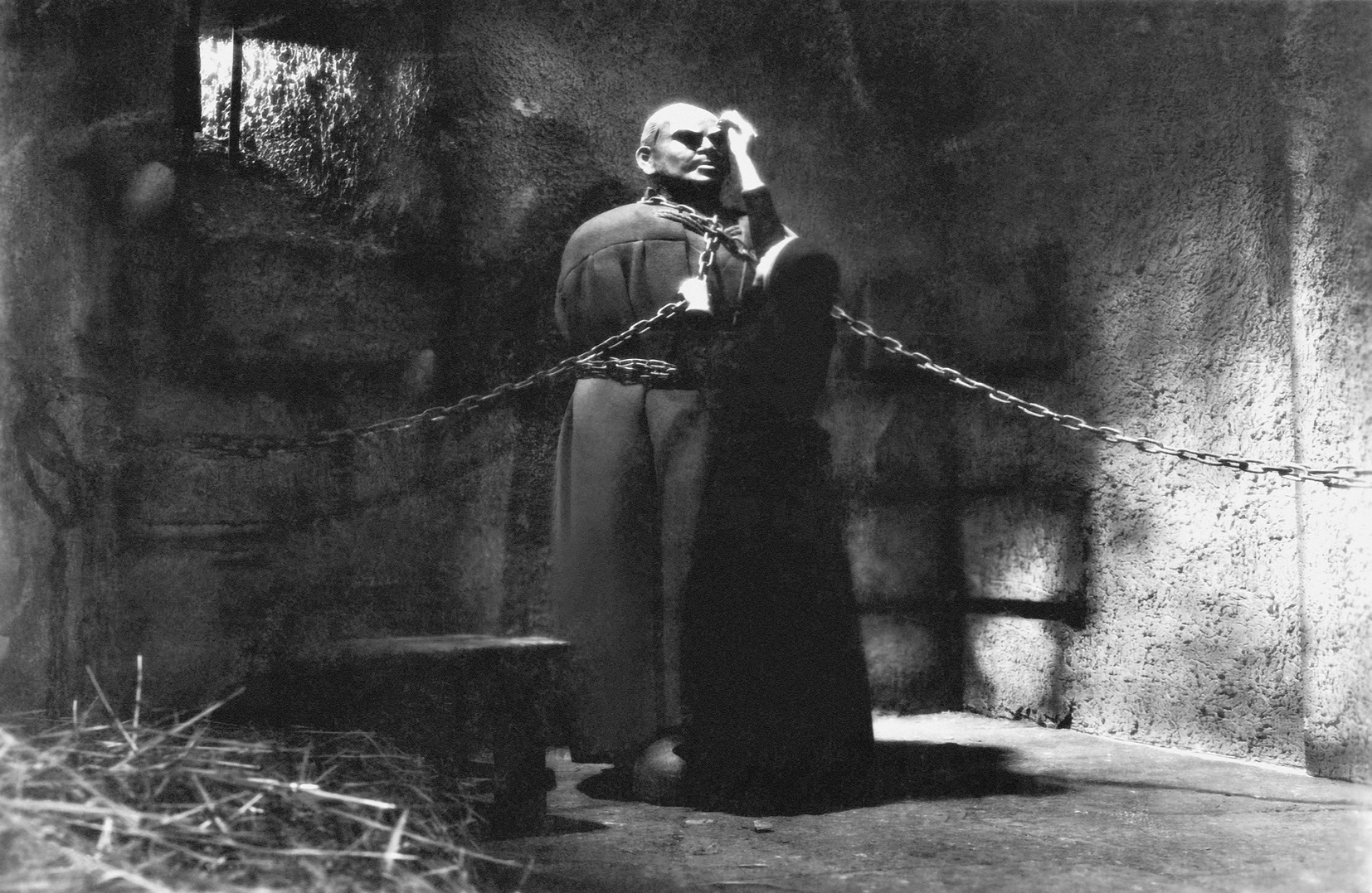
Stylized as a sequel to Paul Wegener's seminal 1920 film The Golem: How He Came into the World, French filmmaker Julien Duvivier's Le Golem, (The Man of Stone, The Legend of Prague, Golem), is a Czech production that fails to capture much of the majesty inherent in the movie that it is following.  Jiří Voskovec and Jan Werich originally penned the script based on their own play, setting it in the same Prague ghetto as the silent film which is once again under the oppression of the Holy Roman Emperor.  Though some money was clearly spent on the costume and set design, there is little compelling, German Expressionist styled atmosphere and virtually no mystical and/or supernatural components whatsoever to the story.  Most problematic though is that the title monster does absolutely nothing until the final ten minutes of the running time, meaning that nearly the entire thing serves as one elongated build-up to some much deserved Jewish vengeance.  Actor Ferdinand Hart makes a towering impression as the golem in question, but his makeup seems to have been applied as an afterthought and all that he really ends up doing is stomping around slowly while people scream and run away from him.

THE GHOST CAT AND THE MYSTERIOUS SHAMISEN
(1938)
Dir - Kiyohiko Ushihara
Overall: MEH

An early, surviving Japanese kaibyō eiga film, The Ghost Cat and the Mysterious Shamisen, (Kaibyō nazo no shamisen, Ghost Cat's Mysterious Shamisen), goes for some drawn-out atmosphere that overstays its welcome by later cinematic standards, yet it is at least an interesting footnote for being one of the few genre films in the country to be produced so closely to the outbreak of World War II.  After a highly prolific career beginning in the silent era, this would be the final movie from the 1930s made by director Kiyohiko Ushihara who would go on to do only two more, each a decade apart from each other.  It has a typical concept of a victimized woman who comes back from the dead under supernatural means, yet her vengeance is ultimately carried out through the assistance of her surviving loved ones.  The story is simple and as the title would suggest, almost the only music present is from the title instrument which is played by a handful of characters, thus giving the movie a more intimate feel that early talkies inherently had.  There are a few relatively creepy moments, but they are few and far between, only arriving after a meandering build up that makes the movie feel longer than it actually is.

DE SPOOKTREIN
(1939)
Dir - Carl Lamac
Overall: MEH

One of the numerous cinematic interpretations of Arnold Ridley's stage play The Ghost Train, De Spooktrein is the Dutch version from Czech filmmaker Carl Lamac, essentially following the same trajectory as adaptations past and present.  Save for a couple of red herrings and some ominous lighting, the supernatural elements which are obliviously implied by the very title are quite underplayed to the point of being nonexistent.  Instead, the movie is comedy first and foremost and while it is not particularly amusing at any intervals, it at least gets by with unembarrassing gags as well as likeable enough characters and performances, which is a lot more than can be said about the atrocious British remake two years later that starred the painfully not funny Arthur Askey ruining every second that he was in front of the camera.  Once the twist is revealed here and the entire thing switches gears to a train robbery crime film, Lamac stages some suspenseful moments with the limited amount of time that the meager seventy-minutes allows.  As is problematic for the source material itself though, the genre switch is too abrupt and underdeveloped to gain any momentum. 

Tuesday, May 9, 2023

1930s Foreign Horror Part Three

THE STUDENT OF PRAGUE
(1935)
Dir - Arthur Robison
Overall: MEH

Meandering at times yet still adequately done, The Student of Prague, (Der Student von Prag), was the third German production of the story in as many decades, this one starring Anton Walbrook in the lead who would soon flea the Nazi occupation in his home country the following year.  This also serves as the final directorial effort from Arthur Robison who, (along with cinematographer Bruno Mondi), makes excellent use of atmospheric shadows and whatnot.  Sadly though, the pacing is lacking at times, with the first act being weighed down by various musical sequences and the final act being one elongated chase scene between Walbrook's doomed Balduin character and his silent, imposing doppelgänger.  The love triangle drama at the center of things is not that interesting either in such a context and the plot quickly gets stuck in the mud with repetitive moments.  More problems arise with the musical score, not just in that it plays throughout almost every scene, (as is all too common once talkies adapted incidental soundtracks in the first place), but also inappropriate in its mood setting at regular intervals.  The least memorable out of the three versions by default, but it still has some style and decent performances.
 
THE MACABRE TRUNK
(1936)
Dir - Miguel Zacarías
Overall: WOOF

Notable for establishing some later used mad scientist motifs while adhering to already established ones, The Macabre Trunk, (El baúl macabro), is still in the running for one of the most sluggishly paced genre films in any era.  Things are interesting for only about the first five minutes where we see a man in a trench coat and hat break into a hospital to steal a body, at which point it is revealed that said man is a surgeon with an unfortunate looking, may-as-well-be-hunchback assistant who is trying to cure his terminally ill wife with blood transfusions.  The "fun" stops cold there though as the rest of the movie is tortuously dull, merely consisting of one scene after the other where room fulls of people stand around talking about things that barely move the plot needle forward, if they do so at all.  As far as any ghastly imagery befitting to a horror movie, there is a shot of a severed limb and the aforementioned Fritz stand-in gets really uncomfortably close to the camera once, but that is about it.  Oddly, the stock music plays incessantly through several random scenes while being thankfully absent in others, including the inevitable, final fight where the doctor gets caught at a crucial time in his experiment, as one naturally does.
 
THE DYBBUK
(1937)
Dir - Michał Waszyński 
Overall: GOOD
 
A significant work in both Polish and Yiddish-language cinema, The Dybbuk, (Der Dibuk, Dybuk), is an expanded upon adaptation of S. Ansky's famous play of the same name which was based upon heavily researched Hassidic Jewish folklore.  Indeed, the deeply rooted traditions inherent in such religious and cultural practices is quite prominent here, made even more impactful by the fact that the film was shot on location in both Kazimierz Dolny and Warsaw, Poland; a region whose Jewish community would be horrifically upheaved by the second World War only a short time later.  Even with the weight of such real life atrocities removed, the movie is strikingly photographed with a deeply spiritual tone.  Director Michał Waszyński and cinematographer Albert Wywerka make evocative use out of primitive sets, plus the costume design is lovely in its authenticity.  The supernatural elements are highly underplayed, with the mysterious and somber messenger figure fading in and out of particular scenes and the ghostly voice of the title spirit either speaking in a slow, deep voice via his would-be bride or off camera once his doomed soul has been successfully excommunicated by the Hassidic congregation.  Pacing wise, it is too leisurely for modern viewers to maintain interest in its over two-hour running time, but it still an impressive work in every other respect.

Monday, May 8, 2023

1930s American Horror Part Eight

THIRTEEN WOMEN
(1932)
Dir - George Archainbaud
Overall: MEH

Somewhat historically significant as a vague precursor to later slasher movies and because of the real life suicide of one of its stars Peg Entwistle, (who makes her sole screen appearance here and jumped to her death off of the Hollywood sign mere weeks before the film's release), Thirteen Women is still forgettable otherwise.  An adaptation of Tiffany Thayer's novel of the same name, fifteen minutes were trimmed to bring it down to an even more brisk fifty-nine for the final running time.  This actually eliminated two entire characters, both of whom would have made up the thirteen in the title.  Not that they were necessary since it is a monotonous story as is, with Myra Loy's exotic "Asian" character gradually picking off her former sorority sisters by convoluted means of manipulation through horoscope predictions.  A silly idea to be sure and even though the story speaks somewhat to prejudice against mix-raced women, its themes are poorly conveyed if they are conveyed at all, so it just ends up being a hum-drum thriller.

THE HUNCHBACK OF NOTRE DAME
(1939)
Dir - William Dieterle
Overall: GOOD
 
Sixteen years after Universal's legendary silent version with Lon Chaney, The Hunchback of Notre Dame was reinterpreted by RKO Pictures with Charles Laughton in the lead as Quasimodo.  Plot wise it is considerably different from the last adaptation, moving some elements around and tweaking the relationships between several characters.  The class dynamic concerning peasants and nobleman is still paramount with a strong emphasis being placed on the advent of the printing press and the poet Pierre Gringoire's romantic rallying of the people.  A then eighteen year-old Maureen O'Hara appears as Esmeralda on account of Laughton who had already worked with her before, and this would in turn launch her wildly successful Hollywood career.  In the lead role, Laughton is reliably excellent and gives the hunchback a voice for the first time, yet his physical transformation is not as complete as the one that Chaney committed to in his virtuosic performance, by comparison.  Also, the happy ending is not in conjunction with Victor Hugo's novel, but it is a fitting deviation that does not dilute the expansive, impressive production overall.

THE HOUND OF THE BASKERVILLES
(1939)
Dir - Sidney Lanfield
Overall: GOOD

The first in what would become a series of fourteen Sherlock Holmes films with Basil Rathbone and Nigel Bruce as Holmes and Dr. John Watson, respectively, The Hound of the Baskervilles was one of two by 20th Century Fox before Universal would take over for the prominent bulk of them.  It could hardly be said that Rathbone had a typecast career, yet this remains his most famous role if not for the sheer volume of times that he appeared as the character, but also due to his sly portrayal which helped set the benchmark this early on in the sound era.  Both John Carradine and Lionel Atwill round out the familiar supporting horror movie actors, though matinee idol Richard Greene got top-billing over Rathbone for whatever reason.  This particular Arthur Conan Doyle novel had been adapted for the screen twice before and it is one of the rare Holmes stories to allow for Gothic scenery and atmosphere, both of which this production stylishly has.  Fog-drenched moors, howling demon dogs, an ominous family curse, and a minimal musical score let things play out in an eerily quiet fashion.  It is mostly amusing for Rathbone's Holmes being twelve steps ahead of everybody, but the macabre mood is a wonderful addition as well.

Saturday, May 6, 2023

1930s American Horror Part Seven - (Ernest B. Schoedsack Edition)

THE MOST DANGEROUS GAME
(1932)
Dir - Irving Pichel/Ernest B. Schoedsack
Overall: GOOD
 
Utilizing the same jungle sets from King Kong, director Ernest B. Schoedsack, producer Merian C. Cooper, and four of the actors from said movie join forces in The Most Dangerous Game which serves as the first of numerous cinematic adaptations of Richard Connell's novel of the same name.  The film mostly works due to its macabre, man-hunting premise, but Leslie Bank's camped-up performance as the villainous aristocratic Count Zaroff certainly helps as he rolls his R's and raises his bushy eyebrows appropriately.  As the only woman on screen, Fay Wray portrays one of her countless, genre-defining damsels in distress, a necessary addition to any movie where men and only men pontificate on the self-proclaimed hierarchy of hunting.  There are a few ghoulish touches such as Zarnoff's human head trophy room and some disturbed decor to his island fortress, but this is mostly just a mild adventure film that ends predictably enough while thankfully never overstaying its agreeable, sixty-two minute running time.
 
KING KONG
(1933)
Dir - Merian C. Cooper/Ernest B. Schoedsack
Overall: GOOD
 
RKO's seminal monster movie King Kong remains one of the most famous of all Hollywood creations and mostly holds up nearly a century later.  Though stop-motion dinosaurs had already proven successful at the box office with things like 1925's The Lost World, (who animator Willis O'Brien likewise worked on), Kong essentially ushered in the "giant monster on a rampage" motif that would prove particularly influential during the 1950s and 60s, especially in Japan.  This was also the first American "talkie" to feature a film score specifically composed for it, with Max Steiner's forty-six piece orchestra setting a standard that is essentially still in practice today.  Fay Wray already had a few noteworthy roles under her belt at the time, (and was even able to film both Dr. X and The Mystery of the Wax Museum during off-production hours here), but this best established her as cinema's first official scream queen.  Kong himself of course is the main attraction and directors Merian C. Cooper and Ernest B. Schoedsack keep up a taught pace after the initial build-up by throwing one intense monster battle and chase sequence after the other, all without unnecessary exposition.  The "beauty killed the beast" angle is moronic and Robert Armstrong's Carl Denham is one of the most laughably irresponsible characters in any film, but there is so much iconic imagery here and overall laudable movie making that it is an impossible work to disregard.

SON OF KONG
(1933)
Overall: MEH

The sequel to King Kong which came out a mere nine months later certainly feels like a bulldozed job as Son of Kong lacks almost all of the grandiose scale of its predecessor and pussyfoots around for over forty minutes before even getting to the title character.  Considering that the movie is less than seventy minutes in total and ergo more than halfway dedicated to an unengaging set-up, this is a problem.  Bringing back Robert Armstrong, Frank Reicher, and Victor Wong with Helen Mack filling in for the lone pretty girl, no one watching such a film would prefer to spend as much time with them standing around and talking while Skull Island awaits for a revisit.  Yet due to the condensed budget and rushed production, that is exactly what we get.  The script by Ruth Rose, (who was an uncredited punch-up writer on the first film), goes for cuteness and low stakes which is probably for the best considering that this had no chance of being a bombastic, heart-racing follow-up.  For stop-motion fans though, Willis O'Brien still delivers the goods when it finally gets to them, but otherwise, this is forgettable stuff.

Thursday, May 4, 2023

2011 Horror Part Nine

TORMENTED
Dir - Takashi Shimizu
Overall: MEH
 
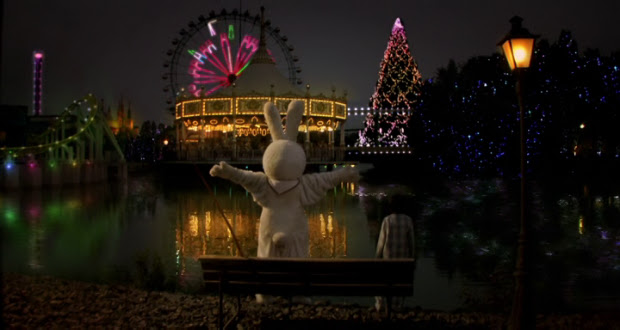
A follow-up and quasi-companion piece to his 2009 film The Shock Labyrinth in that footage from said film is featured in it, Tormented, (Rabitto horā 3D), is bog-standard psychological J-horror that falls flat due to an undercooked script and low-end production values.  One of the few unique angles is that it features a mute protagonist, (Hikari Mitsushima), who after ten years of seemingly having overcome a trauma, faces it again with her younger brother and some ghost like presence in a giant bunny costume.  There is more to it than that of course, but nothing that is all that interesting unfortunately.  As is the case with most horror stories that revolve around intense hallucinations and plot twists, they are exaggerated to comical extents and even though there is an inherent humorous element to several of the sequences as well as the bare bones concept, it comes off foolish as well as not even remotely scary.  Visually, the CGI effects are incredibly poor and add even more unintentional chuckles to the proceedings, plus Shimizu does not offer up enough inventive moments or maintain a swift enough pace to keep everything from dragging.  It is not a poor offering, just not a memorable one once the over-sized rabbit costume gag runs its course.

MEGAN IS MISSING
Dir - Michael Goi
Overall: WOOF

An understandably controversial found footage nightmare, Megan Is Missing is a purposely traumatizing experience that probably has its heart in the right place in spite of or because of its unwatchability.  Filmmaker Michael Goi self-financed the project in an effort to shine an unflinching light on internet predator child abduction as well as the sexualization of minors, societal peer pressure, and neglected, domestic sexual abuse.  While these objectives are likely genuine, Goi's decision to make the final twenty-five minutes a continuous depiction of horrendously disturbing rape, torture, and murder renders it unwatchable to a cautionary extent.  Without this final tag that goes above and beyond most sensationalized torture porn, the movie was already making its intended point by exploring the series of events leading up to the harrowing conclusion via in camera confessionals and cell phone footage, (even if the performances are rough and the characterizations are sterotypically obnoxious).  Though instead of letting the viewer merely ponder the horrific fates of the two leads while contemplating the first hour of character development, Goi forces us to endure something that inadvertently seems exploitative and sickening.  It is a bold move of course and to the director's credit, he has offered up warnings to viewers and allegedly insisted on the actor's parents all being present on set to insure some semblance of emotional security, but this is a movie that is more important just to know about than to ever watch under any mentally healthy circumstances.
 
THE CALLER
Dir - Matthew Parkhill
Overall: MEH
 
On paper, Matthew Parkhill's The Caller has a fetching, Twilight Zone-worthy premise that remains gripping even if it logically unravels at regular intervals.  Filmed in Puerto Rico though set in the US and exclusively featuring an English-speaking cast, the title would suggest a cliched slasher outcome, but this is cleverly subverted as Rachelle Lefevre instead moves into her low-rent apartment in order to get away from her abusive, soon-to-be-ex husband, only to mysteriously and immediately start getting calls from a troubled forty-one year old woman with marital problems of her own.  Without spoiling it, the twist in this case is otherwordly and wisely never explained as the focus is instead on a number of traumatic, time-altering scenarios that ruin Lefevre's already nightmarishly stressful ordeal that much further.  Unfortunately, most if not all of her troubles could be jettisoned by actions that the script never allows her to take.  Excuses are given here or there, but they become more flimsy as things escalate since there are numerous opportunities to notify the police, change cell phone providers, remove a land-line, or just plain old move away that could have stopped such escalation with Lefevre's tormentors.  Aside from these dramatic liberties being taken for the sake of suspense-mounting intensity, it is an adequate, well-paced, and well-acted thriller.

Tuesday, May 2, 2023

2012 Horror Part Eleven

KISS OF THE DAMNED
Dir - Xan Cassavetes
Overall: GOOD
 
The full-length debut Kiss of the Damned from writer/director Xan Cassavetes is a quasi-throwback to 70s, exploitative Euro-horror and one that is heavy on elegant, erotic style.  A musical motif occurs several times that is right out of Italian giallos, plus the ADRed line-readings and thick foreign accents would sit right at home with any number of exports from such an era.  Still, this is contemporary-set and besides one or two slow camera zooms and a Gothic abode that could be a stand-in for the house in José Ramón Larraz's Vampyres, it has a contemporary look and feel.  That said, the dialog is often weak and the plotting thin when it comes to Roxane Mesquida's villainess who is the only character to behave like a smirking asshole for reasons that are never explained.  It offers up a sophisticated angle on vampire mythos though, where most of the undead detest feasting on human blood and pride themselves on their refined tastes and bourgeois lifestyles.  Cassavetes has an eye for striking visuals and suave atmosphere, even if some of the budgetary constraints and old school genre pandering dip their toes into unintentional, (or intentional), camp here or there.

COMPLIANCE
Dir - Craig Zobel
Overall: WOOF

One of the most unwatchable thrillers in recent times, Compliance brings a true, documented strip search call scam that was conducted over a ten year period, all to disturbing life in a manner that is fitting yet relentlessly miserable.  Even without the proper historical context at one's disposal, the audience will have no problem being able to pick up exactly what is going on which is well over an hour before anyone on screen wises up to it.  As is the case with any "based on a true story" movie, certain liberties were taken with the specifics of course, but the effort to rev up the tension by writer/director Craig Zobel goes to absurdly unnecessary lengths, even if said lengths are factual.  While this is not to diminish the trauma that was suffered by the actual victims of the real world ordeal, (the result of over seventy such scam calls made by a single perpetrator), it does not translate to the screen where person after person goes along with increasingly, clearly suspect acts.  The movie raises questions of victimization, brainwashing, and, (as the title obviously alludes to), compliance under pressure, but watching a poor woman get humiliated and sexually harassed by unwilling parties for ninety minutes is just an inexcusable premise for a film.
 
HORROR STORIES
Dir - Jung Bum-shik/Kim Gok/Kim Sun/Min Kyu-dong/Hong Ji-young/Im Dae-woong
Overall: MEH
 
This unimpressive horror anthology from South Korea brings together six different directors, none of which manage to pull off anything memorable in such a framework.  Simplistically titled Horror Stories, (Museoun Iyagi), and the first in a to-date three-deep franchise, it has a framing narrative with a quirky serial killer/kidnapper who instructs his victim to put him to sleep with any frightening tales that she can come up with.  Coincidentally, the audience may find themselves dozing off themselves by the time that the nearly two-hour ordeal has run its course.  The first segment "Don't Answer the Door" has some initial, spooky potential as two kids who are left alone have their imaginations run wild with supernatural forces trying to get them, but it gets confused before wrapping up.  "Endless Flight" has some convenient/illogical horror movie plotting, "Secret Recipe" is a weird, cannibalistic folk tale re-working, and "Ambulance on the Death Zone" ends up being more of a monotonous, paranoia-fueled zombie scenario than a suspenseful one.  Oodles of jump scares and rapid editing muddle things up further and the entire ordeal overstays its popcorn-friendly welcome with its exhaustively cliched presentation.